Who Won The 1965 Indo-Pak War
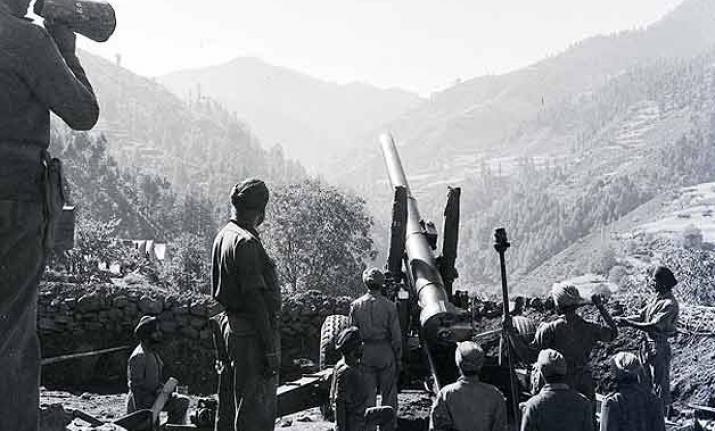
In 1965. Pakistan launched a secret mission to send 30,000 armed men into Indian-administered Kashmir to incite an insurgency and liberate Kashmir from India known as Operation Gibraltar.
By the time Indian forces realized this had happened, the fighters had reached the outskirts of Srinagar, the capital of Kashmir.
As the Indian military offensive seemed to gain success, the Indian Army captured the Haji Pir pass inside Pakistan-administered Kashmir.
To counter this, the Pakistani Army launched an attack in Akhnoor in Jammu. Suffering losses here, India called its air force.
The escalation of the war here made India open a front in Wagah in Punjab – to the surprise of the Pakistanis. The Pakistanis repelled this attack well.
Eventually, the international community forced a ceasefire and the two countries signed an agreement in Tashkent, whereby both returned to pre-1965 territorial positions.
Since the Indian attack across Wagah threatened Lahore and Sialkot, Pakistanis say the Indians lost the war and Pakistan won.
Since Pakistan’s plan to liberate Kashmir failed, and the year ended with Pakistan getting not a single inch of new territory, the Indians say they won.
Independent historians, however, are clear that it was a military stalemate and neither side won.
It is perhaps apt that both India and Pakistan say they won this war, showing up each other’s nationalism for what it is.
India’s own official history of the war, published only two years ago, is scathing in its review of how poorly the Indian army and air force performed.
Pakistan on the other hand does not even pretend that it provoked the war by trying to liberate Kashmir.
It is one thing to commemorate the soldiers who lost their lives, another to celebrate a war ‘victory.’ Truth is, both countries lost a lot in that war.
Firstly, the war made Kashmir an intractable issue forever. The Pakistanis tried to liberate Jammu & Kashmir in 1948 in a similar way.
That got them a chunk of the territory but not the prized Kashmir Valley itself. India took the issue to the United Nations.
The 1965 war should also be read as a failure of the UN, and of diplomatic negotiations between India and Pakistan. If war is a continuation of politics, diplomacy is war by other means.
The most important consequence of the 1965 war was that, for the first time, the India-Pakistan border became a Berlin Wall of sorts.
Until 1965, visas were easy, Indian and Pakistani films were screened in theatres across the border, trade ties were normal, books and journals went across easily.
India–Pakistan relations as we know them today, were formed more by 1965 than by the 1948 war, or arguably, by Partition itself.
In 1947, there were people who left their homes to go and live in the other country, thinking they could always return. 1965 ended that dream.
It is said that 1965 was the first real war between the two countries. Six year later, India helped East Pakistan secede from Pakistan and become Bangladesh.
The Indian threat to Lahore made Pakistanis feel an existential threat from India, and convinced Indians that Pakistan was going to take Kashmir one way or another.
It was 1965 that set in stone a feeling of permanent hostility.
Don’t forget to subscribe to our YouTube Channel
Support our content by becoming a KJ Patreon
https://www.patreon.com/kjvids
Website – www.kjvids.co.uk
Facebook – www.facebook.com/KJVids
Twitter – www.twitter.com/kjvids2016
Instagram – www.instagram.com/kjvidsofficial
All Rights Reserved. Contact info@kjvids.co.uk if you are interested in licensing our content, advertising or working with us in other ways.