KJ ReportsKJ Reports

When the Ottomans almost conquered Italy

19 July 20181,221

Listen to this article

KJ narrates this report in his own voice

When the Ottomans almost conquered Italy

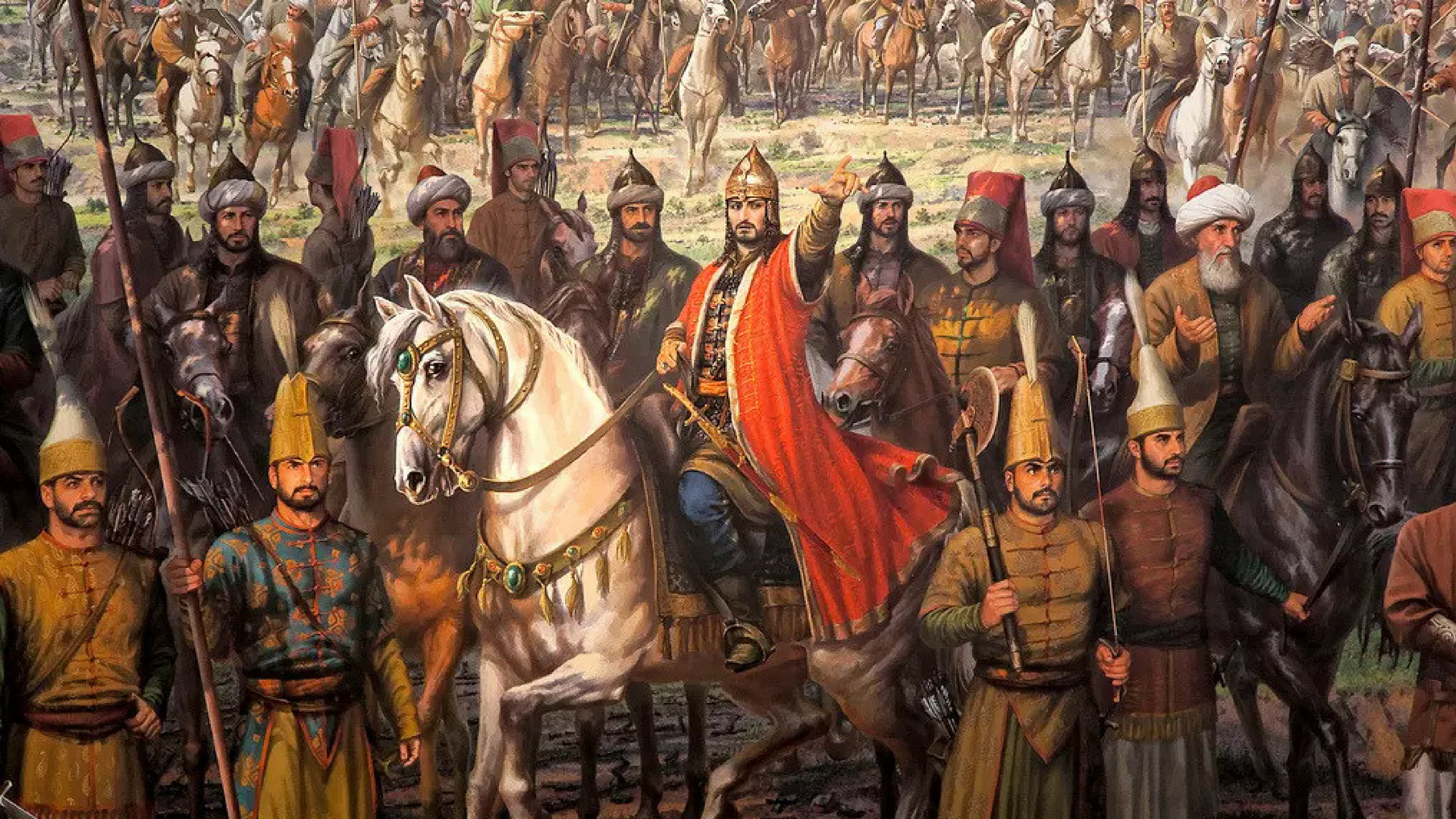
In 1480 Memet the Conqueror launched the most audacious expedition of his leadership.

He sent an army under the Grand Admiral of the Ottman Navy, Gedik Ahmet Pashato Southern Italy to capture Otranto.

The army moved inland towards Brindisi, Taranto and Lecce, but Duke Ferrante of Naples led a counterattack.

The army was pushed back to Otranto and majority of the Ottoman Army sailed away.

However, they left a group of troops stationed at Otranto whilst the Greek Island of Rhodes was being captured.

When the Island of Rhodes was abandoned, the Ottomans returned and continued fighting well into 1481.

The occupation of Italian lands so close to the main altar of Christiandom caused a great level of concern and panic.

Blame was shifted around in Italy. Venice people were acused of doing nothing and even accused of helping the Ottomans.

In spite of the retention of Rhodes, fear of the Ottomans was now at the highest.

Mehmet the Conqueror himself was said to be coming to Italy and the Pope considered fleeing to Avignon.

Instead he asked for assistance. But what saved Italy from the Ottomans was only the eventual death of Mehmet in 1481.

Don’t forget to subscribe to our YouTube Channel

Support our content by donating to fundmypage.com/kjvids

Website – www.kjvids.co.uk
Facebook – www.facebook.com/KJVids
Twitter – www.twitter.com/kjvids2016
Instagram – www.instagram.com/kjvidsofficial

All Rights Reserved. Contact info@kjvids.co.uk if you are interested in licensing our content, advertising or working with us in other ways.


#italy#ottoman#ottoman-history

Related Intelligence

More articles
The Uralic Lever: Russia’s Strategic Pivot to New Delhi
Russia

The Uralic Lever: Russia’s Strategic Pivot to New Delhi

Moscow is trading short-term energy profits for a permanent strategic alliance with India. This shift signals the end of Russian dependency on European markets and the birth of a new Eurasian power axis.

17 Jun 2026

The Ghost of Radcliffe: Why 1947 Still Governs 21st-Century Asia
History

The Ghost of Radcliffe: Why 1947 Still Governs 21st-Century Asia

Geographic partitions are not historical events; they are active geopolitical engines. In South Asia, a hasty retirement from Empire created a structural instability that ensures permanent mobilisation and restricts the rise of two nuclear powers.

15 Mar 2026

Pax Mongolica: The Hard-Power Blueprint for Global Integration
History

Pax Mongolica: The Hard-Power Blueprint for Global Integration

Modern globalisation is often framed as a Western invention. In reality, the 13th-century Mongol Empire established the first template for a borderless economy, proving that global trade requires a single, ruthless security guarantor to function.

15 Jan 2026

The Dollar Pact: Why Bretton Woods Never Actually Ended
History

The Dollar Pact: Why Bretton Woods Never Actually Ended

The 1944 Bretton Woods agreement is often treated as a historical relic. In reality, its core architecture remains the primary engine of American hegemony, weaponising global trade through a system of structural dependency that has no peer.

15 Oct 2025

Mare Clausum: Why the Black Sea is No Longer a Russian Lake
Russia

Mare Clausum: Why the Black Sea is No Longer a Russian Lake

As traditional naval power yields to asymmetric attrition, the Black Sea has become a laboratory for post-modern warfare. Kyiv’s victory in the naval war, achieved without a fleet, is rewriting the rules of global maritime security.

15 Sept 2025

The New Feudalism: Why the Westphalian Order is Withering
History

The New Feudalism: Why the Westphalian Order is Withering

The nation-state is not dying, but it is losing its monopoly on power. As digital territories and corporate spheres of influence supersede physical borders, we are witnessing the gradual return of pre-Westphalian overlapping jurisdictions.

15 Jun 2025