KJ ReportsKJ Reports

‘Top mily, political leadership ‘shamefully’ let Raymond Davis go’

1 July 2017568

Listen to this article

KJ narrates this report in his own voice

‘Top mily, political leadership ‘shamefully’ let Raymond Davis go’

Read original article on the Nation or read below;

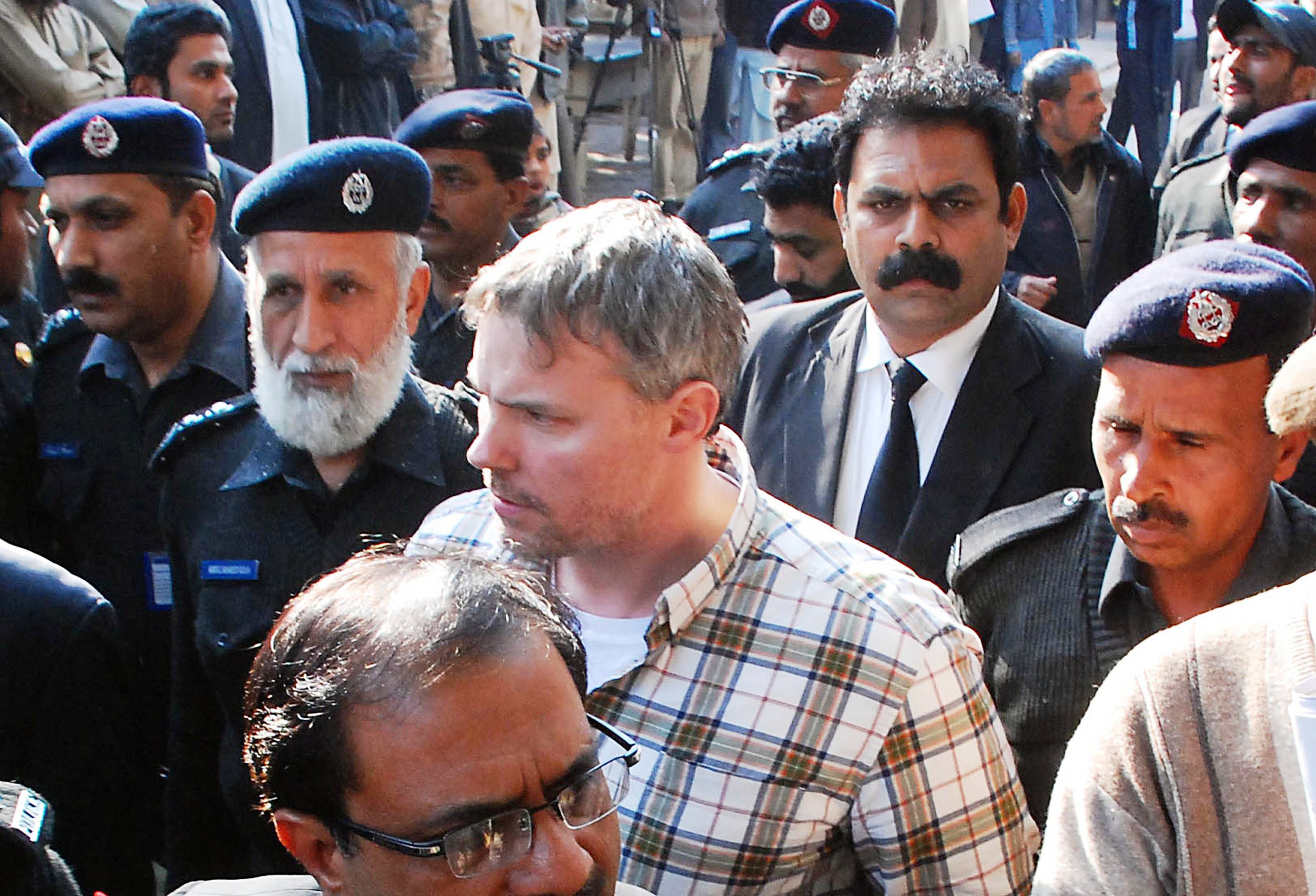
  1. Pakistan Tehreek-e-Insaf (PTI) Chairman Imran Khan has stated that recently published book of Raymond Davis is a shameful account how top political and military leadership of the country let cold blooded murderer, responsible of four deaths, ‘go scot-free’
  2. He called ‘The Contractor: How I Get in Pakistan Prison & Started Diplomatic Crisis’ a must read for every Pakistani. He asserted that this book shows why Pakistan ‘gets so little respect internationally.’
  3. In his book the former US intelligence agency CIA contractor Raymond Davis wrote that former President Asif Ali Zardari, GD ISI General Pasha and current Prime Minister Nawaz Sharif collaborated for his freedom from Pakistani jails where he was under arrest for killing two innocent citizens.
  4. The book has started uproar in Pakistan and serious backlash from citizens.
  5. On January 27, 2011, Davis killed two allegedly armed men in Lahore, Pakistan. Although US held the stance that he has diplomatic immunity but was sent to jail under criminal charges. After a month of the incident US revealed that Davis is a CIA contractor in Pakistan.
  6. A diplomatic crisis was instigated between Pakistan and US over him especially in context of anger in Pakistani public regarding Davis and US.
  7. Raymond Davis, however, was released after payments were made to families of deceased under Sharia Law of ‘Diyyat’. The law allows families of deceased to receive money from the culprit.
#raymond-davis

Related Intelligence

More articles
The Bismarckian Pivot: India’s German Deep-Tech Realignment
South Asia

The Bismarckian Pivot: India’s German Deep-Tech Realignment

As New Delhi systematically decouples from its legacy Russian military dependency, a new strategic architecture is emerging. Berlin is no longer just a trading partner; it is becoming India’s primary engine for industrial sovereignty.

17 Jun 2026

The Islamabad Pivot: Trading Strategic Depth for Economic Survival
South Asia

The Islamabad Pivot: Trading Strategic Depth for Economic Survival

Pakistan is discarding decades of military doctrine to position itself as the vital gateway for Central Asian trade. As domestic pressures mount, Islamabad is prioritising economic rent and connectivity over traditional territorial security.

15 Jun 2026

The Liquid Front: Why South Asian Security Rests on Melting Ice
South Asia

The Liquid Front: Why South Asian Security Rests on Melting Ice

As domestic pressures and climate shifts accelerate, the Indus and Brahmaputra river basins are no longer mere sources of life, but strategic assets being weaponised in a zero-sum game between nuclear powers.

1 Oct 2025

The New Delhi Pivot: Why Strategic Autonomy Survives the Great Split
South Asia

The New Delhi Pivot: Why Strategic Autonomy Survives the Great Split

India is defying the binary logic of the new Cold War. By leveraging Russian energy and American technology, New Delhi is transforming its non-alignment legacy into a sophisticated multi-aligned leverage play that few in the West fully comprehend.

1 Jun 2025

The Garrison State: Pakistan’s Invisible Constitution
South Asia

The Garrison State: Pakistan’s Invisible Constitution

As Islamabad faces a debt ceiling and internal unrest, the facade of civilian governance is thinning. Real power in Pakistan does not reside in Parliament, but in the institutional incentives of the General Headquarters in Rawalpindi.

1 Feb 2025

The Tiger’s Cage: The Structural Fragility of the Bangladesh Model
South Asia

The Tiger’s Cage: The Structural Fragility of the Bangladesh Model

Bangladesh transformed from a basket case into an export powerhouse through an unspoken social contract. As that contract dissolves, the state faces a reckoning between its industrial success and its institutional decay.

1 Oct 2024