Top 5 Facts About Pakistan’s Inter-Services Intelligence (ISI)

25 July 20182,948

Listen to this article

KJ narrates this report in his own voice

Top 5 Facts About Pakistan’s Inter-Services Intelligence (ISI)

[vc_row][vc_column][vc_column_text]On Sunday 22nd July 2018, Pakistan‘s top court said it had begun reviewing statements made by a judge alleging the country’s spy agencies were influencing judicial proceedings, as the powerful military called for an investigation.

Pakistan‘s July 25 general elections have been hit by accusations of pre-poll rigging with ousted prime minister Nawaz Sharif’s Pakistan Muslim League-Nawaz (PML-N) party accusing the military of influencing the judiciary to deny it a second term.

Islamabad high court judge Shaukat Aziz Siddiqui accused the country’s premier spy agency, the Inter Services Intelligence (ISI), of interfering in legal cases.

“The ISI is fully involved in trying to manipulate the judicial proceedings,” Siddiqui said in a speech to lawyers, adding the agency had told the court not to release Sharif and his daughter Maryam until after the elections.

Public criticism of the military by senior officials is rare in Pakistan, which has been ruled by the armed forces for half its 71-year history. In light of this ground breaking development we take a look at the top 5 facts about Pakistan’s Intelligence Agency (ISI).[/vc_column_text][/vc_column][/vc_row][vc_row][vc_column][vc_toggle title=”Fact 1: Pakistan’s ISI was founded in 1948 by a British army officer, Major General William Cawthorne”]The Australian-born Major-General Robert “Bill” Cawthome, once a British Army officer who had later joined the Pakistan Army, remains the longest-serving Director General of the Inter-Services Intelligence Agency (ISI) for over nine years from 1950 to 1959. Research shows that General Robert Cawthome had laid down the basic principles of the ISI, together with a Pakistan Navy Commander, Syed Muhammad Ahsan, who is officially acknowledged to have played an integral part in managing the recruitment and expansion of this world class spy agency.[/vc_toggle][vc_toggle title=”Fact 2: ISI is rated one of best-organised intelligence agencies in the developing world”]Sometimes described as a state within a state with virtually no oversight. ISI is best known for the firm control it exercises over Pakistans politics and its role in protecting the military from domestic opposition. The ISI is seen as the Pakistani equivalent to Israel’s Mossad. The size of the ISI is not publicly known but it is widely believed to employ tens of thousands of agents, including many in the media.

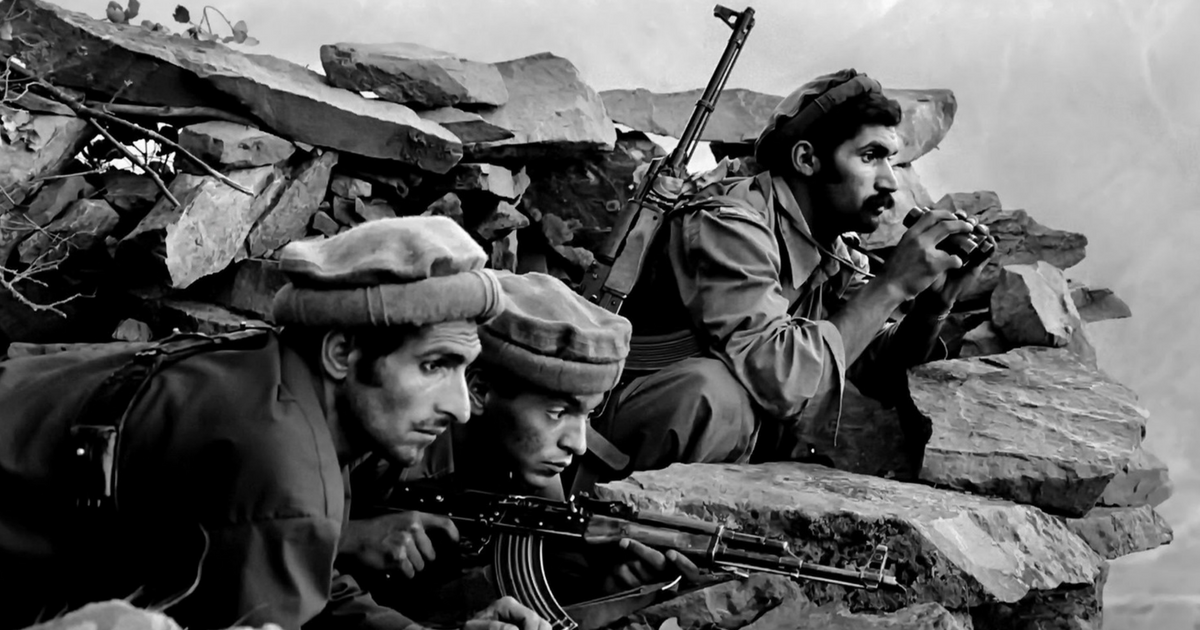
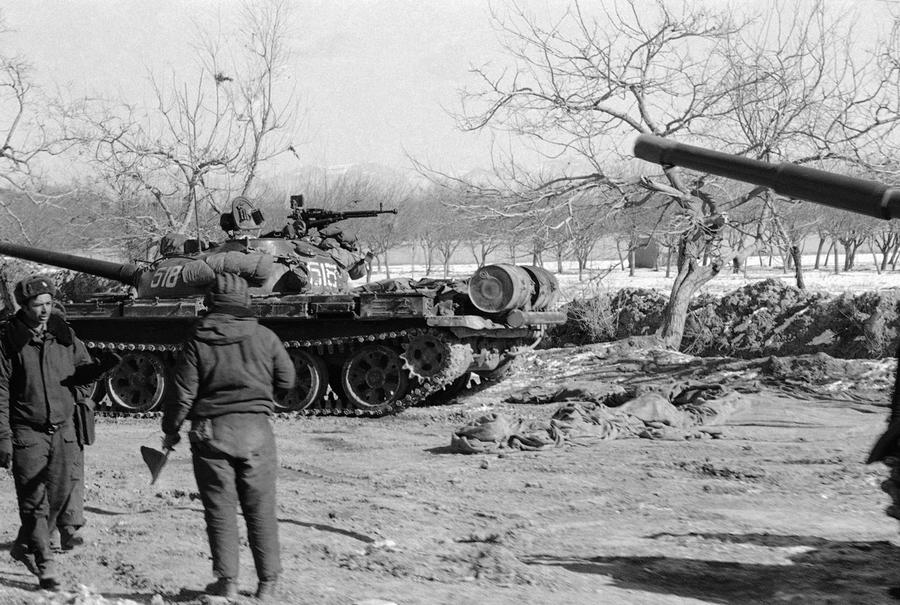
[/vc_toggle][vc_toggle title=”Fact 3: Pakistani intelligence services organised the Afghan resistance against the Sovet Invasion in 1979″]The 1979 Soviet invasion of Afghanistan was seen by Pakistan as a grave threat to its national security. It also presented Pakistan with a major avenue to build on its 1973 policy of empowering dissident Islamists against the governments in Kabul.

Furthermore, Pakistan had been a partner of the United States in the Cold War since the 1950s, and this cooperation had provoked numerous Soviet threats over the years.  The new leader of Pakistan, General Muhammad Zia-ul-Haq, who seized power in a 1977 military coup, was a fervent anti-communist.

General Zia approached the United States for help with organizing a religious resistance against the Soviet invasion of Afghanistan.

The US Central Intelligence Agency (CIA) also began funding the Afghan resistance in 1979.  Accepted doctrine was that America would not overtly reveal its hand in a proxy war with the Soviets, and therefore the CIA worked through its ally Pakistan.
Zia insisted that Islamabad would decide who in Afghanistan received American aid, and the arbiters of this policy ultimately became Pakistan’s spy agency, the Directorate for Inter-Services Intelligence (ISI), and the Pakistani Islamist party Jamaat-e-Islami, which supported Zia’s dictatorship.

As the war progressed and as US and the Saudi Arabia led Arab funding for the mujahideen skyrocketed, the Pakistani government and the ISI gained enormous influence in Afghan affairs.
[/vc_toggle][vc_toggle title=”Fact 4: ISI has been accused by a high court judge of meddling in the Pakistani elections”][/ms-protect-content]

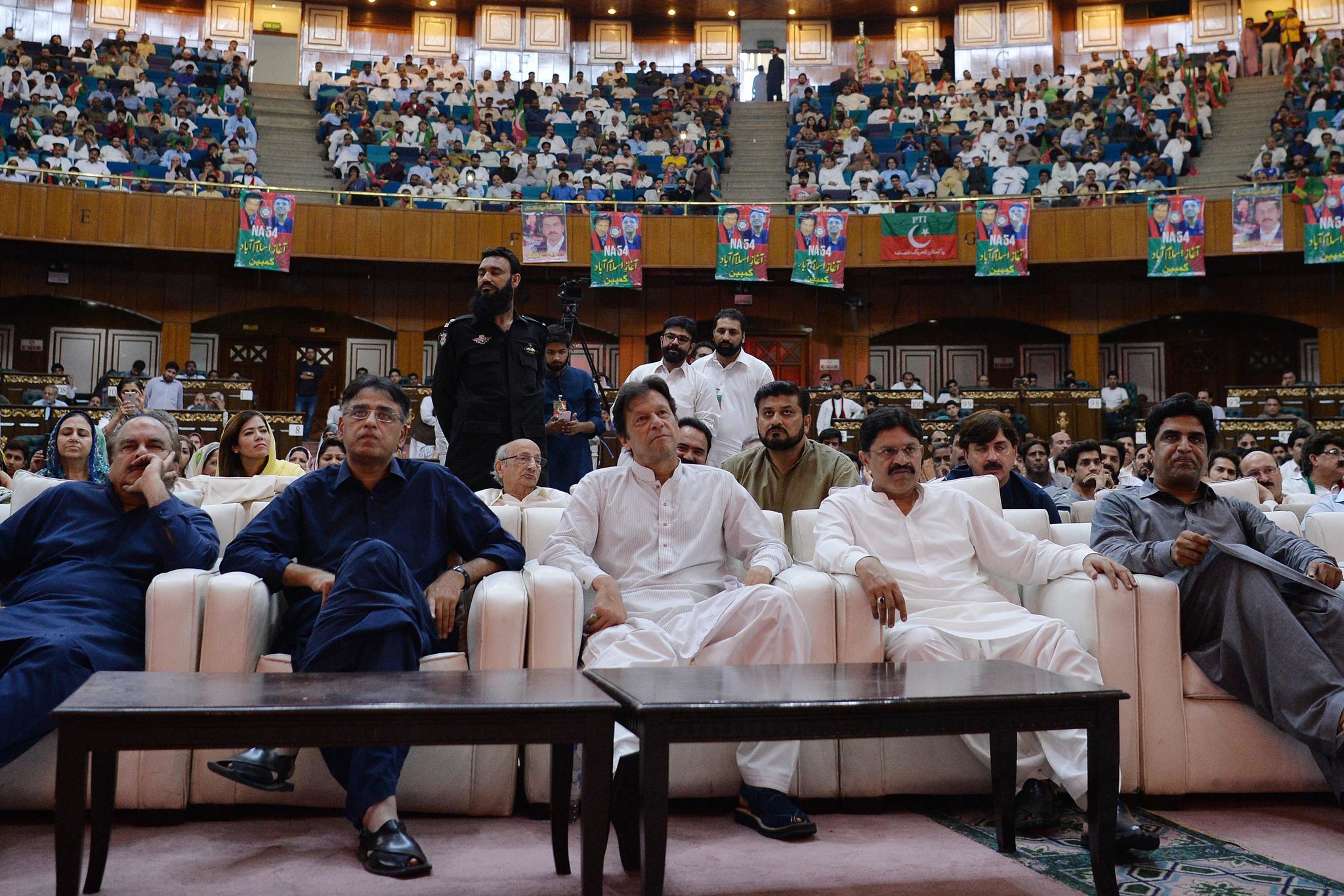
Islamabad High Court judge Shaukat Siddiqui has rather sensationally accused the ISI of meddling with judicial processes and declared that the intelligence agency doesn’t want Nawaz and his daughter Maryam out of jail until the elections are over. Siddiqui has clashed with the army before and his remarks prompted an immediate response from ISPR chief Asif Ghafoor, who asked the Chief Justice of Pakistan Saqib Nisar to take legal notice of a national institution being maligned — which the chief justice has since done.

The speech by Justice Shaukat Aziz Siddiqui to lawyers in Rawalpindi was the latest public indictment of the military’s interference in politics. The parts of the speech that were critical of the ISI were not aired by local television news networks but short video clips went viral on social media.

The judge accused the ISI of influencing and pressuring the court that convicted and sentenced Mr. Sharif and his relatives. On July 17, the Islamabad High Court deferred the hearings of the appeals by Mr. Sharif against the court verdict until after elections.
[/vc_toggle][vc_toggle title=”Fact 5: Pakistan’s ISI has been described by the US authorities as a terrorist organisation in secret files obtained by the Guardian”][/ms-protect-content]

US authorities describe the main Pakistani intelligence service as a terrorist organisation in secret files obtained by the Guardian.

Recommendations to interrogators at Guantánamo Bay rank the Inter-Services Intelligence Directorate (ISI) alongside al-Qaida, Hamas and Hezbollah in Lebanon as threats. Being linked to any of these groups is an indication of terrorist or insurgent activity, the documents say.

“Through associations with these … organisations, a detainee may have provided support to al-Qaida or the Taliban, or engaged in hostilities against US or coalition forces [in Afghanistan],” says the document, dated September 2007 and called the Joint Task Force Guantánamo Matrix of Threat Indicators for Enemy Combatants. It adds that links to these groups is evidence that an individual poses a future threat.[/vc_toggle][/vc_column][/vc_row][vc_row][vc_column][vc_facebook][/vc_column][/vc_row][vc_row][vc_column][vc_single_image image=”4988″ img_size=”full” onclick=”custom_link” css_animation=”bounceInUp” link=”https://www.fundmypage.com/postbanner”][/vc_column][/vc_row]
#facts-about-pakistan-intelligence#isi-facts#pakistan-intelligence-agency#pakistan-isi#pakistan-spies

Related Intelligence

More articles
Are Malaysia and Turkey on a challenging quest to unite the Muslim world?
Indonesia

Are Malaysia and Turkey on a challenging quest to unite the Muslim world?

Malaysia leading efforts to unite the Muslim world In recent years, Malaysia has been trying to increase its engagement and cooperation with the Muslim world. We saw many signals of this in 2019, as the nation significantly strengthened relations with Pakistan, as well as Iran and several other Muslim nations in Asia. Furthermore, Malaysia has been vocal on the oppression of Muslim minorities, namely, the Uighurs in China and the Rohingya in Myanmar. After a call for a Muslim summit currently taking place in Malaysia, coming after many calls by Malaysian PM Mahathir Mohammad for the Muslim world to come together, many believe that Malaysia is trying to unite the Muslim world, and consequently increase their say in world politics. Can Malaysian Prime Minister Mahathir Mohamad bring together a divided Muslim world riven by conflict, oppression and under-development? That’s the question observers will ask as Islamic world leaders and representatives convene in Kuala Lumpur for a four-day summit chaired by the outspoken 94-year-old Malaysian leader. “Islam, the Muslims and their countries are in a state of crisis, helpless and unworthy of this great religion which is meant to be good for mankind,” said Mahathir in his opening address to the summit, at which he said Muslim nations had “lost the respect of the world” due to rampant terrorism and disrespect for human rights. In addition to this, Economic Affairs Minister Datuk Seri Azmin Ali said foreign direct investment (FDI) within Muslim economies would stimulate wealth creation of Muslim economies. He said this could be done even as these states continued their current efforts to promote FDIs and trade with other members of the international community. “There is a lot we can benefit from if we increase trade among Muslim countries. This allows us to correct the imbalances in supply and demand among Muslim countries. The demand may be high but we lack the ability to produce the products. We have a huge human capital who are talented and are skilled workers which can be leveraged on.” Malaysia appears to be trying to unite the Muslim world for some sort of economic revival, but as point 3 will illustrate, this will not be easy. Subscribe to read the full article We wish we didn't have to do this, but only paid subscribers can read the full article, Unlike other publishers, we are not the beneficiaries of State funds and are entirely dependent on our supporters to keep KJ Vids functioning. Please subscribe to read the rest of the article. The First 1,000 subscribers will receive a 50% lifetime discount to our content. - Access over 500 videos explaining global politics - Full access to all articles - Vote on future video topics - Secure Questions for Video Q&As Sign Up - https://www.kjreports.com/product/lifetimediscount/

20 Dec 2019

Russia and the G8: 5 Geopolitical Effects You Need to Know 
Eastern Europe

Russia and the G8: 5 Geopolitical Effects You Need to Know 

1. Russian Concessions to the West The US President Donald Trump expressed his support for reinstating Russia into the G8. The Kremlin would certainly have to make some serious concessions in order to renew its membership in this inter-governmental political forum. French President Emmanuel Macron already said that Russia can't return to the G8 format before the Ukrainian crisis is resolved. In other words, Moscow will, most likely, have to end its support to the self-proclaimed Donetsk People's Republic and Lugansk People's Republic. Such move will be seen as an open betrayal of the pro-Russian forces in the Donbass. However, the Kremlin political technologists will undoubtedly try to portray it as another geopolitical victory. 2. Return of Crimea as a Condition Ukrainian President Volodymyr Zelensky, on the other hand, wrote on Facebook that Russia can return to the G8 if it returns Crimea to Ukraine, ends the conflict in the Donbass and releases 24 Ukrainian sailors who were captured at the end of the last year during the Kerch Strait accident. During the Macron-Putin meeting on Monday, French leader said a resolution of Russia's annexation of Crimea would be the "magic wand" to bring Russia back into the G7. Even though Russia was expelled from the old G8 format after it incorporated Crimea into the Russian Federation in March 2014, at this point it's unlikely that Moscow will be willing to discuss the future of the peninsula. Subscribe to unlock the other 3 Points We wish we didn't have to do this, but only paid subscribers can read the full article, Unlike other publishers, we are not the beneficiaries of State funds and are entirely dependent on our supporters to keep KJ Vids functioning. Please subscribe to read the rest of the article. The First 1,000 subscribers will receive a 50% lifetime discount to our content. - Access over 500 videos explaining global politics - Full access to all articles - Vote on future video topics - Secure Questions for Video Q&As Sign Up - https://www.kjreports.com/product/lifetimediscount/

22 Aug 2019

Is the US letting the Taliban loose at the cost of Afghanistan? 5 Geopolitical Effects You Need to Know
Afghanistan

Is the US letting the Taliban loose at the cost of Afghanistan? 5 Geopolitical Effects You Need to Know

1. Does the latest suicide bomb put the deal with the US at risk? On Saturday night, a suicide bomber killed at least 63 people and wounded 182 in an explosion at a packed wedding hall in Kabul. An Afghan government spokesperson said the bomber detonated inside the wedding reception, where more than 1,000 guests had gathered to celebrate a marriage. “Everybody was running,” a waiter at the hall, Sayed Agha Shah, told Reuters. “Several of our waiters were killed and wounded.” A spokesperson for Afghanistan’s president, Ashraf Ghani, called the attack a “heinous crime against our people,” Glasse says. No group has claimed responsibility for the bombing and the Taliban denied being behind it. However, it is possible that the Taliban is behind it and trying to cover up the attack in light of ongoing negotiations with the US. If this is true, it could put negotiations with the US for its withdrawal from Afghanistan at risk, as the Taliban would be seen as untrustworthy. 2. Taliban says differences with the US resolved Meanwhile, the Taliban have appeared to have found a deal with the US regarding the withdrawal of US troops from Afghanistan, as Zalmay Khalilzad, the American envoy who has been leading the talks since they began late last year, tweeted that they had made “excellent progress.”The Taliban have kept up a near-daily rate of deadly attacks, despite holding several rounds of peace talks with Khalilzad since his appointment almost a year ago. The Taliban now control roughly half of Afghanistan and are at their strongest since 2001, when the U.S.-led invasion toppled their government after it harboured al-Qaida leader Osama bin Laden. The US is, therefore, withdrawing at the wrong time according to some. Subscribe to unlock the other 3 Points We wish we didn't have to do this, but only paid subscribers can read the full article, Unlike other publishers, we are not the beneficiaries of State funds and are entirely dependent on our supporters to keep KJ Vids functioning. Please subscribe to read the rest of the article. The First 1,000 subscribers will receive a 50% lifetime discount to our content. - Access over 500 videos explaining global politics - Full access to all articles - Vote on future video topics - Secure Questions for Video Q&As Sign Up - https://www.kjreports.com/product/lifetimediscount/

19 Aug 2019

Is Kashmir and Uyghur repression uniting Pakistan and Malaysia? 5 Geopolitical Effects You Need to Know
Kashmir

Is Kashmir and Uyghur repression uniting Pakistan and Malaysia? 5 Geopolitical Effects You Need to Know

1. Pakistan counted on Malaysian support regarding Kashmir When the Indian government issued a presidential order to scrap the constitutionally mandated special status of Kashmir, Pakistan launched a diplomatic mission to gain support in opposition to the move. Pakistan counted on Malaysia for support due to commonalities between the nations and Pakistan Prime Minister Imran Khan spoke to Malaysian Prime Minister Mahathir Muhammad over the phone to discuss the unfolding situation in Kashmir. 2. Malaysian parliament voices support for Pakistan on Kashmir Malaysia has appeared to confirm its allegiance to Pakistan, as the Malaysian parliament voiced their support for the region and Pakistan, saying that India’s move is an assault on the rights of the besieged people in Kashmir. The Malaysian government has said it is carefully monitoring the situation and is calling for the dispute to be resolved in favour of the Malaysian people. Subscribe to unlock the other 3 Points We wish we didn't have to do this, but only paid subscribers can read the full article, Unlike other publishers, we are not the beneficiaries of State funds and are entirely dependent on our supporters to keep KJ Vids functioning. Please subscribe to read the rest of the article. The First 1,000 subscribers will receive a 50% lifetime discount to our content. - Access over 500 videos explaining global politics - Full access to all articles - Vote on future video topics - Secure Questions for Video Q&As Sign Up - https://www.kjreports.com/product/lifetimediscount/

19 Aug 2019

How does India’s Kashmir move affect relations with China? 5 Geopolitical Effects You Need to Know
China

How does India’s Kashmir move affect relations with China? 5 Geopolitical Effects You Need to Know

1. China warns of breach of their territory China has been concerned by India’s actions in Kashmir, and now China Foreign Minister Wang told S Jaishankar that the Indian government’s announcement of the establishment of the Ladakh Union Territory, “which involves Chinese territory, has posed a challenge to China’s sovereignty and violated the two countries’ agreement on maintaining peace and stability in the border region”. India should be concerned by this response and should reconsider their decision on Ladakh, to avoid conflict with China. 2. India to expect ‘consequences it can’t control’ In another worrying sign from China to India, India’s unilateral decision on Kashmir is a ‘geopolitical trickery’ that may have ‘actual consequences that India can’t control’, Chinese government’s mouthpiece Global Times said in an editorial. Warning India that “a nationalist India has no future” in an editorial titled ‘Unilateral move will incur risks for India’. Despite this, India seems unaffected by China’s comments and staying on track to its plans in Kashmir. It remains to be seen if India will eventually buckle under pressure, or maintain its position. Subscribe to unlock the other 3 Points We wish we didn't have to do this, but only paid subscribers can read the full article, Unlike other publishers, we are not the beneficiaries of State funds and are entirely dependent on our supporters to keep KJ Vids functioning. Please subscribe to read the rest of the article. 3. India and China won’t let this cloud stable relations 4. The promise of economic co-operation 5. Cultural ties to grow? By investing in KJ Vids, you are investing in yourself Our content succinctly contextualises the key geopolitical trends you need to know in order to make sense of world events. We can assure you that a regular dose of our content will be as healthy as fruit and vegetables for your mind. Subscribe for only £10 a month.

14 Aug 2019

Will Kashmir Split? – 5 Geopolitical Effects You Need to Know
China

Will Kashmir Split? – 5 Geopolitical Effects You Need to Know

1. India’s bill to split Kashmir India’s house of parliament has ratified a bill that will split the region of Kashmir into two “union territories”. The bill in Lok Sabha came one day after a presidential order dissolved Article 370. The Lok Sabha is expected to easily ratify the bill downgrading Kashmir from a state to a union territory with a legislature and carving out the Ladakh region as another union territory without a legislature. This is another move of escalation from India, that has not received the approval of the population of the region in question. 2. India divided over the split The latest bill passed by India, splitting Kashmir, has even got widespread opposition in India, and has left the nation divided, for instance India’s surprise move to carve out sparsely populated Ladakh from the state of Jammu and Kashmir to make it a territory directly controlled by New Delhi has been met with protests in Kargil, a Muslim-majority border city in Ladakh that identifies culturally with Kashmir, suggesting that the Government’s plan to redraw the country’s political map will be far from easy. It remains to be seen whether India will reconsider its decision. Subscribe to unlock the other 3 Points We wish we didn't have to do this, but only paid subscribers can read the full article, Unlike other publishers, we are not the beneficiaries of State funds and are entirely dependent on our supporters to keep KJ Vids functioning. Please subscribe to read the rest of the article. 3. China reacts negatively 4. Effect on Pakistani administered Kashmir 5. Restrictions to be eased By investing in KJ Vids, you are investing in yourself Our content succinctly contextualises the key geopolitical trends you need to know in order to make sense of world events. We can assure you that a regular dose of our content will be as healthy as fruit and vegetables for your mind. Subscribe for only £10 a month.

9 Aug 2019