Biden’s bid to end Yemen war
President Joe Biden announced last month the end of U.S. support for offensive operations in Yemen and named a new envoy to oversee the nation’s diplomatic mission to end the civil war there, part of a broader foreign policy address highlighting greater U.S. engagement in the world.
“This war has to end,” Biden said during his first address on foreign policy as president. “We are ending all American support for offensive operations in the war in Yemen including relevant arms sales.”
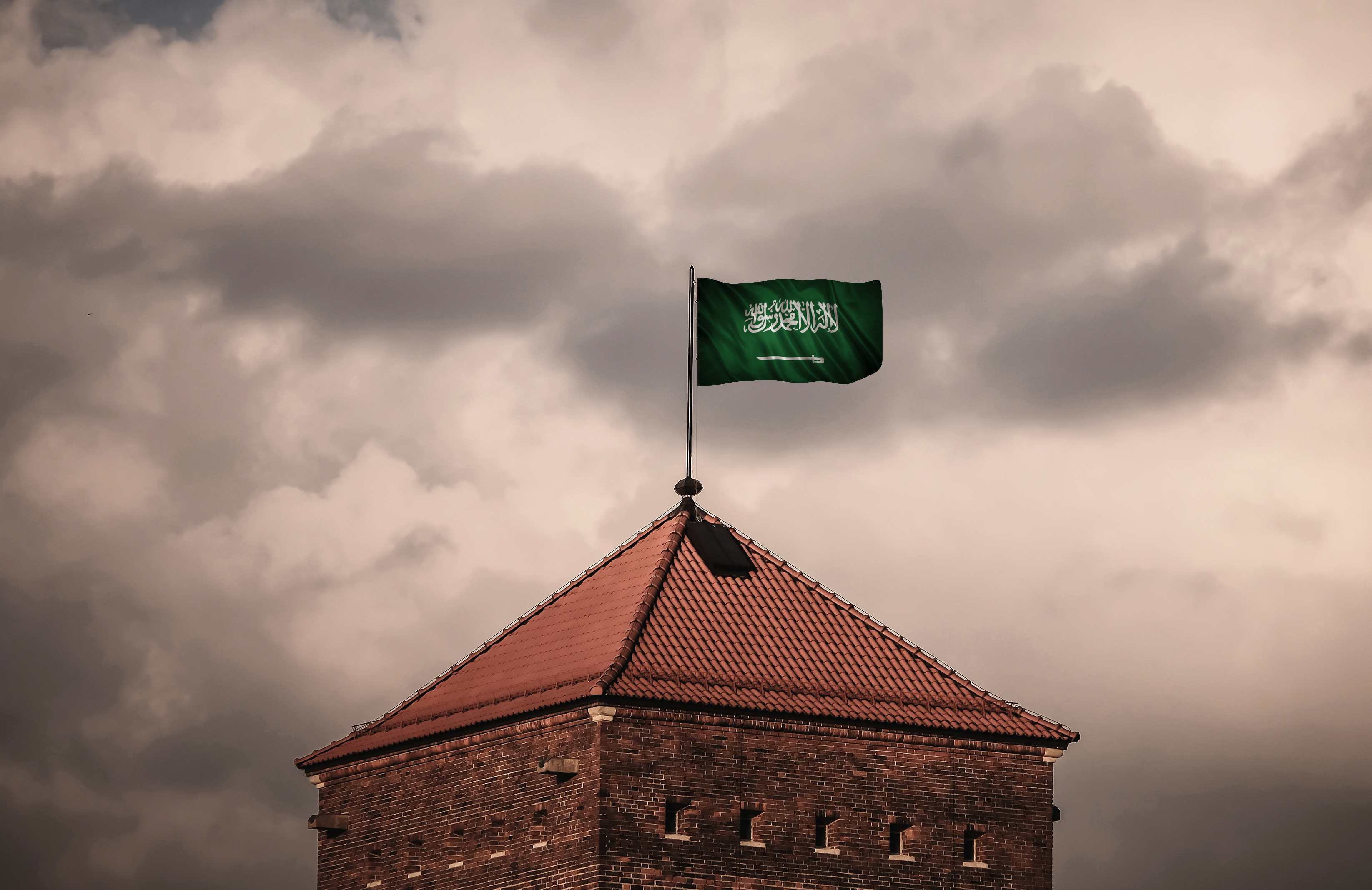
“At the same time, Saudi Arabia faces missile attacks and UAV strikes and other threats from Iranian supplied forces in multiple countries,” Biden said. “We are going to continue to help Saudi Arabia defend its sovereignty and its territorial integrity and its people.”
The president tapped Tim Lenderking, deputy assistant secretary of State for Iran, Iraq, and regional multilateral affairs, to oversee the U.S. diplomatic mission to end the war in Yemen.
But just over two weeks later, his administration is now sanctioning more Houthi leaders, as the movement’s forces continue their offensive against a key northern city and their rocket and drone attacks against Saudi Arabia. And despite Yemen experiencing the world’s worst humanitarian crisis, the United Nations donors conference Monday fell short of half of its requested funding to address the Yemeni people’s plight.
It’s a sign that despite U.S. intentions, there are limits to what U.S. diplomacy can do, but to critics, it’s also proof that Biden shouldn’t have revoked his predecessor Donald Trump’s 11th hour designation of the Iran-backed rebels.
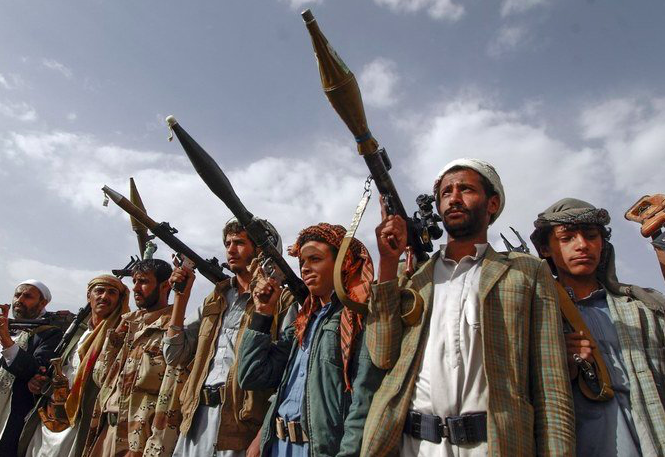
In six years of war, Saudi Arabia and the United Arab Emirates have led a U.S.-backed coalition in support of the Yemeni government against the Houthis, a Shiite movement known formally as Ansar Allah and armed by Iran. Both sides have faced allegations of war crimes, with Yemen’s population of around 29 million people suffering in the crosshairs and from starvation, sky-high inflation and a collapsed economy, and outbreaks of cholera and now coronavirus.
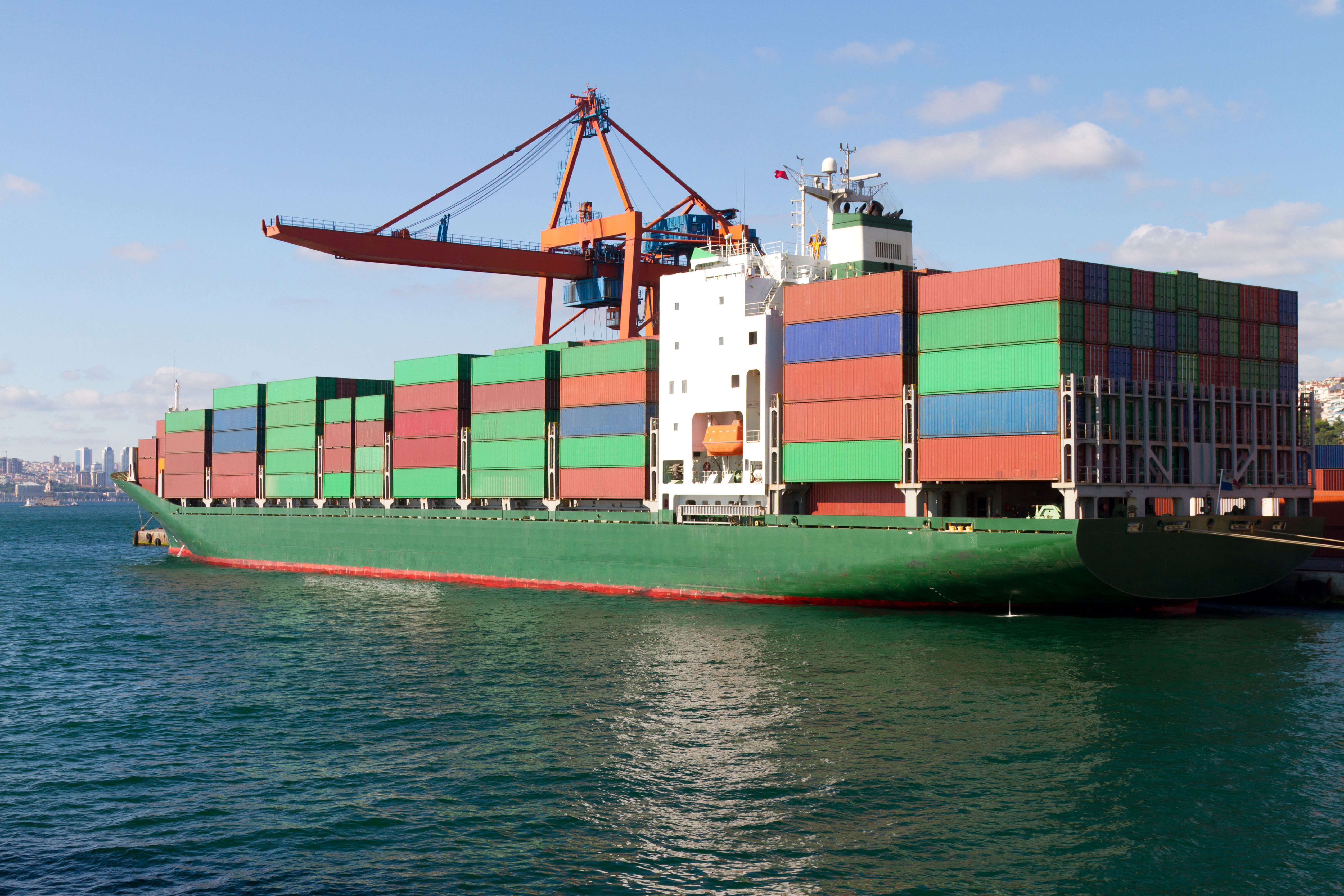
The new U.S. sanctions Tuesday target the Houthis’ naval chief of staff Mansur al Saadi and their air force commander Ahmad Ali Ahsan al Hamzi. Al Saadi is responsible for lethal attacks on international shipping, including civilian vessels, the U.S. Treasury said Tuesday, while al Hamzi oversees the Houthi’s drone program that has targeted neighboring Saudi Arabia.
Both men are said to have received training in Iran and helped smuggle Iranian weapons into Yemen. Secretary of State Antony Blinken condemned Tehran’s government for fanning “the flames of the conflict, threatening greater escalation, miscalculation, and regional instability,” and providing the Houthis “weapons, intelligence, training, and support to conduct attacks” against civilian targets in Yemen and neighboring Saudi Arabia.
Some believe that what Biden does not understand about the Houthis is their organizational abilities, which are characteristic of their terror practices, and their ability to trigger an instant crisis if they see a retreat from America on how to confront them.
It could be a ruinous situation for world peace and regional stability when a new US administration mortgages its future in the Middle East on placating a terror group. It is the least productive foreign policy perspective when US presidential advisers are advocates for rogue states and regimes that are political outcasts.
The UAE maintains its interests
The UAE has reportedly quietly remained in Yemen, and is continuing its operations, clearly without any reaction from Joe Biden. This refusal to follow up on its promises could prolong and worsen the Yemen crisis.
The UAE announced in October that it had ended its military involvement in Yemen, but four months later, those documenting the war have insisted otherwise. From strategic islands to air and sea ports, military bases and militias, the UAE is accused of being heavily active in the civil-turned-proxy war.
Justin Russel, head of the New York Center for Foreign Policy Affairs (NYCFPA) think tank, which is bringing a lawsuit against the US State Department over a now-paused arms deal to the UAE, told Middle East Eye that his organisation has documented continued Emirati involvement in Yemen.
“The UAE, either in the spotlight or under the radar, continues to be an aggressor in the region,” Russel said.
“The UAE’s withdrawal announcement drew international attention away and basically took the rest of the world off the scent of what they are actually doing in the region… But in our research, there is still funding and other battlefield support from the UAE in Yemen on a regular basis,” he continued.
Described by the UN as “the world’s worst humanitarian crisis”, the conflict has displaced millions and nearly 250,000 people have been killed, mostly at the hands of the Saudi-led coalition, which includes the UAE as its main partner.
While the UAE and Saudi Arabia began their involvement in the country on the side of Yemen’s internationally recognised government, in 2017 the Emirates took a slightly separate path, focusing on supporting the Southern Transitional Council (STC).
Still working against the rebel Houthi group – the Yemeni government’s and Saudi Arabia’s main rival in the country – the STC also aims to restore the independence of South Yemen, which united with the north in 1994.
The UAE’s interests in Yemen are varied, but a key goal of the small Gulf nation – which shares no border with Yemen – is maintaining influence over the Bab-el-Mandeb Strait.
The waterway is essential for the passage of about nine percent of the world’s seaborne-traded crude oil and refined petroleum.
“It’s pretty clear to me as a Yemeni what the UAE’s endgame is, and that is to make sure that they have a government in Yemen that is going to make it easy for their oil to travel through Bab-el-Mandeb,” Shireen al-Adeimi, a Yemen-born activist and professor at Michigan State University told MEE.
“It’s a really important strategic location. It’s why Yemen has always had interventions by Saudi Arabia and the US in the past,” she said. “That’s really what it comes down to.”
During its independence, South Yemen controlled the entirety of modern-day Yemen’s southern coast and the mouth of the strait, which connects the Gulf of Aden and the Arabian Sea to the Mediterranean via Egypt’s Suez Canal.
The strait is 18 miles wide at its narrowest point, which limits tanker traffic to a four-mile-wide channel for inbound and outbound shipments, resulting in an easy-to-control passage.
Throughout the war, the UAE has worked to take up strategic outposts around the waterway.
Most recently, the United Arab Emirates (UAE) deployed military officials to the strategic Yemeni Island of Socotra, a Yemeni adviser said on Tuesday.
“The UAE dispatched military commanders to Socotra,” Mukhtar Al-Rahbi, an adviser to the Yemeni information minister, said on Twitter.
He said the move coincided with the docking of an Emirati ship at the archipelago carrying ammunition to militias situated there.
According to the official, the development follows a military escalation on the island, but without giving further details.
There has been no immediate comment from Abu Dhabi regarding Al-Rahbi’s statement.
Houthis accelerate violence
Meanwhile, after Joe Biden’s decision to reverse the US’s designation of the Houthis as a terrorist group, the Houthi rebels have ramped up violence in the region.
UN’s Yemen envoy visited Iran on Sunday to discuss the war in Yemen after Tehran-backed Houthis intensified missile, drone and ground attacks on government-controlled areas, UN and Yemeni officials have said.
Martin Griffiths landed in Tehran to meet Iran Foreign Minister Javad Zarif and other Iranian officials to discuss his peace initiative, known as the Joint Declaration.
Houthis launched a barrage of missiles, explosive-laden drones and shells at residential areas in Marib and Taiz, and escalated ground attacks on government ground troops in Marib, residents and Yemeni officials said on Sunday.
Three civilians were killed and several more wounded on Sunday when a ballistic missile fired by Houthis ripped through a residential area in the central city of Marib, Yemen’s defense minister said.
Also on Sunday, Yemeni army air defenses shot down an explosive-laden UAV over the city of Marib, causing no human or property damage. The missile and drone attacks triggered explosions, rocking the densely populated city that hosts more than a million internally displaced people, residents told Arab News.
In Marib province, fighting between the Yemeni government and Houthis intensified on the main battlefields in Al-Makhdar and Serwah, leaving dozens of fighters dead and wounded on both sides, military and health sources said on Sunday.
Houthis resumed their assaults on government troops in the two areas in an attempt to break the army’s lines of defense and push towards oil and gas fields in the province.
If the US aims to end the Yemen war any time soon, it must take a stronger stance, and negotiate directly with Iran to reach a peace agreement, in cooperation with the UN mission. It must also take a decisive stance with the UAE, and address its maintained presence in Yemen, despite opposing claims.