The North American Pivot
Mexico is no longer just the world’s car plant. It has become the strategic floor for the high-end compute industry. As the United States formalises its technological decoupling from China, the central plateau of Mexico—specifically the Durango-Coahuila corridor—has emerged as the primary site for AI hardware manufacturing. This is not a matter of cheap labour. It is a matter of geography, energy security, and the hard realities of the US-Mexico-Canada Agreement (USMCA).
The shift is driven by a simple incentive: the need for a 'friendly' jurisdiction that is physically connected to the Texan energy grid and the Californian design hubs, yet insulated from the escalatory tariffs and export controls characterising the Pacific trade route. The Durango Hedge represents a structural realignment of the global supply chain, where resilience has finally superseded efficiency as the primary metric of success.
The Logic of Proximate Power
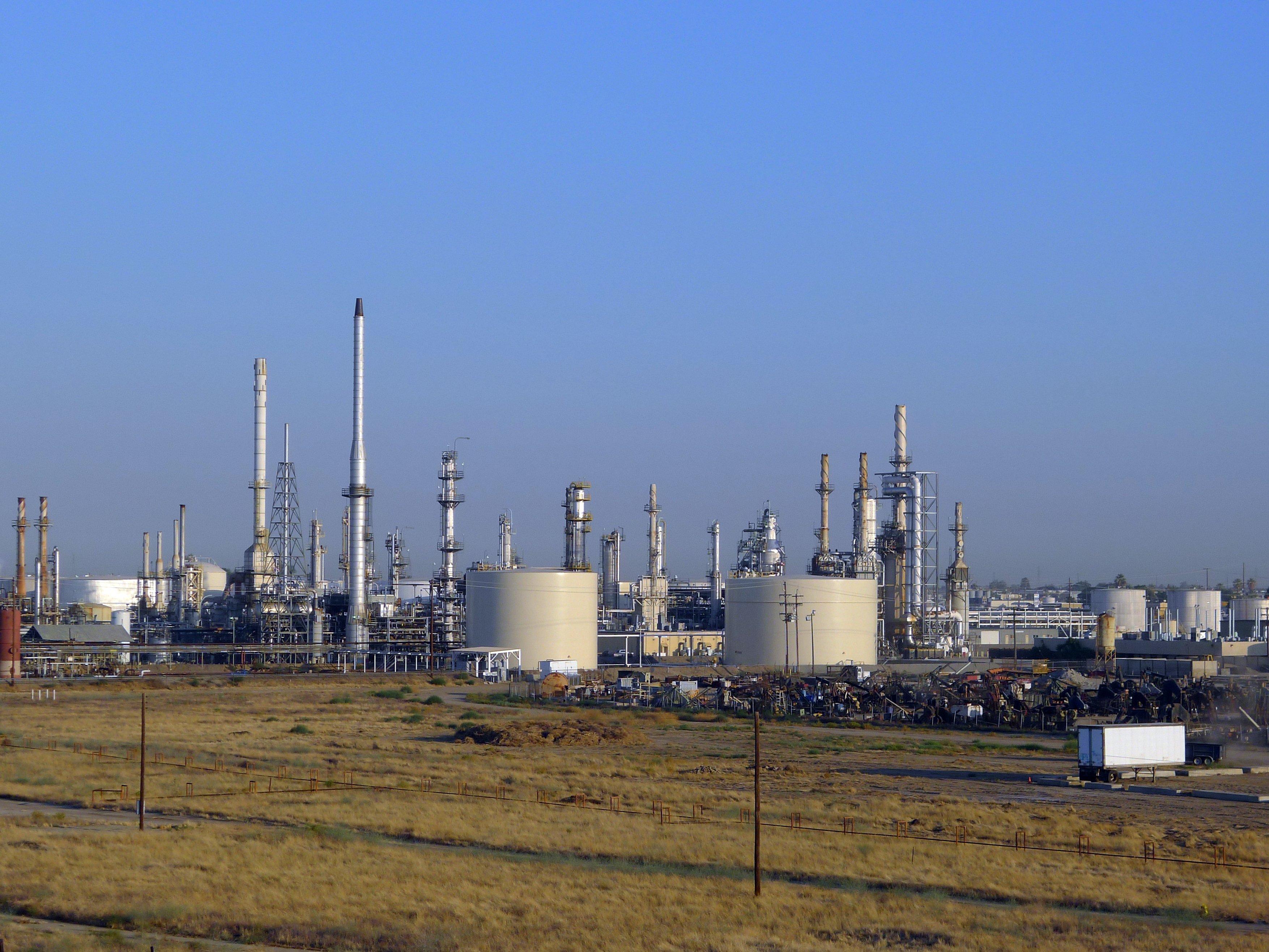
To understand why Mexico is winning the AI infrastructure race, one must look at the grid. Artificial intelligence is an energy-intensive endeavour. The manufacturing of high-end servers, liquid cooling systems, and advanced power management units requires stable, high-volume electricity. While the United States faces domestic regulatory hurdles and NIMBYism regarding industrial expansion, Northern Mexico offers vast tracts of land with direct proximity to Permian Basin natural gas pipelines.
Capital is flowing into Mexican 'Silicon Cities' because they offer the shortest physical distance between the fabrication plants of Arizona and the data centres of Virginia. By moving the assembly of AI clusters to Mexico, American firms bypass the 'China-plus-one' strategy for a 'North American Only' mandate. The incentive for the Mexican state is equally clear: the transition from $5-an-hour textile work to $40-an-hour precision engineering. This is the industrialisation of the second-order effect; Mexico is capturing the value that China lost when the geopolitical trap snapped shut.
The Historical Parallel: The Ruhr Valley
History provides a template for this transition in the 19th-century industrialisation of the Ruhr Valley. Much like the Ruhr served as the coal-rich engine that turned Prussia into a global power, the Northern Mexican corridor is becoming the logistical engine for the American digital hegemony. In both cases, the proximity of raw energy (then coal, now natural gas) to transportation networks (then rail, now fibre and logistics hubs) created an industrial gravity that was impossible to resist. The Ruhr allowed Germany to bypass British maritime dominance; Durango allows the US to bypass Chinese supply chain leverage.
"Geopolitics is the art of turning geography into an advantage. Mexico is the only nation that can simultaneously satisfy the American hunger for security and the corporate hunger for margin."
What Most People Miss: The Talent Arbitrage
The standard analysis focuses on trade volumes, but the real story is the migration of human capital. Over the last three years, we have seen a quiet but significant influx of Taiwanese and South Korean engineering talent into Monterrey and Durango. These are not expatriates in the traditional sense; they are the architects of the decoupling. They are training a new generation of Mexican engineers in the specific, tacit knowledge required for advanced semiconductor packaging.
Furthermore, the market misses the role of water. Advanced manufacturing is thirsty. As the American Southwest faces chronic water scarcity, the industrial centres of Mexico—often drawing from different artisanal basins and benefiting from more flexible (if controversial) water rights regimes—are positioned to absorb the capacity that Phoenix or Las Vegas cannot. The Durango Hedge is as much a climate hedge as it is a political one.
Strategic Consequences
The rise of Mexico as a high-tech fortress has three primary consequences. First, it creates a permanent 'hard' border for Chinese technology. Any component entering the Mexican AI clusters must meet USMCA rules of origin, effectively cleansing the supply chain of Chinese intellectual property at the point of assembly. Second, it shifts the balance of power within Mexico itself. The industrial north is becoming economically decoupled from the political south, creating internal tensions that will define Mexican politics for a generation.
Third, it cements the 'Fortress North America' concept. By integrating the AI supply chain across the Rio Grande, the US makes it impossible for any future administration to truly isolate from Mexico without destroying the American tech sector. This is mutual assured dependence. The chips are the new glue of the bilateral relationship.
What to Watch
- Energy Infrastructure: Watch for the expansion of cross-border gas pipelines and private micro-grids in Coahuila. If the energy flows, the chips follow.
- Taiwanese Investment: Monitor the capital expenditure of major 'OSAT' (Outsourced Semiconductor Assembly and Test) firms in Mexico. Their presence is the ultimate signal of long-term intent.
- The 2026 USMCA Review: The language regarding 'digital trade' and 'critical hardware' will reveal exactly how much leverage Washington is willing to trade for supply chain security.
- Labour Unionisation: As Mexican wages rise, look for the entry of sophisticated labour movements that could disrupt the 'just-in-time' flow of AI hardware.
The KJ Verdict
The Durango Hedge is not a temporary workaround; it is the new structural reality of the Western Pacific. China has lost the hardware assembly battle for the AI era because it cannot compete with the physical and political proximity of Mexico to the American market. While observers focus on the 'decline' of American manufacturing, they fail to see the emergence of a continental industrial bloc. The US is not de-industrialising; it is regionalising. Mexico is the beneficiary, the buffer, and the new frontline of the technical Cold War. The incentive to maintain this corridor is now too high for either Washington or Mexico City to abandon, regardless of who sits in the executive mansions.