KJ ReportsKJ Reports

The Great Game of the 19th Century

2 September 20172,308

Listen to this article

KJ narrates this report in his own voice

The Great Game of the 19th Century

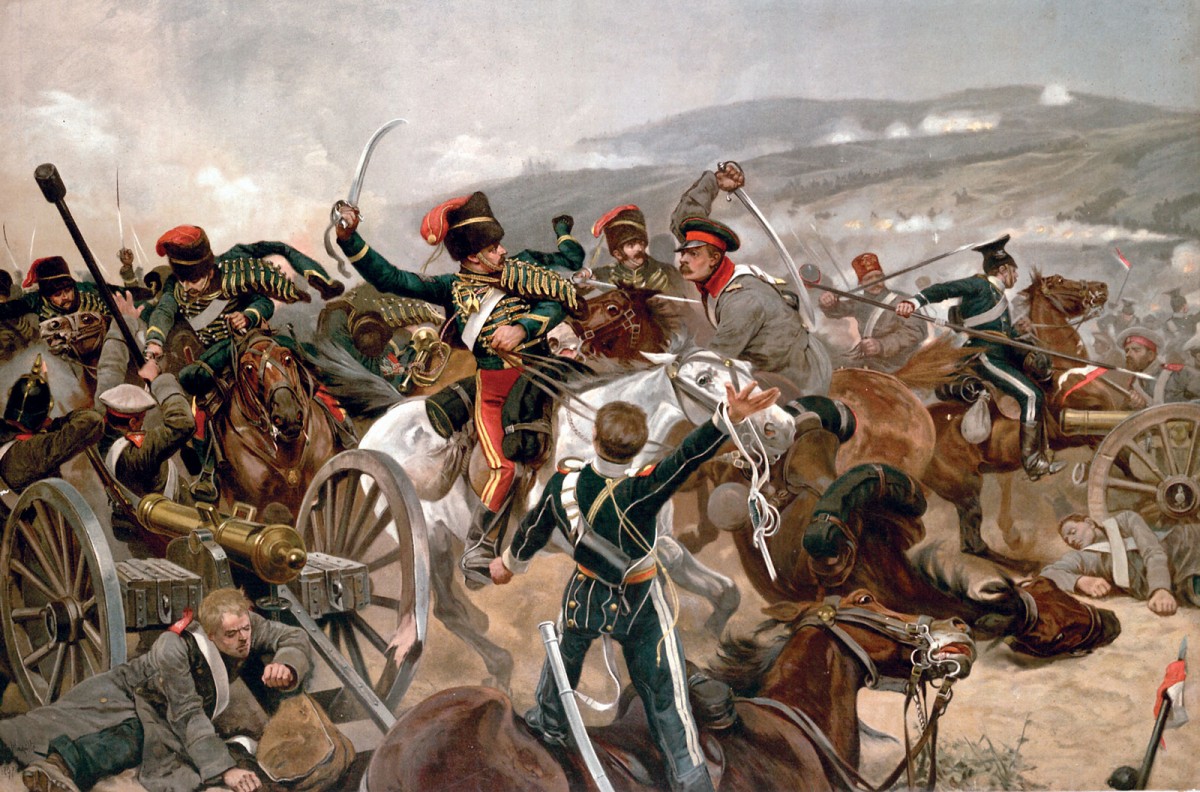
The Great Game  was an intense rivalry between the British and Russian Empires in Central Asia, beginning in the nineteenth century

British Lord Ellenborough started “The Great Game” on January 12, 1830, with an edict establishing a new trade route from India to Bukhara, using Turkey, Persia and Afghanistan

The aim was to create a buffer against Russia to prevent it from controlling any ports on the Persian Gulf.

Meanwhile, Russia wanted to establish a neutral zone in Afghanistan allowing for their use of crucial trade routes.

This resulted in a series of unsuccessful wars for the British to control Afghanistan, Bukhara and Turkey.

The British lost at all four wars — the First Anglo-Saxon War (1838), the First Anglo-Sikh War (1843), the Second Anglo-Sikh War (1848) and the Second Anglo-Afghan War (1878) — resulting in Russia taking control of several Khanates including Bukhara.

Although Britain’s attempts to conquer Afghanistan ended in humiliation, the independent nation held as a buffer between Russia and India

The Great Game officially ended with the Anglo-Russian Convention of 1907, which divided Persia into a Russian-controlled northern zone, a nominally independent central zone, and a British-controlled southern zone.

The Convention also specified a borderline between the two empires running from the eastern point of Persia to Afghanistan and declared Afghanistan an official protectorate of Britain.

Relations between the two European powers continued to be strained until they allied against the Central Powers in World War I

The term “Great Game” was popularized by Rudyard Kipling in his book “Kim” from 1904, wherein he plays up the idea of power struggles between great nations as a game of sorts.

Today, the Great Game is often quoted to describe the Geopolitical competition between America, China and Russia over Central Asia.

Afghanistan plays a vital geopolitical role in this Great Game as it borders Central Asia

The Struggle for Afghanistan lies in an even Greater Game for control over the Eurasian Landmass

This theory was first talked about by Sir Halford Mackinder but reinforced by Nicholas Spykman where he famously outlined his core geopolitical argument in 1944

“Who controls the Rimland rules Eurasia, who rules Eurasia controls the destiny of the world”
#19th-century-great-game#anglo-afghan-war#britain#britain-geopolitics#british-empire#british-empire-19th-century#british-empire-documentary#british-history#bukhara#central-asia-great-game#geopolitics#history-of-the-great-game#ottoman-caliphate#ottoman-empire#persia#persian-empire#russia#russia-britsh-history#russia-geopolitics#russia-history#russia-uk-19th-century#the-great-game#the-great-game-19th-century#the-great-game-britain-and-russia-in-central-asia#the-great-game-of-britain#the-great-game-russia-britain#the-new-great-game

Related Intelligence

More articles
The Bismarckian Pivot: India’s German Deep-Tech Realignment
South Asia

The Bismarckian Pivot: India’s German Deep-Tech Realignment

As New Delhi systematically decouples from its legacy Russian military dependency, a new strategic architecture is emerging. Berlin is no longer just a trading partner; it is becoming India’s primary engine for industrial sovereignty.

17 Jun 2026

The Islamabad Pivot: Trading Strategic Depth for Economic Survival
South Asia

The Islamabad Pivot: Trading Strategic Depth for Economic Survival

Pakistan is discarding decades of military doctrine to position itself as the vital gateway for Central Asian trade. As domestic pressures mount, Islamabad is prioritising economic rent and connectivity over traditional territorial security.

15 Jun 2026

The Ghost of Radcliffe: Why 1947 Still Governs 21st-Century Asia
History

The Ghost of Radcliffe: Why 1947 Still Governs 21st-Century Asia

Geographic partitions are not historical events; they are active geopolitical engines. In South Asia, a hasty retirement from Empire created a structural instability that ensures permanent mobilisation and restricts the rise of two nuclear powers.

15 Mar 2026

Pax Mongolica: The Hard-Power Blueprint for Global Integration
History

Pax Mongolica: The Hard-Power Blueprint for Global Integration

Modern globalisation is often framed as a Western invention. In reality, the 13th-century Mongol Empire established the first template for a borderless economy, proving that global trade requires a single, ruthless security guarantor to function.

15 Jan 2026

The Dollar Pact: Why Bretton Woods Never Actually Ended
History

The Dollar Pact: Why Bretton Woods Never Actually Ended

The 1944 Bretton Woods agreement is often treated as a historical relic. In reality, its core architecture remains the primary engine of American hegemony, weaponising global trade through a system of structural dependency that has no peer.

15 Oct 2025

The Liquid Front: Why South Asian Security Rests on Melting Ice
South Asia

The Liquid Front: Why South Asian Security Rests on Melting Ice

As domestic pressures and climate shifts accelerate, the Indus and Brahmaputra river basins are no longer mere sources of life, but strategic assets being weaponised in a zero-sum game between nuclear powers.

1 Oct 2025