The Great Decoupling of Risk
For fifty years, the geopolitical playbook was simple: instability in the Middle East meant an immediate spike in crude prices, followed by a global inflationary wave. Today, that relationship has inverted. As kinetic conflict intensifies across the Levant and the Persian Gulf, global capital markets are not fleeing to commodities as an inflation hedge. Instead, they are retreating into the safety of long-term sovereign debt and technology equities. The markets have reached a startling conclusion: a major Middle Eastern war is no longer a supply shock; it is a massive, global deflationary event.
The reasoning is grounded in a cold assessment of human incentives and structural shifts in the energy transition. Investors no longer fear the loss of marginal barrels from the Gulf as much as they fear the total paralysis of the global manufacturing heartlands in East Asia and Europe. When trade corridors close, the result is not just higher prices—it is a catastrophic collapse in demand. In a world of overcapacity and softening consumption, war serves as the ultimate wet blanket on economic activity.
The End of the Oil Veto
The primary driver of this shift is the erosion of the OPEC+ veto over the global economy. In the 1970s, a supply disruption was an existential threat to the West because there were no alternatives. Today, the United States is the world’s largest hydrocarbon producer, and the electrification of the global vehicle fleet has created a structural ceiling for oil demand. Global capital sees a regional war not as a permanent loss of supply, but as an accelerant for the transition away from the region’s primary export.
When conflict breaks out, the immediate reaction is no longer a speculative bid on oil futures. Instead, it is a realization that the largest consumers—China and the European Union—will face a sharp industrial slowdown. This slowdown reduces the global velocity of money. As trade slows, the demand for the US Dollar rises, strengthening the greenback and further suppressing the price of globally traded commodities. This is the 'Gilded Hedge': investors buy the currency of the hegemon and the debt of stable governments, betting that war will crush global consumption faster than it can restrict supply.
The China Factor: Importers as Price Setters
In this new landscape, China’s role is pivotal. As the world’s largest oil importer, China’s economic health is the primary variable in global inflation. If a Middle Eastern conflict disrupts the flow of energy to the Port of Ningbo-Zhoushan, the result is not an inflationary spiral in Beijing, but an industrial hibernation. Chinese factories, already struggling with domestic overcapacity, would further reduce output. This exports deflation to the rest of the world as the price of Chinese manufactured goods falls in a desperate bid to capture dwindling global market share.
Historical Parallel: The 1914 Paradox
We find a historical parallel in the lead-up to the First World War. In early 1914, many economists argued that the interconnectedness of global finance made a general European war impossible because it would bankrupt every participant. When war did arrive, it did not immediately cause the hyperinflation of popular imagination. Instead, it caused a massive 'liquidity preference'—a global scramble for gold and cash. Trade plummeted, and the initial shock was deeply contractionary for global markets. It was only much later, through massive state spending and the destruction of productive capacity, that inflation took hold. Today’s markets are pricing in that initial 1914-style contraction: the sudden stop of the global machine.
What Most People Miss: The Spare Capacity Illusion
The common misconception is that the world is running on a tight margin. In reality, the surge in non-OPEC production—specifically from the US Permian Basin, Brazil, and Guyana—has created a buffer that did not exist during the Iraq War or the Arab Spring. Furthermore, the world is currently awash in 'invisible' inventory. Strategic reserves are high, and the high-interest-rate environment of the past few years has forced companies to become leaner and more efficient with energy usage.
More importantly, the market understands that the actors in the Middle East—specifically Iran and the GCC states—cannot afford a prolonged shutdown. Their regimes depend entirely on energy rents to maintain domestic social contracts. History shows that even under heavy bombardment or strict sanctions, oil finds a way to the sea. The 'threat' of a total blockade of the Strait of Hormuz is often more valuable to these actors than the act itself, which would be an act of economic suicide. Capital markets have called this bluff.
Strategic Consequences and Second-Order Effects
The move toward a deflationary view of conflict has profound structural consequences:
- Monetary Policy Pivot: Central banks, previously hawkish on inflation, now view regional instability as a reason to cut interest rates to forestall a recession, rather than raising them to combat energy costs.
- Acceleration of Localisation: The fear of supply chain fragility during war is driving 'friend-shoring' and domestic manufacturing, which, while initially expensive, leads to long-term deflation through increased automation and reduced transport costs.
- The US Dollar as a Weapon: The more the Middle East destabilises, the more the world flees to the Dollar, giving Washington immense leverage over global credit conditions.
The real risk is no longer the price of the pump, but the solvency of the consumer. If a conflict lasts long enough to break the back of global shipping, the resulting economic depression would be a far more potent deflationary force than any central bank policy.
What to Watch
- The Spread between Brent and WTI: If the gap remains narrow despite Middle Eastern tension, it confirms that the market views the risk as localized and manageable.
- USD/CNY Exchange Rate: A sharp devaluation of the Yuan during a Middle Eastern crisis indicates China is preparing to export deflation to save its industrial base.
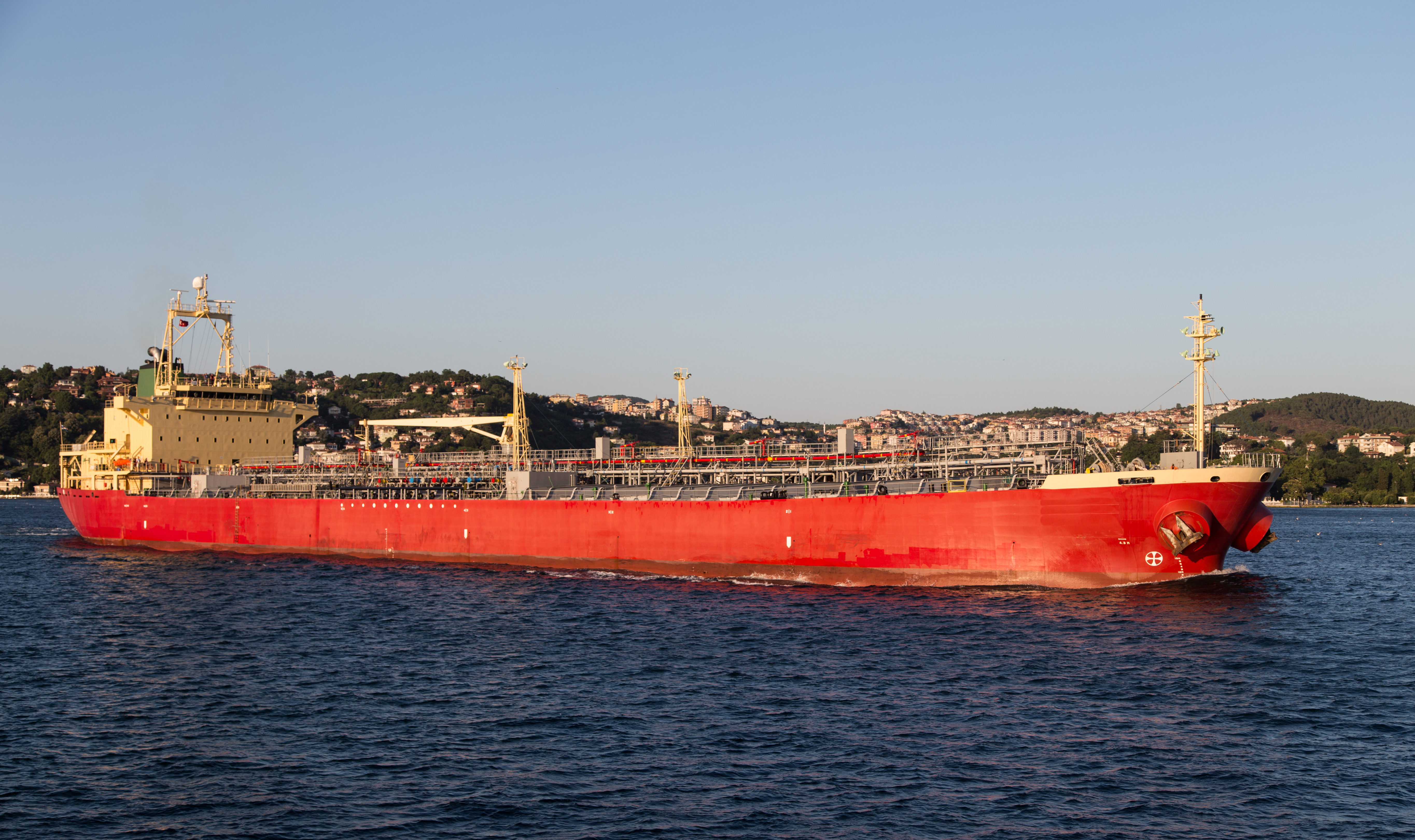
- Insurance Premiums for LNG Tankers: These are the 'canaries in the coal mine' for real-world physical disruption versus speculative paper trading.
The KJ Verdict
The era of 'Oil Shock Inflation' is over, replaced by the era of 'Geopolitical Demand Destruction.' Global capital has decoupled from the physical geography of the Middle East, viewing it no longer as the heart of the global economy, but as its volatile periphery. As long as the US remains the dominant energy producer and China remains the dominant consumer, war in the Middle East will be a signal to sell commodities and buy the safety of the deflationary trend. The world is not afraid of expensive oil; it is afraid of a world that stops buying. In the modern economy, silence in the factories is more certain than fire in the wells.