1. EU wants to address trade imbalance with the US
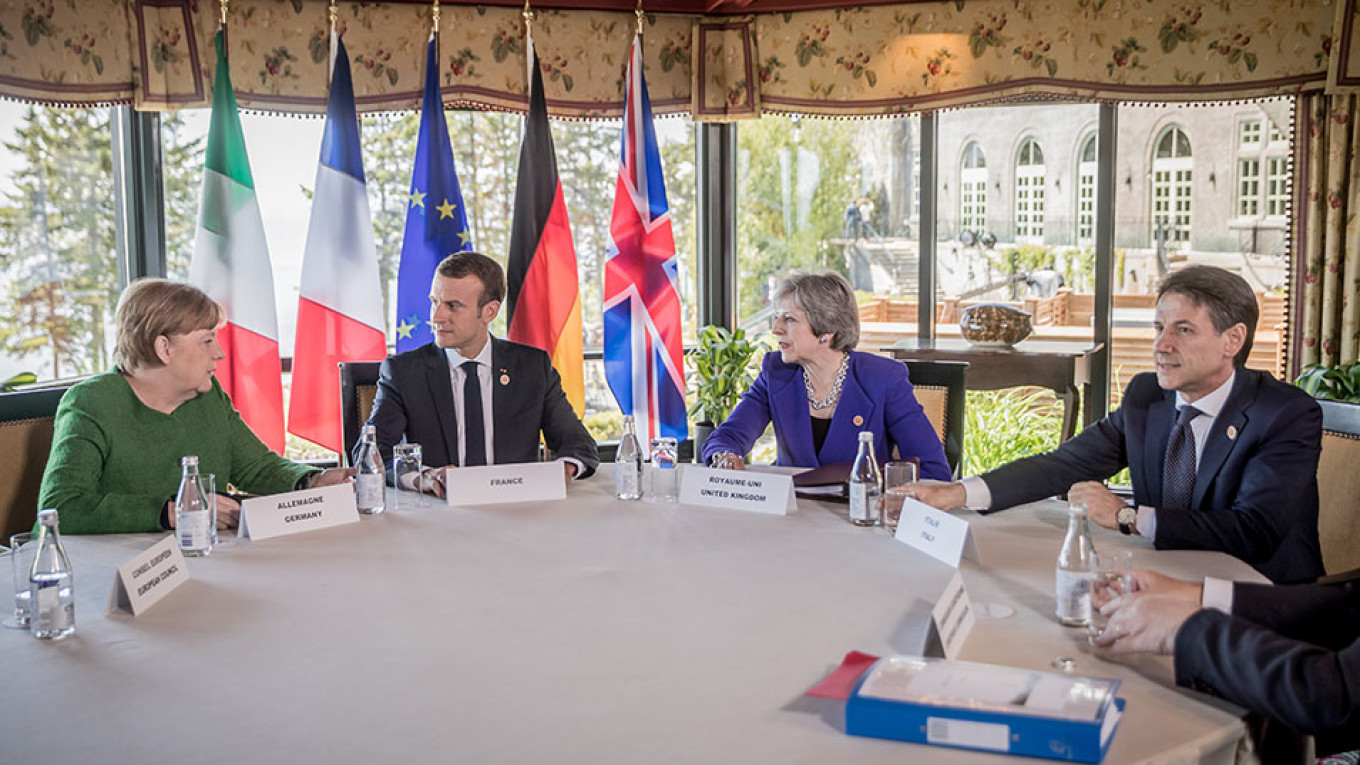
The EU wants to address its increasingly imbalanced trade relationship with the US at the upcoming G7 summit. French President Emmanuel Macron looks to lead Europe’s defensive strategy against a trade-heavy White House agenda that has pushed the continent into a variety of uncomfortable disagreements. Trump may not like this approach, and his reaction is unlikely to be positive, but the EU remains hopeful.
2. Tusk attacks Trump
In a move that further stirs tensions between the parties before the G7 summit, as Donald Tusk, President of the European Council, announced that “under no condition” will the EU agree to Trump’s suggestion to invite Russia back into the G7. In fact, Ukraine may be invited as a guest to next year’s summit. “One year ago, in Canada, President Trump suggested reinviting Russia to G7, stating openly that Crimea’s annexation by Russia was partially justified and that we should accept this fact,” Tusk said. “Under no condition can we agree with this logic.” Officials from Germany, France, and the United Kingdom made similar comments earlier in the week. Tusk went on to explain: “When Russia was invited to G7 for the first time, it was believed that it would pursue the path of liberal democracy, rule of law, and human rights. Is there anyone among us, who can say with full conviction, not out of business calculation, that Russia is on that path?” This is certainly a negative preview to talks at the summit as tensions seem high.
3. The deep trade relationship between the EU and US
Despite the imbalances being protested, trade relations between the US and the Eu run deep. In 2018, the total trade in goods and services between the US and EU was almost $1.3 trillion. But the US runs a trade deficit with the EU, meaning that the value of US exports to Europe ($575bn) was less than the value of the European imports to the US ($684bn). As far as the US is concerned, the negative trade imbalance arises from lopsided trade in goods, since the US actually runs a services trade surplus with the EU. This should be a positive basis to negotiate on, despite the recent tensions.
4. EU drafts plan to take on Trump
The future is filled with obstacles to improving relations, however, despite the summit, as European Union officials have drawn up an aggressive 173-page plan to counter both President Donald Trump’s trade moves and American tech giants including Google, Apple, Amazon, Microsoft and Facebook. They’re also advocating for Europe to show more grit in Trump’s trade war, saying the EU should slap tariffs unilaterally on the United States. This is an ambitious move by the EU, that will not help mend ties with the US, but help retain trade advantages.
5. Deadline for trade deal slips
Meanwhile, The European Union won’t clinch a trade deal with the U.S. by Nov. 1 as originally targeted, according to the bloc’s chief trade negotiator. European Trade Commissioner Cecilia Malmstrom reiterated that the EU is prepared to make a limited agreement with the U.S. that would remove tariffs on industrial goods. However, she told reporters in Stockholm Friday that “those discussions haven’t started yet as the U.S. wants to include agricultural products and that is not what the EU wants.” Despite the delay, it is a positive sign that negotiations are in sight, and there may be hope for an agreement.