The Death of the Buffer
For three centuries, the Russian state has been defined by a single geographic reality: strategic depth. From Napoleon to Hitler, the Russian strategy was to trade space for time, drawing adversaries into a vast, unforgiving interior where logistics collapsed under their own weight. Today, that pillar of Russian security has crumbled. The proliferation of long-range, low-cost autonomous systems has achieved what conventional armies could not. It has brought the front line to the interior. Geography is no longer a shield; it is a liability.
As of mid-2026, the systematic degradation of Russian energy infrastructure and command nodes deep within the heartland demonstrates a fundamental shift in the nature of power projection. The cost of a strike is now orders of magnitude lower than the cost of a defence. Moscow is discovering that you cannot build a physical or electronic wall around a continent-sized state. The 'Northern Exposure' is not merely a tactical failure of air defence; it is the obsolescence of the Russian defensive maps.
The Incentive of Asymmetry
The primary driver behind this vulnerability is economic. Standard kinetic air defence—the S-400 or the Pantsir system—relies on sophisticated, expensive interceptors. In a world of saturation attacks, the maths does not hold. When an adversary can launch fifty drones costing £20,000 each, and the interceptors cost £2 million per shot, the defender loses the war of attrition even if they hit every target. This is the 'Cost-Imbalance Trap'.
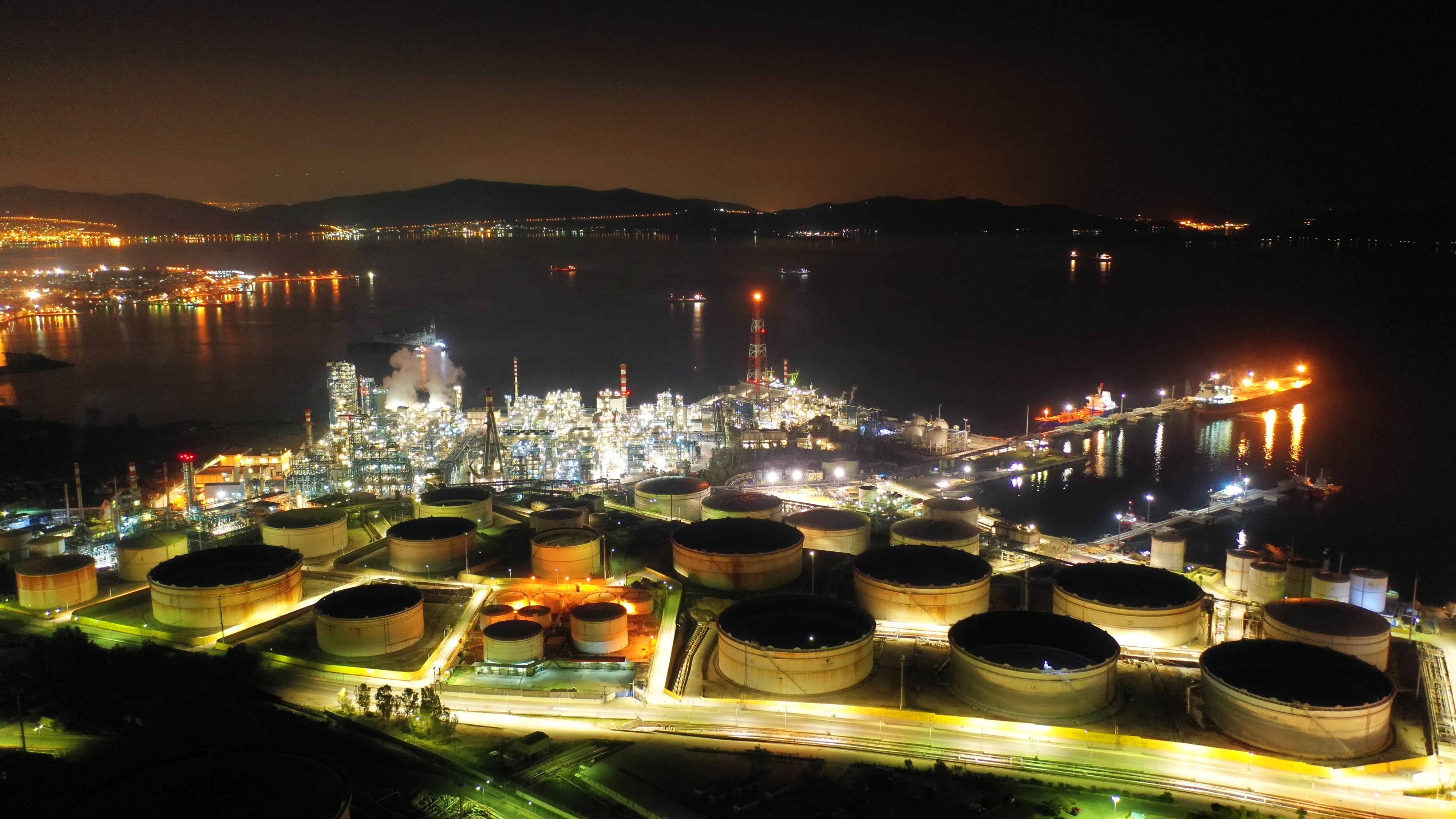
Russian elites have historically viewed their geography as an asset that provided a secure rear for industrial production. That rear no longer exists. Facilities in Yaroslavl, Tatarstan, and even the Arctic ports are now within reach of precision attrition. The incentive for Russia’s adversaries is clear: they do not need to defeat the Russian army in a pitched battle if they can systematically dismantle the economic engine that fuels it from a thousand kilometres away. This forces Moscow to divert massive resources from the front line to the interior, thinning out their operational capabilities.
The Historical Parallel: The Great Wall Fallacy
Defending Everything, Protecting Nothing
The current Russian predicament mirrors the decline of the Ming Dynasty’s defensive strategy. The Great Wall was a monumental investment in static defence, intended to provide security by defining a clear, impenetrable border. However, it failed because it could not be manned everywhere simultaneously, and the cost of maintaining it bankrupted the state. High-technology air defence is the modern 'Great Wall'.
Just as the horse-mounted nomads of the steppe used mobility to find the seams in the Ming defences, modern drone swarms exploit the gaps in Russia's radar coverage. Russia has the largest landmass on Earth. To provide total coverage is a physical and fiscal impossibility. By attempting to protect every refinery, depot, and airfield, Moscow ensures that none are truly safe. They are defending the map, while their opponents are attacking the gaps.
What Most People Miss: The Internal Power Shift
The most significant second-order effect of this vulnerability is not military, but political. In the Russian system, the state’s primary contract with the provincial governors and the industrial oligarchs is protection. Since the era of Peter the Great, the centre has promised security in exchange for absolute loyalty. When the centre can no longer prevent explosions in the middle of a provincial city, that contract begins to fray.
The erosion of strategic depth is also the erosion of central authority. If Moscow cannot protect the periphery's assets, the periphery begins to seek its own solutions—or questions its contributions to the centre.
We are seeing the emergence of 'Corporate Air Defences'. Major energy firms are now purchasing their own electronic warfare suites and hiring private security to manage them. This fragments the state's monopoly on violence. When a refinery in the Urals has a better defence system than the local military base, the hierarchy of power in Russia shifts from the state to the entities that can actually provide security.
Strategic Consequences
The death of depth forces Russia into a more aggressive posture. If geography no longer provides a buffer, the only way to ensure security is to prevent the adversary from possessing the technology in the first place. This leads to a cycle of 'Pre-emptive Security'. Moscow must now consider any drone manufacturing capacity within a 1,500km radius as an existential threat, necessitating constant, high-intensity escalation to preemptively destroy launch sites.
Furthermore, technology is rapidly moving toward full autonomy. Once drones are equipped with terminal-phase AI guidance, electronic warfare—Russia’s strongest suit—becomes less effective. You cannot jam a signal that does not exist. This moves the battle from the electromagnetic spectrum back to the physical kinetic realm, where Russia is most stretched.
What to watch
- The 'Refinery Exodus': Watch for the relocation of critical industrial components to underground facilities or far-eastern regions, though the latter only trades one vulnerability for another (proximity to China).
- Private EW Proliferation: Increased regulatory changes allowing Russian corporations to operate their own sophisticated jamming and kinetic interceptor units.
- Miniaturised Interceptors: Research into low-cost 'counter-drone' drones. This is the only way to fix the cost-imbalance trap.
- The Saturation Threshold: Increased frequency of attacks involving more than 100 units simultaneously, testing the reload speed of Russian mobile SAM batteries.
KJ Verdict
The narrative of the 'invincible Russian interior' is a relic of the 20th century. In the 21st, depth is no longer measured in kilometres, but in the density and cost-efficiency of sensor networks. Russia’s current architecture is built for a war that no longer exists—a war of heavy metal and clear fronts. By nullifying the advantage of distance, drone technology has effectively shrunk Russia. This creates a permanent state of domestic insecurity that will drain the Russian treasury and decentralise its power structures. Moscow is now a front-line city, and its vastness is its greatest weakness.