The Strategic Pivot Point
The formal conclusion of the American military presence in Iraq is not merely a logistical drawdown; it is the final removal of the structural barrier to Iranian regional hegemony. For two decades, the United States presence in Baghdad acted as a strategic speed bump, preventing the full integration of the 'Resistance Axis.' With that presence now relegated to a token diplomatic mission, the vacuum is being filled by a permanent, integrated security architecture controlled by Tehran.
To understand why this matters, one must look past the headlines of troop counts and into the mechanics of the Iraqi state. Power in Baghdad no longer flows from the parliament alone, but through the Popular Mobilisation Forces (PMF), which have now been legally and financially institutionalised into the state budget. The departure of the US military removes the last credible deterrent to the PMF’s total dominance of the Iraqi interior. Tehran has achieved what it sought since 2003: a compliant, contiguous land bridge to the Levant.
The Geography of Control
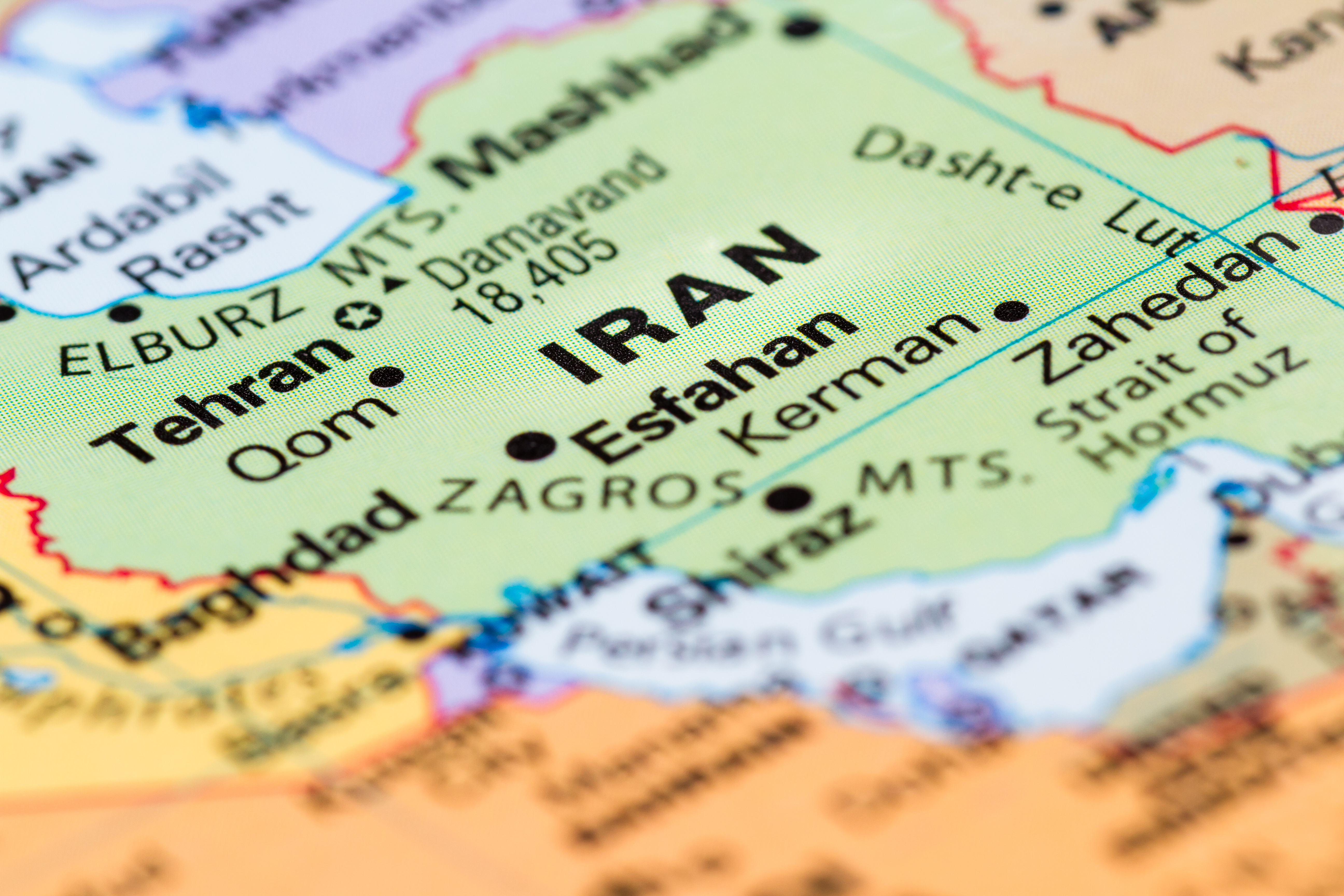
Geography remains the ultimate arbiter of power in the Middle East. The Iranian strategy has long focused on the 'Levantine Corridor'—a continuous stretch of territory through Iraq and Syria to the Lebanese coast. While the US held bases like Al-Asad and Al-Tanf, this corridor was vulnerable to interdiction and monitoring. The withdrawal effectively de-risks this logistics route.
We are seeing the creation of a trans-national economy. Iranian goods, energy, and military hardware can now move from the Caspian to the Mediterranean without passing through a single truly sovereign checkpoint. This is not just about missiles; it is about the integration of banking systems, electricity grids, and transport networks. Iraq is no longer a sovereign actor balancing between Washington and Tehran; it is the industrial and financial lung of the Iranian regional project.
The Incentives of the Iraqi Elite
Why did the Iraqi political class facilitate this? The answer lies in survival and patronage. The sectarian political system established after the 2003 invasion incentivised short-term extraction over long-term state-building. Local elites realised that the US was a transient power, fickle and distracted by domestic politics. Iran, by contrast, is a permanent neighbour with a long memory. The incentive for any Iraqi politician seeking longevity was to accommodate the militias that hold the street. By removing the US security umbrella, the West has left these politicians with only one source of protection: the very groups that answer to the IRGC.
The Historical Parallel: The British Exit of 1958
History provides a sobering precedent. In the mid-20th century, the British attempted to maintain Iraq as a client state through the Baghdad Pact, a defensive alliance designed to contain Soviet and Pan-Arab influence. When the Hashemite monarchy was overthrown in the 1958 revolution, the British-built security architecture collapsed overnight. The subsequent vacuum led to decades of instability and the eventual rise of the Ba'ath Party.
Today’s withdrawal echoes 1958 but with a crucial difference. Unlike the Soviets or the Nasserists, the modern Iranian influence is not just ideological; it is deeply embedded in the state’s bureaucracy and security services. The US is not leaving behind a neutral state; it is leaving a consolidated satellite. The 'Baghdad Vacuum' is not a state of emptiness, but a space where Western influence has been replaced by a more resilient, local, and ideological competitor.
What Most People Miss
Most analysts focus on the military implications—the risk of an ISIS resurgence or the increased threat to Israel. While valid, these are second-order effects. The most significant shift is the 'Financialisation of the Corridor.' Iraq is the world’s fifth-largest oil producer. For years, the US Federal Reserve maintained a level of oversight on the flow of dollars into the Iraqi economy to prevent money laundering for Tehran. As the security relationship dissolves, Washington’s leverage over the Central Bank of Iraq will inevitably wane.
Iraq is being transformed into the primary mechanism for Iran to bypass international sanctions. Through shadow banking, inflated infrastructure contracts, and cross-border energy swaps, the Iraqi state budget is effectively subsidising the Iranian economy. The US withdrawal signifies the loss of the primary monitoring post for this massive, illicit financial flow. Tehran is not just winning a war of maps; it is winning a war of balance sheets.
Strategic Consequences
The fallout of this withdrawal extends far beyond Baghdad’s borders. First, Turkey will feel compelled to expand its military footprint in Northern Iraq to prevent the PKK from benefiting from the security gap. This sets the stage for a long-term Turkish-Iranian rivalry on Iraqi soil. Second, the Gulf monarchies—specifically Saudi Arabia and the UAE—will likely accelerate their pivot toward 'realpolitik' engagement with Iran. If they cannot rely on a US presence in Iraq to act as a buffer, they must buy security through diplomatic concessions.
Furthermore, Israel now faces a landscape where its 'war between wars' strategy in Syria becomes infinitely more complex. Previously, US surveillance and presence provided a layer of intelligence and a psychological barrier. Now, the entire 1,000-mile stretch from the Zagros Mountains to the Golan Heights is a unified theatre of operations for the IRGC.
What to watch
- The Basra-Latakia Rail Project: Watch for the acceleration of trans-regional infrastructure projects that bypass the Suez Canal and link Iranian ports to the Syrian coast.
- Central Bank Autonomy: Any further weakening of US Treasury oversight on the Iraqi dollar auctions will signal the final economic integration of Baghdad into the Iranian sphere.
- The Future of Al-Tanf: With Iraq surrendered, the small US base at Al-Tanf in Syria becomes a strategic island. Its closure will mark the absolute completion of the land bridge.
- Kurdish Re-alignment: The Erbil government, sensing the shift, may be forced to make a definitive security pact with Tehran to avoid being overrun by PMF-aligned forces.
KJ Verdict: The American withdrawal from Iraq is the most significant geopolitical concession in the Middle East since the fall of the Shah. It formalises a reality that has been building for a decade: Iraq is now the central node of a new Persian-led regional order. By prioritising a domestic political exit over a regional power balance, the West has effectively ceded the Levantine Corridor. The result is a more cohesive, more resilient, and more dangerous Iranian sphere of influence that will define the next fifty years of Middle Eastern history.