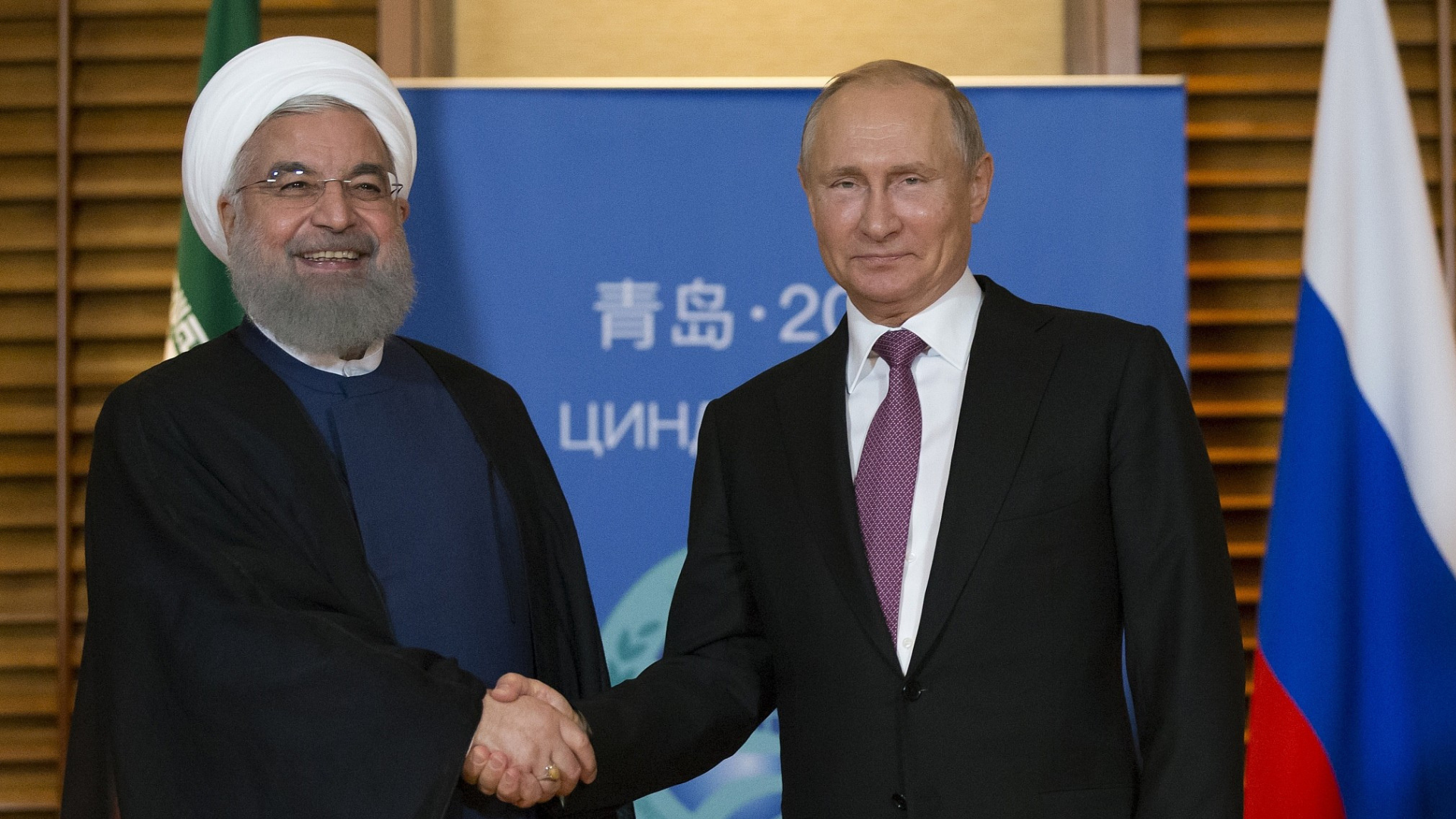
In case of a major military confrontation between the US and Iran, Russia would be one of the main geopolitical beneficiaries. Such a conflict would return Iran to complete isolation and would help Russia to regain lost markets in Central Asia.
The war would also affect the oil price, which would skyrocket, and since Russia is one of the world largest oil producers, there is no doubt that the bloodshed in the Middle East would have a positive impact on Russia’s sanctions hit economy.
Russia as an Unreliable Partner
Although the Western media tend to portray Russia as the Iranian ally and a strategic partner, the two counties have a long history of wars, disputes and mistrust. Also, they were quite often on opposite sides during major crisis they faced.
Russia already proved to be a completely unreliable partner, especially when it comes to Iran.
Although the Soviet Union was the first country to recognize the Islamic Republic in February 1979, during the Iran-Iraq war 1980-1988, the USSR supplied Saddam Hussein with with large amounts of conventional arms.
Throughout the 1990s and in the following decades, Russia has abandoned Iran at every juncture whenever its interests have required it.
Back in 2010, Russia refused to sell S-300 to Iran, bending to pressure from the United States and Israel. Later Russian officials admitted that such decision was a mistake, but it was too late since it damaged Moscow’s image as a reliable weapons supplier.
Recently, Moscow has refused to provide Iran with an S-400 missile system, even though this request allegedly came from the very top of the Iranian political leadership. Kremlin officials explained that “the sale would stoke more tension in the Middle East.” In other words, Russia tried to avoid any confrontation with major Western and regional powers over this very sensitive matter.
On the other hand, it’s interesting that Russians didn’t hesitate to provide this weapons system to the NATO member state Turkey.
Russia is, obviously, playing a double game with Iran. It is providing mostly a verbal support to Tehran who’s faced with threats from the Western powers,
but if the US and its allies decide to go to war with the Islamic Republic, there’s no guarantee that Russia would be on Iranian’s side.
Moscow would, instead, attempt to improve its geopolitical position, and present itself as a mediator and peacemaker. It’s unlikely that the Kremlin would be ready to confront the West over Iran, since any significant military support to Tehran would mean more anti-Russian sanctions.
That’s why Russia would rather take a neutral stance, hoping to reduce sanctions that were already imposed by the US and the European Union due to the Russian role in the conflict in the Donbass, as well as Russian annexation of Crimea.
However, there’s no assurance that sanctions would actually be lifted, as any concessions made by the US President Donald Trump might still be blocked by the US Congress.
In spite of that, Iran is likely to fall victim to the Kremlin’s desire to improve ties with the US. Whenever it was pressed hard by the United States, Russia often made concessions at the expense of their Iranian connection, which destroyed Russia’s credibility in the eyes of the Iranian leaders.
Who Else Did the Kremlin Betray?
Iran is not the only country that had to deal with Russian unreliability.
In September 2018, Russian Defense Minister Sergey Shoygu said in a televised statement that “Russia will transfer the modern S-300 air defense system to the Syrian armed forces within two weeks.”
Since then, Israel has conducted numerous air strikes in Syria, targeting the Syrian Arab Army as well as pro-Iranian and Iranian forces. Either the S-300 is not efficient against Israeli air power, or Russia simply didn’t keep its promise to supply Syria with the missile system.
Apart from Syria and Iran, there are other nations that felt betrayed and abandoned by the Kremlin.
For instance, in 2003, Russia left the Serbs at the mercy of the West when Russian peace-keeping troops were ordered by the Kremlin to leave both Bosnia-Herzegovina and Kosovo.
Armenia is another country with close ties with Russia and strong doubts over its alliance with Moscow.
In 2017, Russia delivered a new batch of anti-tank missiles to Azerbaijan as a part of a lucrative arms deal with Baku that has been strongly criticized by Armenia.
However, Russian Prime Minister Dmitry Medvedev rejected the ensuing criticism, saying that “providing weapons to both sides creates a military balance in the conflict.”
Russia is also trying to create a balance in Syria. On one hand, it backs the Syrian Arab Army against ISIS and various Jihadi factions, but on the other hand it doesn’t provide any support to the Syrian armed forces against frequent Israeli air strikes, which is why some analysts believe that Russia acts as ally of Israel.
For the past few years, Tel Aviv has used its military superiority to hit at the different elements of Iran’s military presence in Syria, including its proxies. Russia has the ability to protect Iranian forces with its own air force and air defense systems in Syria, but it has opted not to use them to stop Israel.
Perspectives of Russia-Iran Relations
Along these lines, the Kremlin has historically used Iran as a counterweight or source of leverage to balance its relations with Western powers, particularly Washington.
For instance, Russia did not hesitate to vote in favor of all six resolutions passed at the UN Security Council against Iran from 2006 to 2010.
Also, Russian President Vladimir Putin recently stated that Moscow “is not a fire brigade, and cannot save just everything,” implying that Russia cannot help Iran in its current tensions with the US.
The Kremlin seeks to exploit Iranian vulnerabilities and regional challenges for its own advantage. In the short term, Russia could benefit from the current U.S.-Iran tensions on areas that include expanding its foothold in Syria,
increasing its oil exports in conjunction with Saudi Arabia and other OPEC countries, all at the expense of Iran.
However, at this point Moscow doesn’t seem to be willing to further worsen its alleged partnership with Iran due to their common interests.
Iran is on its own
Quite aware of such Russian position, and taking into account its own geopolitical position, Iran managed to create a relatively self-sufficient system that offers the Islamic republic a strong ability to counter Western sanctions. Unlike Syria, Armenia, Serbia and other countries that relied on Russian help, Iran is not in a position to heavily depend on Russian military and economic support.
Over the years, the country developed its own military industry, and it certainly does not calculate on Russian gas and oil, since it has its own.
Iran also created a self-sufficient agricultural system, which means it doesn’t depend on food import. On the other hand, the Islamic Republic still needs to import some water conservancy facilities, agricultural machinery, fertilizers and beverages, but these problems should not have a significant impact on country’s food supply in the short term.
In the long term, Iran seems to be prepared for a continued period of sanctions, isolation and even for a potential major war, which is, at least at this point, very unlikely to happen.