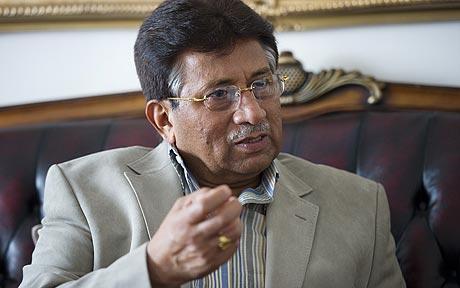
Pervez Musharraf is a former President of Pakistan that came to power via a coup d’état in 1999 and was the President between 2001 and 2008.
Musharraf rose to national prominence when he was elevated to a four-star general, appointed by then-Prime Minister Sharif in October 1998, making Musharraf the head of the armed forces.
He led the Kargil infiltration that almost brought India and Pakistan to a full-fledged war in 1999.
After months of contentious relations with Prime Minister Sharif, Sharif unsuccessfully attempted to remove Musharraf from the army’s leadership.
In retaliation, the army staged a coup d’état in 1999 which allowed Musharraf to take-over Pakistan and subsequently placed Prime Minister Sharif under a strict house-arrest.
Musharraf became the head of the military government while remaining the Chairman of the Joint Chiefs in 2001.
He became the President of Pakistan on 20 June 2001, only to win a controversial referendum on 1 May 2002 which awarded him five years of presidency.
During his presidency, he advocated for a third way for varying synthesis of conservatism and left-wing ideas.
He appointed Shaukat Aziz in place of Sharif and directed policies against terrorism, becoming a key player in the American-led war on terror.
Within hours of the attacks on the World Trade Centre and the Pentagon on September 11 2001, the US administration concluded that the attackers had probably originated from Afghanistan and that any effective counter-attack would require the co-operation of Pakistan.
The US gave Pakistan a choice to align itself with the Taliban regime in Afghanistan or with Washington. In response to the US Government, Musharraf made a snap decision and Washington would get what it wanted.
He oversaw a rise of in overall GDP at around 50%, however domestic savings declined and saw a rapid rise in economic inequality.
As Shaukat Aziz departed as Prime Minister, and after approving the suspension of the judicature branch in 2007, Musharraf’s position was dramatically weakened in early 2008.
Tendering his resignation in a threat to face potential impeachment movement led by the ruling Pakistan People’s Party in 2008, Musharraf moved to London in self-imposed exile after returning to Pakistan to participate in the general elections held in 2013.
Upon his return, Musharraf was disqualified from taking part in the elections by High Court judges in April 2013.
On 31 March 2014, Musharraf was booked and charged with high treason for implementing emergency rule and suspending the constitution in 2007
On 31 August 2017, he was declared an “absconder” by Pakistan’s anti-terrorism court in verdict of Benazir Bhutto murder case.
Don’t forget to subscribe to our YouTube Channel
Support our content by becoming a KJ Patreon
https://www.patreon.com/kjvids
Website – www.kjvids.co.uk
Facebook – www.facebook.com/KJVids
Twitter – www.twitter.com/kjvids2016
Instagram – www.instagram.com/kjvidsofficial
All Rights Reserved. Contact info@kjvids.co.uk if you are interested in licensing our content, advertising or working with us in other ways.