
KJ ReportsKJ Reports

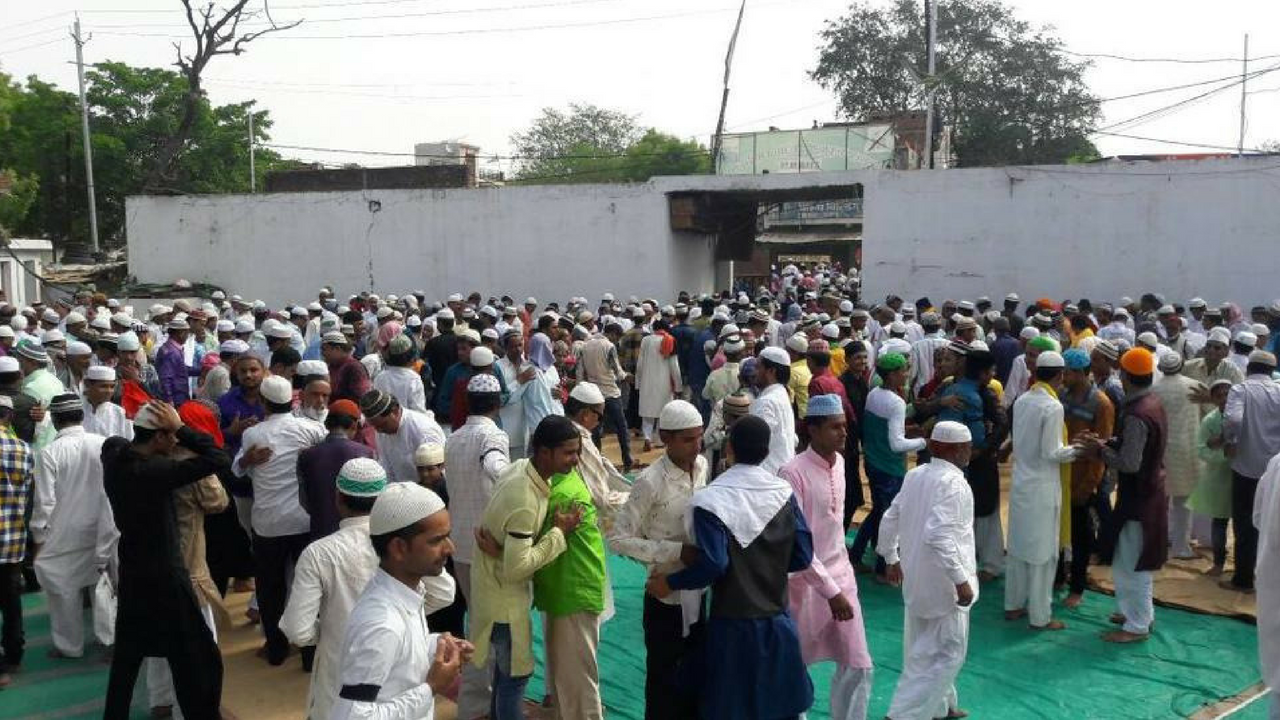
Muslims in India wear black bands to Eid prayers in protest of recent lynchings

26 June 2017516

Listen to this article

KJ narrates this report in his own voice

Muslims in India wear black bands to Eid prayers in protest of recent lynchings

Read original report on Hindustan Times or read a quick summary below;

  1. Muslims wore black arm bands in some parts of Madhya Pradesh’s Bundelkhand on Monday while offering Eid prayers at local mosques to protest against recent attacks on their community members.
  2. Nazir Khan, a teacher who came for prayers at the Eidgah in Bundelkhand, said mobs were targeting Muslim youth and murdering them without reason. “If they are guilty then action must be taken according to law which is a democratic thing. But not the way it is being done these days. We are protesting against this brutality in a peaceful and democratic manner”, he said.
  3. Abid Suleiman, president of Muslim Mahasabha Nowgawh, said frequent attacks on “our innocent Muslim youth without any proof of their involvement in any wrongdoing is bothering our community. Without police complaint, one sided action is being taken against them. Today we are wearing black bands to protest against government’s failure to check such incidents”.
  4. On Thursday, a 16-year-old Muslim boy was stabbed to death and his three brothers were injured on a Mathura-bound train. The prime suspect Ramesh was part of a mob that attacked the four brothers who were on their way back home to Haryana’s Ballabhgarh after Eid shopping at Sadar Bazar. In April, a Muslim dairy farmer was lynched in Rajasthan by alleged cow vigilantes.
 

#indian-muslims#muslim-lynchings-india#muslims-in-india

Related Intelligence

More articles
The Bismarckian Pivot: India’s German Deep-Tech Realignment
South Asia

The Bismarckian Pivot: India’s German Deep-Tech Realignment

As New Delhi systematically decouples from its legacy Russian military dependency, a new strategic architecture is emerging. Berlin is no longer just a trading partner; it is becoming India’s primary engine for industrial sovereignty.

17 Jun 2026

The Islamabad Pivot: Trading Strategic Depth for Economic Survival
South Asia

The Islamabad Pivot: Trading Strategic Depth for Economic Survival

Pakistan is discarding decades of military doctrine to position itself as the vital gateway for Central Asian trade. As domestic pressures mount, Islamabad is prioritising economic rent and connectivity over traditional territorial security.

15 Jun 2026

The Liquid Front: Why South Asian Security Rests on Melting Ice
South Asia

The Liquid Front: Why South Asian Security Rests on Melting Ice

As domestic pressures and climate shifts accelerate, the Indus and Brahmaputra river basins are no longer mere sources of life, but strategic assets being weaponised in a zero-sum game between nuclear powers.

1 Oct 2025

The New Delhi Pivot: Why Strategic Autonomy Survives the Great Split
South Asia

The New Delhi Pivot: Why Strategic Autonomy Survives the Great Split

India is defying the binary logic of the new Cold War. By leveraging Russian energy and American technology, New Delhi is transforming its non-alignment legacy into a sophisticated multi-aligned leverage play that few in the West fully comprehend.

1 Jun 2025

The Garrison State: Pakistan’s Invisible Constitution
South Asia

The Garrison State: Pakistan’s Invisible Constitution

As Islamabad faces a debt ceiling and internal unrest, the facade of civilian governance is thinning. Real power in Pakistan does not reside in Parliament, but in the institutional incentives of the General Headquarters in Rawalpindi.

1 Feb 2025

The Tiger’s Cage: The Structural Fragility of the Bangladesh Model
South Asia

The Tiger’s Cage: The Structural Fragility of the Bangladesh Model

Bangladesh transformed from a basket case into an export powerhouse through an unspoken social contract. As that contract dissolves, the state faces a reckoning between its industrial success and its institutional decay.

1 Oct 2024