Iran closes the door on the US
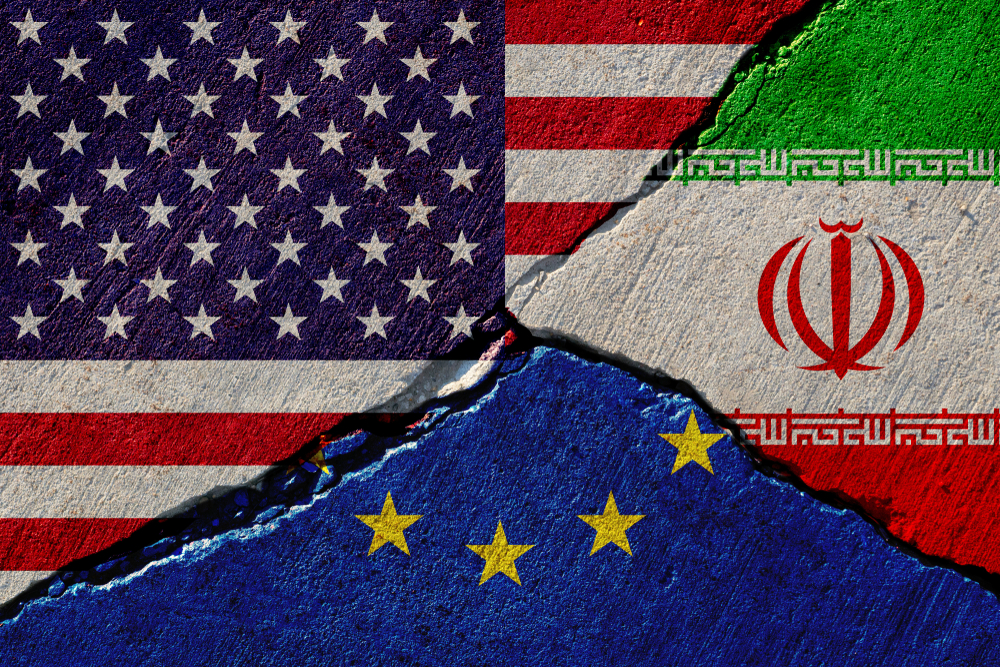
Iran has appeared to close all doors of possible re-establishment of talks with the US, as Iranian President Hassan Rouhani has ruled out holding any bilateral talks with the United States and threatened to further cut commitments to the country’s crumbling nuclear deal with world powers within days. “Maybe there has been a misunderstanding. We have said it several times and we repeat it – there has been no decision to hold bilateral talks with the US,” said Rouhani. “In principle, we do not want bilateral talks with the United States,” he added. Last month, Iran’s stance towards the US has shown that it has not changed or even worsened, as, in his speech, Iranian President Rouhani also struck a muscular tone on dealings with the US, saying that “talks are useless” over the nuclear deal. “Now that our enemies do not accept logic, we cannot respond with logic,” Rouhani said. He added: “When the enemy launches a missile against us, we cannot give a speech and say: ‘Mr. Rocket, please do not hit our country and our innocent people. Rocket-launching sir, if you can please hit a button and self-destroy the missile in the air.’” If the situation between Iran and the US is to de-escalate, the US will have to present an opening or improve terms.
Iran optimistic on European front
Meanwhile, Iran is increasingly willing to cooperate with Europe, and it appears is using its negotiations with France, to take advantage of the increasing rift between the EU and the US, and ironically, France is at the front of that rift. The French president, Emmanuel Macron, and his Iranian counterpart, Hassan Rouhani, spoke for two hours by telephone, a spokesman said, as Paris continued its diplomatic initiative to salvage the deal, which has been at risk of unravelling since the US withdrew last year. “Fortunately the points of views have become closer on many issues and now technical discussions are being held on ways to carry out the Europeans’ commitments,” said the Iranian government spokesman, Ali Rabiei. Iran seemed to recognize Europe as a source of negotiations early as last month, French President Emmanuel Macron offered on Wednesday to either soften sanctions on Iran or provide a compensation mechanism “to enable the Iranian people to live better” in return for full compliance with the pact, and Iran seemed open to the proposition.
US-led patrol in Persian Gulf increases danger
The US’s approach has not helped the situation and is only making its relation with Iran irreversable. the U.S. Navy is trying to put together a new coalition of nations to counter what it sees as a renewed maritime threat from Iran. “It is plausible to imagine a scenario where these forces stumble into some type of accidental escalation,” said Becca Wasser, a senior policy analyst at the RAND Corp. who studies the region. “While U.S. efforts are intended to deter, Iran may view increased U.S. maritime presence as offensive in nature or as preparation for a larger attack on Iran and respond accordingly.” In fact, this approach has encouraged Iran to forming a new alliance forming between Iran, Turkey and Russia, as all 3 have a common goal of reducing the US’s sphere of influence, as well as the more visible aim of containing the US-backed Kurds in Syria. Iran and the US have both closed the doors and moved in the way of violence, which is a signal of a dangerous situation unfolding in the Persian Gulf. In fact the European Union could find itself as a mediator in the conflict despite the US’s attempts to get it on its side.