Back in August 2018, Denmark banned the face veil that some Muslim women wear as part of their beliefs. A 28-year old women became the first person to be charged with wearing the full-face veil in public. She was fined 1000 Danish Krones after refusing to take it off. Last year the European Court of Human Rights upheld a similar Belgian ban, saying that communal harmony trumped an individual’s right to religious expression. Full or partial bans are also in place in France, Austria, Bulgaria and the German state of Bavaria.
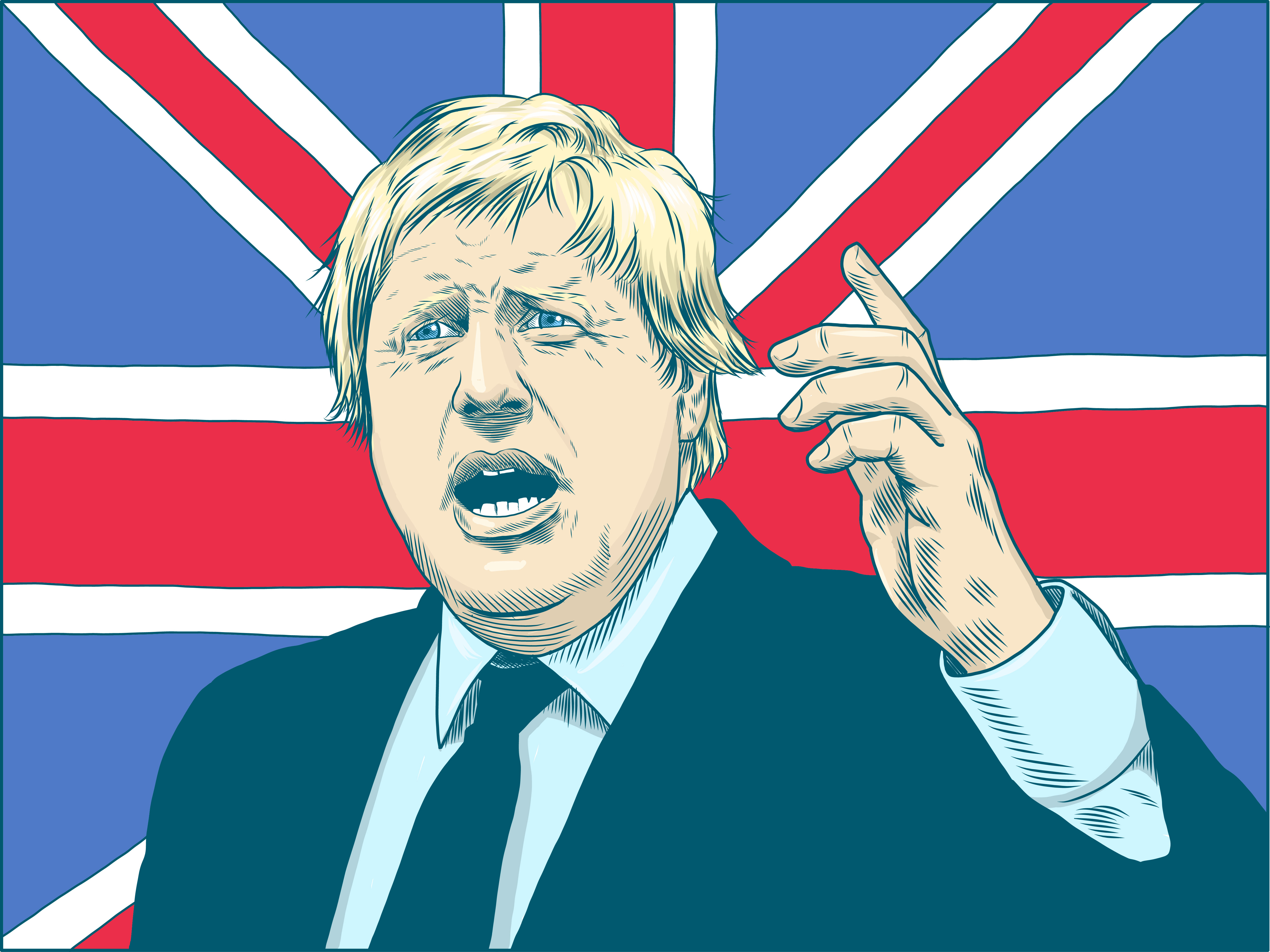
In reaction to the Danish legislation, former British Foreign Secretary and Future PM, Boris Johnson wrote in his column for the Daily Telegraph “If you say that it is weird and bullying to expect women to cover their faces, then I totally agree…I would go further and say that it is absolutely ridiculous that people should choose to go around looking like letter boxes.” He added that if a female student turned up at school or a university lecture looking like a bank robber, he would ask her to remove it. The inflammatory remarks sparked debates over the choice of Boris Johnson’s words and if a similar ban should take place in the UK.
Make no mistake, the language Boris used is not an accident. It is a calculated and tactical method designed to achieve a particular objective.
What is Dog-Whistle Politics?
in his book, Dog Whistle Politics, Ian Haney-López explains that dog whistling “simply means speaking in code to a target audience.
According to Safire’s Political Dictionary, the Washington Post may have first used the term “dog whistle” in an article about political polling in 1988. It explained that “subtle changes” in poll wordings led to respondents understanding the questions differently than the researchers did.
Racial dog whistles are often used when politicians want to speak about race specifically to their target audience. The coded messages are used to reinforce racist ideas that the country’s societal and economic problems are because of undeserving, lazy, and violent people of colour.
One example of this is when US President, Ronald Reagan used the word “welfare queen”, which was a common stereotype against Black women to imply that black women on social programs like welfare are lazy people, who don’t do anything to “help themselves.” Instead, they have children to use up government money and the tax dollars of “hard-working” Americans to live luxuriously. Ronald Reagan first hinted at this stereotype in 1976, while he was campaigning and promoting his anti-government assistance stance. He never explicitly used the term “Black” or “African-American.” Instead, he introduced the welfare queen into the public conversation about poverty.
Another example of Dog-Whistle politics is when Bill Clinton famously used the phrase “tough on crime”, during his presidential campaign in the 1990s. In theory, “theory on crime” simply is another way of saying “law and order” right? I mean who wants to live somewhere that lets bad criminals go?
But no, “Tough on crime” is primarily used as a code for “tough on Black and Latinx people, who are dangerous!” Bill Clinton used it to sway white voters toward the “New Democrats”. Clinton’s campaign promises leaned more to the right and included his backing for supporting the death penalty and increased welfare restrictions. The policies that Clinton later enacted negatively impacted black communities and played a key role in molding mass incarceration as we know it today.
Donald Trump has also used dog-whistling throughout his entire campaign and presidency. The author of the book “Dog Whistle Politics” Haney-López argued that the coded language was embraced by many in Trump’s base to “protect themselves from the idea that they’re being mobilized by racist appeals.” Haney-López gave other examples of this coded language:
Trump says things like, ‘We got to ban Muslims from the US — not to ban Muslims, but to secure our borders.” and “We got to make America great again” — not to return to a time of culturally sanctified white dominance, but because we love our country.
Donald Trump plays towards racial, economic and social anxieties. He falsely accused Mexicans of bring in rapists,Muslims of cheering after 9/11 and describing inner-city Chicago as “worse than the Middle East”. He plays upon a vulnerable audience, exploits their baseless fears and forces communities against each-other for political gain.
Boris Johnson is a prime example of a politician that uses dog-whistle politics. His time in Government has been littered with incidents written off as “gaffes” and besides the insulting and hurtful comments he is passed as some sort of intelligent person. From his remark that Libya needs to just “clear away” the dead bodies to his latest comments about the Niqab, Boris knows exactly what he is doing. His status in the upper-class white elite of this country that dominate positions of power and privilege allows him and others to get away with these comments.
In Fact, the whole Niqab ban itself is a distraction by European Governments who use the issue to instill fear, galvanise political support and use it to justify discriminatory legislation. At a time of great unresolved issues such as wealth inequality and the rise of the far-right which has been the strongest across the western world since the 1930s, we can only expect more dog-whistling.