KJ ReportsKJ Reports

A History of Islam in the Philippines

4 August 20172,631

Listen to this article

KJ narrates this report in his own voice

A History of Islam in the Philippines

A History of Islam in the Philippines

Islam was first brought over by Arab traders in the late 13th and early 14th centuries, Around 200 years before Spanish explorers first introduced Christianity to the 7,107 Islands. These Muslim merchants came from present-day Malaysia and Indonesia to the Sulu Islands and Mindanao in the Philippines. Watch this video to learn more or read here – kjvids.co.uk/islam-in-the-philippines

Don’t forget to subscribe to our YouTube Channel

Support our content by becoming a KJ Patreon
https://www.patreon.com/kjvids

Sign up to our website and submit video suggestions:
www.kjvids.co.uk

Like our Facebook page for exclusive updates:
https://www.facebook.com/KJVids

Follow us on Twitter to be informed when we post:
https://twitter.com/kjvids2016

All Rights Reserved. Contact info@kjvids.co.uk if you are interested in licensing our content, advertising or working with us in other ways.
#filipino-islam#filipino-muslim#islam-in-philippines-2016#islam-in-the-philippines#islam-philippines#islamic-history-philippines#jihad-philippines#manlia-muslims#mindanao-muslims#moro-muslims#muslim-philippines#philippines#philippines-convert-to-islam#philippines-documentary#philippines-history-documentary#philippines-history-muslim#philippines-mosque#philippines-muslim-history#philippines-religion#philippines-religion-history#philippines-travel#phillipines-islam#solo-island-islam#spanish-america-philippines

Related Intelligence

More articles
China-Philippines Tensions: 5 Geopolitical Effects You Need to Know
China

China-Philippines Tensions: 5 Geopolitical Effects You Need to Know

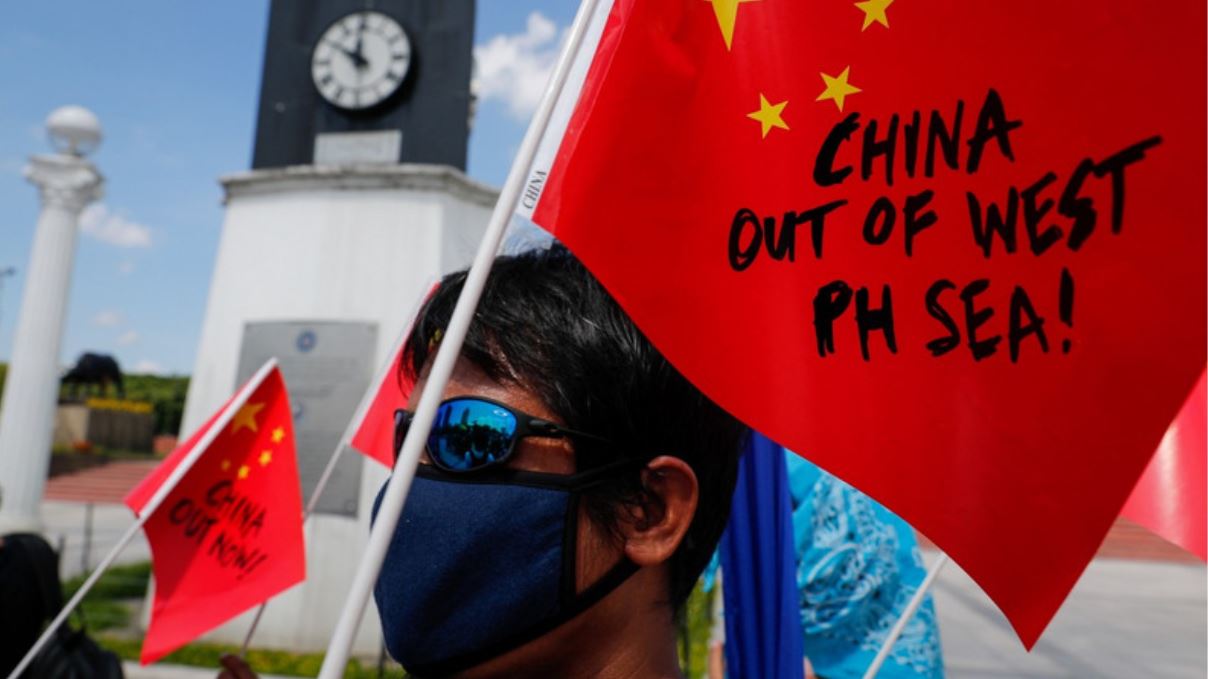
1. Philippino public protest China’s aggression After reports of over 100 Chinese fishing vessels being spotted a Philippine-administered island in the South China Sea, at the end of July, thousands of Philippinos took to the streets in a diplomatic protest against China. The country’s national security adviser, Hermogenes Esperon Jr, revealed the event, and said he recommended the filing of the protest against China, but added that the government was unsure on the motivations of the Chinese vessels. The Philippines, China, Brunei, Malaysia, Taiwan and Vietnam, all have overlapping claims in the South China Sea, and China has recently acted aggressively in the area. The Philippino people fear further escalation and are hence speaking out. 2. Philippines want to resolve through negotiations In response to China’s aggressive action in the South China Sea, Philippine President Rodrigo Duterte is set to meet Chinese president Xi Jingping to discuss the issue. Although this is a response to the growing domestic pressure to stand up to China, it is also a sign that the Philippines want to resolve the issue peacefully. In fact, many political opponents and critics have said he is sacrificing the Philippines’ integrity in favour of appeasing his new close ally China. Subscribe to unlock the other 3 Points We wish we didn't have to do this, but only paid subscribers can read the full article, Unlike other publishers, we are not the beneficiaries of State funds and are entirely dependent on our supporters to keep KJ Vids functioning. Please subscribe to read the rest of the article. 3. China ignores warnings 4. Fears of China’s influence in the nation 5. US sees the wrong side of the coin By investing in KJ Vids, you are investing in yourself Our content succinctly contextualises the key geopolitical trends you need to know in order to make sense of world events. We can assure you that a regular dose of our content will be as healthy as fruit and vegetables for your mind. Subscribe for only £10 a month.

8 Aug 2019

The Beijing Buffer: China’s Strategic Checkmate in the Persian Gulf
China

The Beijing Buffer: China’s Strategic Checkmate in the Persian Gulf

Beijing’s mediation of the US-Iran accord signals a fundamental shift in maritime power. By positioning itself as the indispensable guarantor of Gulf stability, China has effectively neutralized decades of Western naval dominance.

20 Jun 2026

The APRA Mandate: Australia’s Financial Hedging for a Post-US Order
United States

The APRA Mandate: Australia’s Financial Hedging for a Post-US Order

As Canberra adjusts its regulatory framework to account for intensifying geopolitical shocks, a deeper shift is occurring: Australia is decoupling its financial stability from the total reliance on the American security umbrella.

19 Jun 2026

The Silicon Strait: China’s Data Hegemony in the South China Sea
China

The Silicon Strait: China’s Data Hegemony in the South China Sea

Beijing is transforming the South China Sea from a contested waterway into a high-tech data corridor. By integrating AI infrastructure with maritime power, China is effectively bypassing the strategic vulnerability of the Malacca Strait.

18 Jun 2026

The Bismarckian Pivot: India’s German Deep-Tech Realignment
South Asia

The Bismarckian Pivot: India’s German Deep-Tech Realignment

As New Delhi systematically decouples from its legacy Russian military dependency, a new strategic architecture is emerging. Berlin is no longer just a trading partner; it is becoming India’s primary engine for industrial sovereignty.

17 Jun 2026

The Uralic Lever: Russia’s Strategic Pivot to New Delhi
Russia

The Uralic Lever: Russia’s Strategic Pivot to New Delhi

Moscow is trading short-term energy profits for a permanent strategic alliance with India. This shift signals the end of Russian dependency on European markets and the birth of a new Eurasian power axis.

17 Jun 2026