KJ ReportsKJ Reports

Why Japan Attacked Pearl Harbor

22 June 20181,452

Listen to this article

KJ narrates this report in his own voice

Why Japan Attacked Pearl Harbor

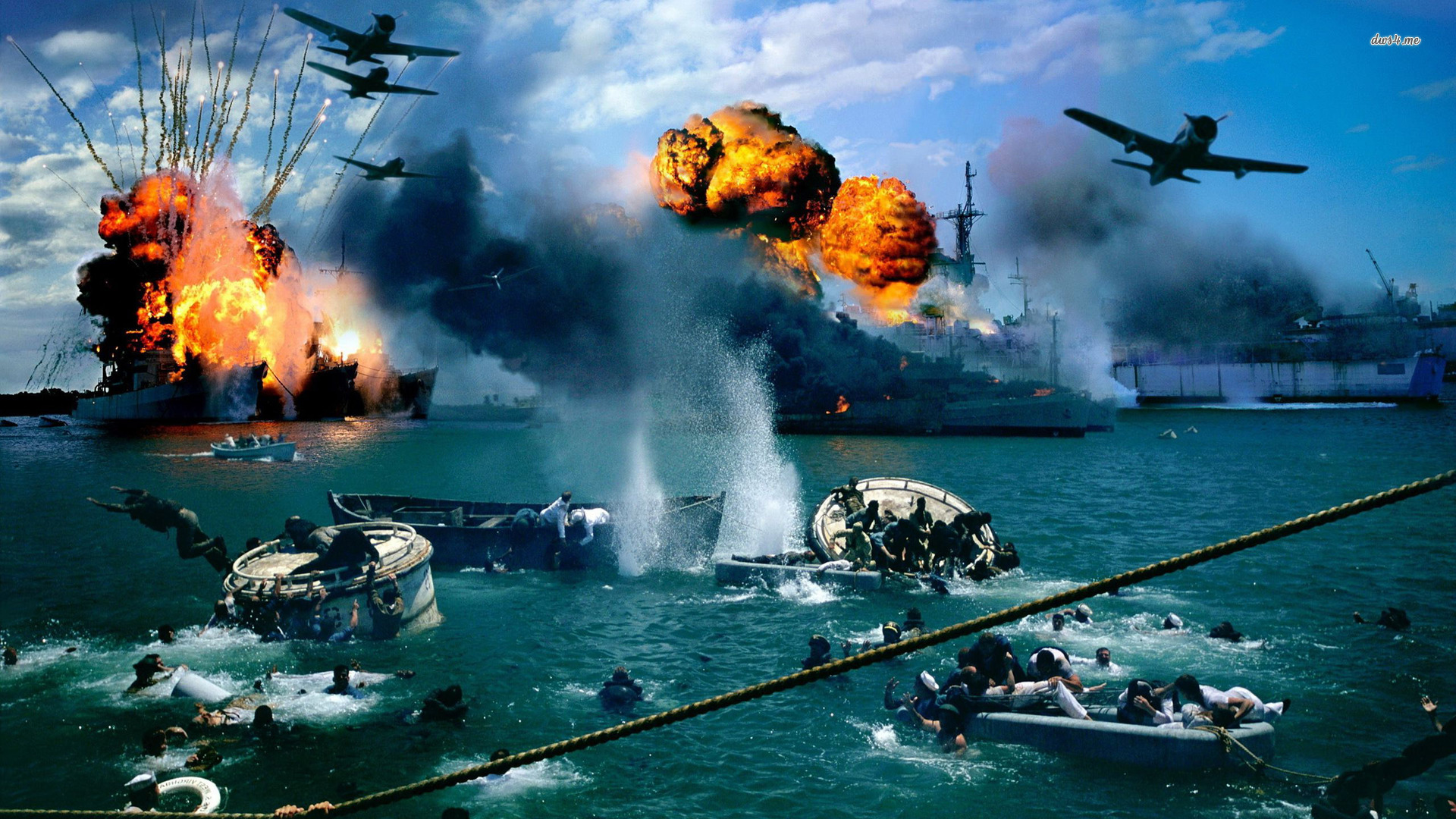
On December 7th 1941, a Japanese attack on the U.S Pacific naval headquarters at Pearl Harbor, damaged or destroyed nearly 20 American ships and more than 300 airplanes in less than two hours which claimed the lives of more than 2,400 people, and wounded 1,000 more.

But why did Japan attack Pearl Harbor in 1941?

Don’t forget to subscribe to our YouTube Channel

Sign up to our website and submit video suggestions:
www.kjvids.co.uk

Like our Facebook page for exclusive updates:
https://www.facebook.com/KJVids

Follow us on Instagram for our one minute vids:
https://www.instagram.com/kjvids2016

Follow us on Twitter to be informed when we post:
https://twitter.com/kjvids2016

All Rights Reserved. Contact info@kjvids.co.uk if you are interested in licensing our content, advertising or working with us in other ways.

#1941-japan-attack#america-japan#america-japan-war#japan-attack-us#japan-history-documentary#japan-pearl-harbor#japan-pearl-harbor-attack#japan-pearl-harbour#pearl-harbor#pearl-harbor-1941#pearl-harbor-attack-scene#pearl-harbor-documentary#pearl-harbor-full-movie#pearl-harbor-history#pearl-harbor-japan#pearl-harbor-soundtrack#pearl-harbor-trailer#pearl-harbour#world-war-1

Related Intelligence

More articles
The Ghost of Radcliffe: Why 1947 Still Governs 21st-Century Asia
History

The Ghost of Radcliffe: Why 1947 Still Governs 21st-Century Asia

Geographic partitions are not historical events; they are active geopolitical engines. In South Asia, a hasty retirement from Empire created a structural instability that ensures permanent mobilisation and restricts the rise of two nuclear powers.

15 Mar 2026

Pax Mongolica: The Hard-Power Blueprint for Global Integration
History

Pax Mongolica: The Hard-Power Blueprint for Global Integration

Modern globalisation is often framed as a Western invention. In reality, the 13th-century Mongol Empire established the first template for a borderless economy, proving that global trade requires a single, ruthless security guarantor to function.

15 Jan 2026

Transactional Neutrality: How Middle Powers Broke the Cold War Logic
Geopolitics

Transactional Neutrality: How Middle Powers Broke the Cold War Logic

The Global South has abandoned the pursuit of ideological blocks. By leveraging competition between Washington and Beijing for critical minerals and digital infrastructure, a new class of 'swing states' is securing unprecedented sovereign leverage.

1 Nov 2025

The Dollar Pact: Why Bretton Woods Never Actually Ended
History

The Dollar Pact: Why Bretton Woods Never Actually Ended

The 1944 Bretton Woods agreement is often treated as a historical relic. In reality, its core architecture remains the primary engine of American hegemony, weaponising global trade through a system of structural dependency that has no peer.

15 Oct 2025

The Hollow Giants: Why Demographic Depth is the New Nuclear Deterrent
Geopolitics

The Hollow Giants: Why Demographic Depth is the New Nuclear Deterrent

Conventional power metrics like GDP and military hardware are lagging indicators. In the 21st century, the true arbiter of sovereignty is the replacement rate, shifting the global tilt towards a new tier of demographically resilient powers.

1 Jul 2025

The New Feudalism: Why the Westphalian Order is Withering
History

The New Feudalism: Why the Westphalian Order is Withering

The nation-state is not dying, but it is losing its monopoly on power. As digital territories and corporate spheres of influence supersede physical borders, we are witnessing the gradual return of pre-Westphalian overlapping jurisdictions.

15 Jun 2025