KJ ReportsKJ Reports

Who was Mawlana Sayyid Abu Al-`ala Mawdudi?

22 April 20181,424

Listen to this article

KJ narrates this report in his own voice

Who was Mawlana Sayyid Abu Al-`ala Mawdudi?

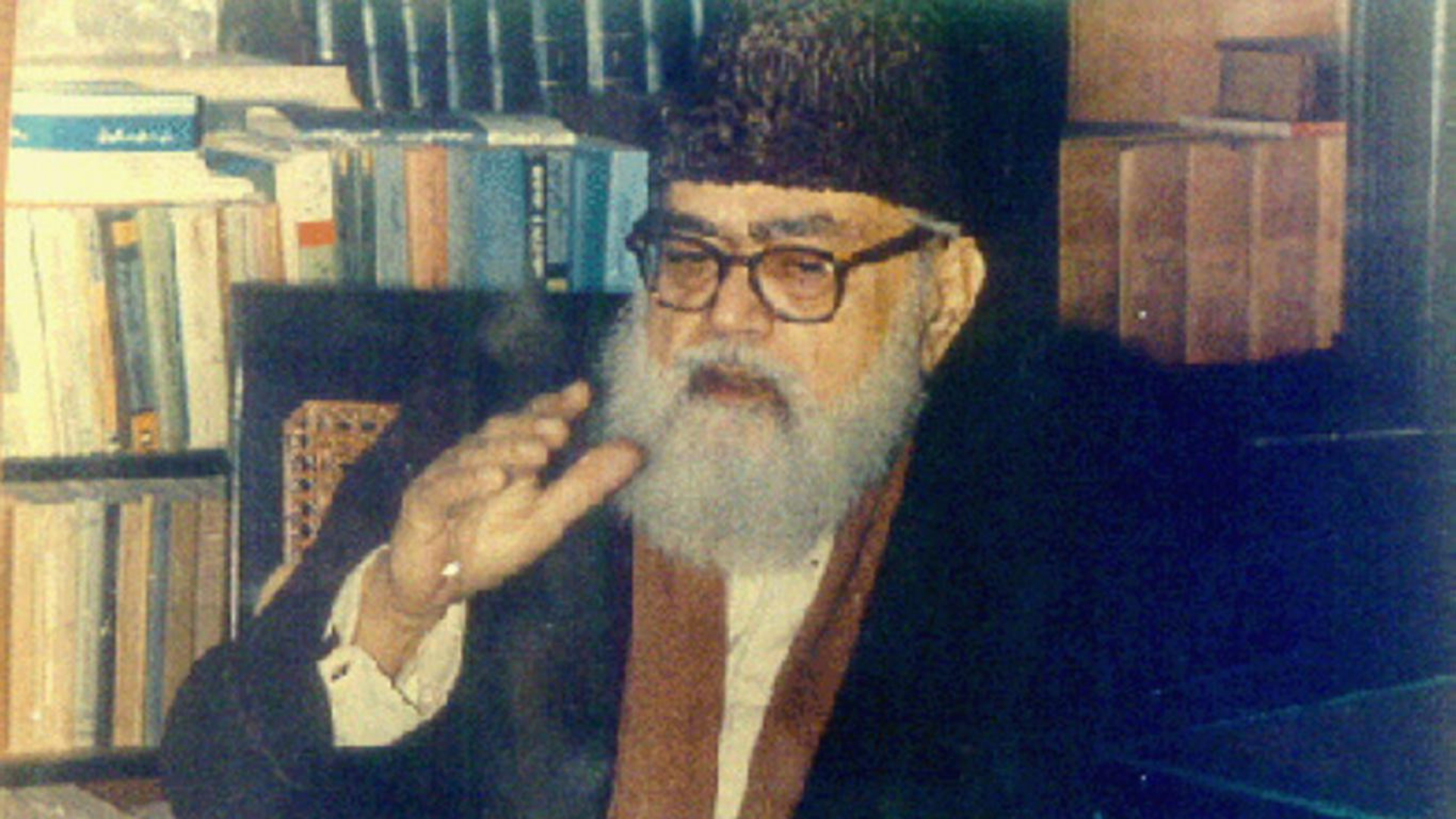
Mawlana Sayyid Abu Al-`ala Mawdudi stands as one of the leading Islamic figures of the twentieth century. Mawdudi’s ideological contributions have made him a towering figure in modern Islamic thought.

His political and religious vision of Islam have gained widespread currency in Pakistan, as well as in the broader Middle East, North Africa, and throughout Central, South, and Southeast Asia.

Not only a political theorist, he was a well-known translator and commentator of the Qur’an; a best-selling author; a frequently jailed political activist; and the founder of Islamic party, Jamaat-ti Islami.

Born in 1903 to a religious family in Hyderabad Deccan, India, Mawdudi began his career as a journalist, ascending in his early twenties to the editorship of al-Jamiah , the newspaper of India’s leading Muslim clerical organization.

He went on to assume the editorship of Tarjuman al-Qur’an (Interpreter of the Qur’an ), which he used as a platform to advocate for a uniquely Islamic way of life and against the influences of the West, which he believed had captivated the Muslims of India.

Mawdudi’s emphasis became increasingly political following the landmark Indian elections in 1937 and the growing agi-
tation against British rule by Hindu and Muslim leaders.

Mawdudi’s ideas were grounded in the historical context in which he wrote. First the dismantling of the Mughal empire in 1857 and then the formal abolishment of the Ottoman caliphate after World War I fueled feelings of powerlessness among the Muslims of India.

In 1941 he founded the Jama`at-i Islami, a party he would lead for the next three decades until in death in 1979.

Although Mawdudi opposed the formation of Pakistan, following the partition of 1947 he became the leading advocate for political Islam in Pakistan, debating over the nature of the constitution and participating actively in electoral politics.

Mawdudi’s most fundamental contributions was championing the idea that Islam constitutes a nizam-i zindagi —a complete system of life that is an ideology, a civilization, and a legal-political order.

Both in his political writings and in his widely read Tahfim al-Qur’an , he built his argument on the need for an Islamic political system and to channel devotions into a broader revolutionary agenda.

His legacy arguably is that he was able to convince large sections of the middle class of the role politics and Islam- which still resonates today in modern Pakistan.


#ideological#islamic-thought#jamaat-ti-islami#kjvids#mawdudi#mawlana-sayyid-abu-al-ala-mawdudi#mughal-empire

Related Intelligence

More articles
The Ghost of Radcliffe: Why 1947 Still Governs 21st-Century Asia
History

The Ghost of Radcliffe: Why 1947 Still Governs 21st-Century Asia

Geographic partitions are not historical events; they are active geopolitical engines. In South Asia, a hasty retirement from Empire created a structural instability that ensures permanent mobilisation and restricts the rise of two nuclear powers.

15 Mar 2026

Pax Mongolica: The Hard-Power Blueprint for Global Integration
History

Pax Mongolica: The Hard-Power Blueprint for Global Integration

Modern globalisation is often framed as a Western invention. In reality, the 13th-century Mongol Empire established the first template for a borderless economy, proving that global trade requires a single, ruthless security guarantor to function.

15 Jan 2026

The Dollar Pact: Why Bretton Woods Never Actually Ended
History

The Dollar Pact: Why Bretton Woods Never Actually Ended

The 1944 Bretton Woods agreement is often treated as a historical relic. In reality, its core architecture remains the primary engine of American hegemony, weaponising global trade through a system of structural dependency that has no peer.

15 Oct 2025

The New Feudalism: Why the Westphalian Order is Withering
History

The New Feudalism: Why the Westphalian Order is Withering

The nation-state is not dying, but it is losing its monopoly on power. As digital territories and corporate spheres of influence supersede physical borders, we are witnessing the gradual return of pre-Westphalian overlapping jurisdictions.

15 Jun 2025

The Invisible Rot: Why Great Powers Implode From Within
History

The Invisible Rot: Why Great Powers Implode From Within

Conventional wisdom blames external rivals for the fall of empires. History suggests otherwise. True decline is a domestic process of institutional sclerosis, currency debasement, and the fatal decoupling of elites from national interests.

15 Feb 2025

The Suez Moment: When London Realised Might Was Not Money
History

The Suez Moment: When London Realised Might Was Not Money

In 1956, Britain’s imperial facade collapsed not through military defeat, but through a financial ambush. This structural analysis examines why the Suez Crisis remains the ultimate lesson in the fragility of debt-backed power.

15 Oct 2024