The US planning final troop withdrawals
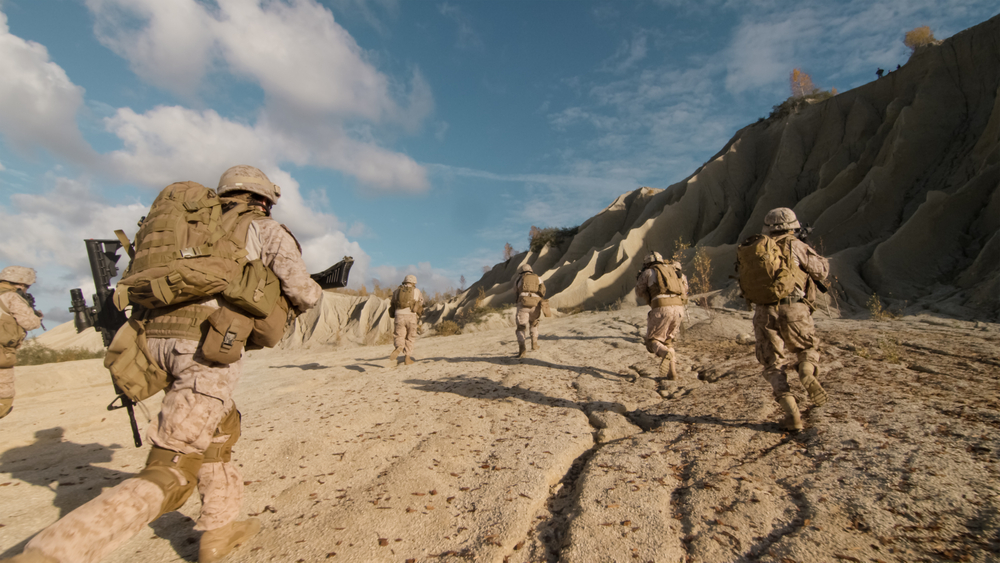
All US troops in Afghanistan should be “home by Christmas”, President Donald Trump said, just hours after his national security adviser said Washington would reduce its forces in Afghanistan to 2,500 by early next year.
A landmark deal between the United States and the Taliban in February said foreign forces would leave Afghanistan by May 2021 in exchange for security guarantees by the Afghan armed group.
Trump and other officials have said the US will decrease its troops between 4,000 and 5,000 in Afghanistan by November. Beyond that, officials have said a reduction will depend on conditions in Afghanistan. On Twitter, Trump said: “We should have the small remaining number of our BRAVE Men and Women serving in Afghanistan home by Christmas!” It was unclear whether Trump was giving an order or verbalising a long-held aspiration. Trump, who is seeking re-election next month, has made troops pullout from “ridiculous endless wars” the cornerstone of his foreign policy, even though thousands of troops remain in Iraq, Syria and Afghanistan.
David Helvey, the Pentagon’s deputy assistant secretary for Indo-Pacific Security Affairs, told lawmakers Sept. 22 the US has reduced its force levels in Afghanistan to 8,600 troops and turned over five bases to Afghan forces. Just hours before Trump’s tweet, NSA Robert O’Brien said the US had less than 5,000 troops in Afghanistan currently and would go down to 2,500 by early next year. “Ultimately, the Afghans themselves are going to have to work out an accord, a peace agreement … It’s going to be slow progress, it’s going to be hard progress, but we think it’s a necessary step – we think Americans need to come home,” O’Brien told an event at the University of Nevada, Las Vegas. The National Security Council and the White House did not immediately respond to a request for comment. The White House’s plan for the withdrawal will almost certainly be subject to review should Trump lose his bid for a second term in the November 3 election.
Doubts remain as to the US’s intentions
There are still doubts as to whether the US will follow through with its claims of gradual withdrawal. Especially when considering the fact that the United States has enduring interests in South Asia that can be safeguarded and promoted by keeping a small military footprint concentrated in two bases leased from Afghanistan.
First and foremost, after two decades of investments in lives, treasure, and political capital, the United States may intend to ensure that Afghanistan cannot revert back to an unchecked breeding ground for terrorists with international agendas and reach. The sole reason for the initial U.S.-led international intervention in Afghanistan was the September 11, 2001, terrorist attacks. Even under the best-case scenarios, an intra-Afghan agreement is poised to lead to further fragmentation of central authority in Afghanistan, meaning growing opportunities for al-Qaida, the Islamic State-Khorasan Province, and similar outfits.
Second, under the best circumstances, a relatively stable Afghanistan free of any U.S. security presence will further enable the growing political, military, and economic reach of China and Russia, as well as Iran, which would compromise US interests in the region.
US Secretary of State Mike Pompeo has tried to brush away these doubts in a recent speech. Pompeo in his tense speech to the negotiating Afghan parties said democracy has worked best for the US and many other nations but then acknowledged that “no one size fits all.” “The United States doesn’t seek to impose its system on others,” he added, stressing that his country “can only urge” it. “You will write the next chapter in Afghan history,” he said, looking at the negotiating Taliban and Afghan government teams on both sides of the table.
What are the implications for the Taliban?
The Taliban says U.S. President Donald Trump’s intention to withdraw all American troops from Afghanistan before the end of the year will bode well for the peace deal between the two adversaries. The Taliban hailed the announcement as “a positive step” on the way to implementing the peace deal it signed with the United States on February 29 aimed at ending the 19-year-old Afghan war.
“The Islamic Emirate (Taliban) is also committed to the contents of the agreement and hopes for good and positive relations with all countries, including the U.S., in the future,” a Taliban statement said Thursday.
Also, as a result of the deal, negotiations between the Afghan government and the Taliban started last month in the Qatari capital Doha to achieve lasting peace in the war-torn country. Rival negotiators have been pushing for the reduction of violence and a possible new power-sharing agreement in Kabul.
The Afghan government, which was not part of the U.S.-Taliban deal, did not immediately offer any direct reaction to Trump’s tweet. However, Afghan army chief General Yasin Zia told reporters Thursday that in the past six months, local security forces have conducted all ground operations against insurgents across Afghanistan.
Last month, after years of waiting, the Afghans themselves have finally engaged in negotiations. They could result in the possible end of the decades-long conflict in which tens of thousands of civilians have been killed and displaced. Representatives of the Afghan government and the Taliban movement met in Doha, Qatar, on Saturday amid hopes that the two sides will eventually agree to form a power-sharing government.
The meeting marked the first official contact between the insurgents and the Kabul officials in intra-Afghan peace talks, which comes six months after the United States signed a deal with the Taliban as part of an exit strategy for American troops. “Remember this is the beginning of a long and fragile process. Nothing substantial has been discussed and the topics involved are very sensitive,” says Amina Khan, Middle East and Africa director at the Institute of Strategic Studies Islamabad (ISSI) think-tank. “What needs to be appreciated and acknowledged is that this is the first time since 9/11 that the Taliban and the Afghan government have officially met in a bid to achieve peace.”
The latest US statements will definitely accelerate the process, but also give more confidence to the Taliban in their negotiations with the Afghan government.