KJ ReportsKJ Reports

UK and US: The myth of the special relationship

13 July 20181,858

Listen to this article

KJ narrates this report in his own voice

UK and US: The myth of the special relationship

▶ Check out my gear on Kit: https://kit.com/kjvids

The wreckage of WW2 left Britain effectively bankrupt and militarily overextended, whilst America emerged as the new superpower.

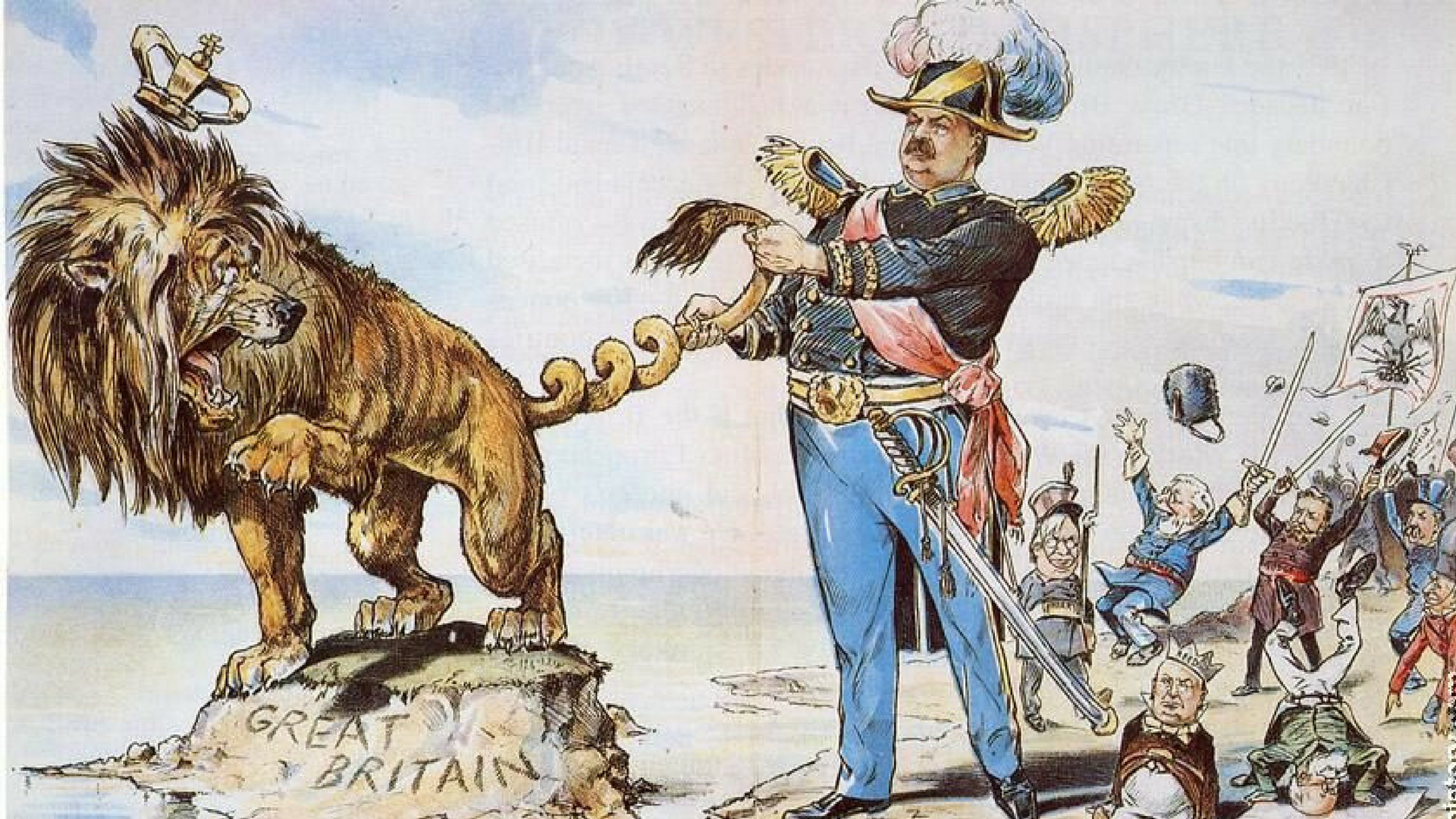
In order to stay relevant in global politics, Britain considered it essential to continue Churchill’s wartime alliance with the US.

In order to stay relevant in global politics, Britain considered it essential to continue Churchill’s wartime alliance with the US.

Britain allowed America to establish bases for B-29 bombers initiating foreign military bases on British soil.

The Secretary of State, Ernest Bevin, acknowledged the gravity of this decision and said “Permanent peacetime bases involved quite new principles.”

By 1950, the Americans were basing bombers carrying nuclear weapons in Britain as well as established NATO.

Even though WW2 ended, Britain took an unprecedented decision to continue conscription into peacetime.

Britain paid a “blood price” to show their commitment to US foreign policy and to project itself as a global power like the US.

This came at the peak of the Korean War when the Communist North invaded the South in June 1950.

British chiefs were opposed to sending troops to Korea to avoid harming relationswith Mao Zedong’s Communist China.

British chiefs were opposed to sending troops to Korea to avoid harming relationswith Mao Zedong’s Communist China.

“Refusal to provide troops would harm Anglo-American relations.” The cabinet decided that “British land forces should be sent in order to consolidate Anglo-American friendship and to placate American public opinion.”

In 1956, Britain’s futile attempt in invading Egypt in alliance with France and Israel was cut short by American political pressure.

Yet the British remained fully committed to maintaining an alliance with the USAregardless of the post-war humiliation.

Similarly, besides the strong opinion against America’s Vietnam war, Britain supplied military hardware and troops.

There are countless more examples in recent history that show that the “special” relationship only benefits one side.

Don’t forget to subscribe to our YouTube Channel

Support our content by donating to fundmypage.com/kjvids

Website – www.kjvids.co.uk
Facebook – www.facebook.com/KJVids
Twitter – www.twitter.com/kjvids2016
Instagram – www.instagram.com/kjvidsofficial

All Rights Reserved. Contact info@kjvids.co.uk if you are interested in licensing our content, advertising or working with us in other ways.

Related Intelligence

More articles
The APRA Mandate: Australia’s Financial Hedging for a Post-US Order
United States

The APRA Mandate: Australia’s Financial Hedging for a Post-US Order

As Canberra adjusts its regulatory framework to account for intensifying geopolitical shocks, a deeper shift is occurring: Australia is decoupling its financial stability from the total reliance on the American security umbrella.

19 Jun 2026

The Security Deficit: Why Washington is Resigning as Global Underwriter
United States

The Security Deficit: Why Washington is Resigning as Global Underwriter

As domestic debt surges and populist sentiment hardens, the United States is quietly retracting its global security umbrella. This strategic withdrawal is forcing allies toward a messy, fragmented era of self-reliance.

16 Jun 2026

The Sovereign Sanctuary: America’s Retreat to Fortress North America
United States

The Sovereign Sanctuary: America’s Retreat to Fortress North America

As the 2026 World Cup begins, the United States is quietly pivoting from global ideologue to insular hegemon. By prioritising domestic stability over democratic export, Washington is redrawing the map of American power.

15 Jun 2026

The Ghost of Radcliffe: Why 1947 Still Governs 21st-Century Asia
History

The Ghost of Radcliffe: Why 1947 Still Governs 21st-Century Asia

Geographic partitions are not historical events; they are active geopolitical engines. In South Asia, a hasty retirement from Empire created a structural instability that ensures permanent mobilisation and restricts the rise of two nuclear powers.

15 Mar 2026

The Leviathan's Edge: Why America Still Monopolises the Future
United States

The Leviathan's Edge: Why America Still Monopolises the Future

While critics forecast a hollowed-out empire, the United States has widened its lead in the global technology race. The reason is not policy, but a unique synthesis of capital risk, institutional elasticity, and geographic isolation.

1 Mar 2026

Pax Mongolica: The Hard-Power Blueprint for Global Integration
History

Pax Mongolica: The Hard-Power Blueprint for Global Integration

Modern globalisation is often framed as a Western invention. In reality, the 13th-century Mongol Empire established the first template for a borderless economy, proving that global trade requires a single, ruthless security guarantor to function.

15 Jan 2026