KJ ReportsKJ Reports

The Truth Behind the 1989 U.S. Invasion of Panama

17 February 20182,194

Listen to this article

KJ narrates this report in his own voice

The Truth Behind the 1989 U.S. Invasion of Panama

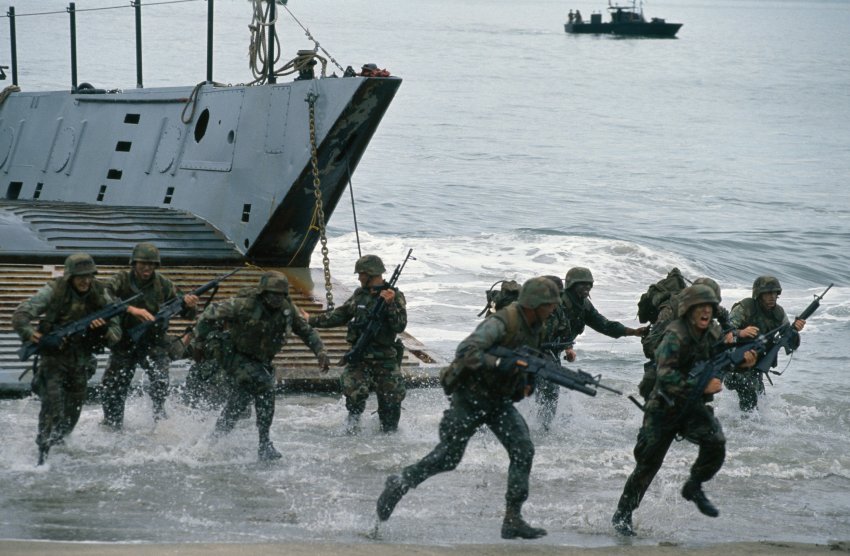
The raid into Panama was the largest US combat operation since the Vietnam War. At the time the US trotted out various “noble justifications.”

The narrative was to overthrow the military dictator Manuel Noriega who was accused of drug trafficking and supressing democracy.

A key narrative was that Manuel endangered U.S nationals, similar to how Russia justified the invasion of Crimea and its intervention in Eastern Ukraine in 2014 – to “protect Russian speaking nationals”

But in an all too familiar fashion, this wasn’t the true story. Like Saddam, Noriega enjoyed US support and was actually recruited by the CIA before he turned into a wayward ally.

Noriega was recruited as a CIA informant while studying at a military academy in Peru. He received intelligence and counterintelligence training at the School of the Americas at Fort Gulick in Panama, in 1967. He remained on the CIA payroll until February 1988.

Don’t forget to subscribe to our YouTube Channel

We’re also currently running a crowdfunding campaign to help our operation produce more and better videos. You may donate what you towards our project here – http://www.crowdfunder.co.uk/kj-vids

Support our content by becoming a KJ Patreon
https://www.patreon.com/kjvids

Website – www.kjvids.co.uk
Facebook – www.facebook.com/KJVids
Twitter – www.twitter.com/kjvids2016
Instagram – www.instagram.com/kjvidsofficial

All Rights Reserved. Contact info@kjvids.co.uk if you are interested in licensing our content, advertising or working with us in other ways.


#mario-noriega#panama#panama-invasion

Related Intelligence

More articles
The Bretton Woods Reversal: Gold and the Decay of Dollar Security
Geopolitics

The Bretton Woods Reversal: Gold and the Decay of Dollar Security

Global central banks are liquidating US Treasuries for physical gold at a record pace. This shift marks the end of the post-war bargain: the dollar is no longer a neutral sanctuary for sovereign wealth.

20 Aug 2026

The Blue Nile Pincer: Dismantling Egypt’s Strategic Depth
History

The Blue Nile Pincer: Dismantling Egypt’s Strategic Depth

A deepening alliance between Sudan’s Rapid Support Forces and Ethiopia is redrawing the map of East Africa, isolating Cairo and threatening the historic hegemony of the Nile’s downstream power.

19 Aug 2026

The Persian Counter-Pivot: How 1979 Defined Modern Multipolarity
History

The Persian Counter-Pivot: How 1979 Defined Modern Multipolarity

Tehran’s decades-long defiance of the unipolar order has moved from isolation to a blueprint for middle-power resistance, as Iran leverages geography and historical grievances to outlast Western influence in the Levant.

18 Aug 2026

The Durango Hedge: Mexico’s Role in the Great Tech Decoupling
United States

The Durango Hedge: Mexico’s Role in the Great Tech Decoupling

As Washington and Beijing sever semiconductor ties, Mexico is transforming from a low-cost assembly hub into the critical fail-safe for the AI era. Power, geography, and North American energy are rewriting the rules of silicon sovereignty.

16 Aug 2026

The Hegemon’s Disconnect: Why Israel Was Left Behind
United States

The Hegemon’s Disconnect: Why Israel Was Left Behind

Washington’s decision to finalise the 2026 Tehran Accord without Israeli consent marks a definitive shift. It signals the end of the US-led security umbrella in the Middle East and the birth of a cold, pragmatic multipolarity.

5 Aug 2026

The Chokepoint Dilemma: How Small States Master Asymmetric Blockades
Geopolitics

The Chokepoint Dilemma: How Small States Master Asymmetric Blockades

Middle powers are rewriting the rules of global trade by weaponising maritime geography. As traditional naval dominance wanes, the ability to close a strait has become the ultimate diplomatic lever for the world's regional agitators.

3 Aug 2026