KJ ReportsKJ Reports

The role of ports in the global economy

24 December 20181,976

Listen to this article

KJ narrates this report in his own voice

The role of ports in the global economy

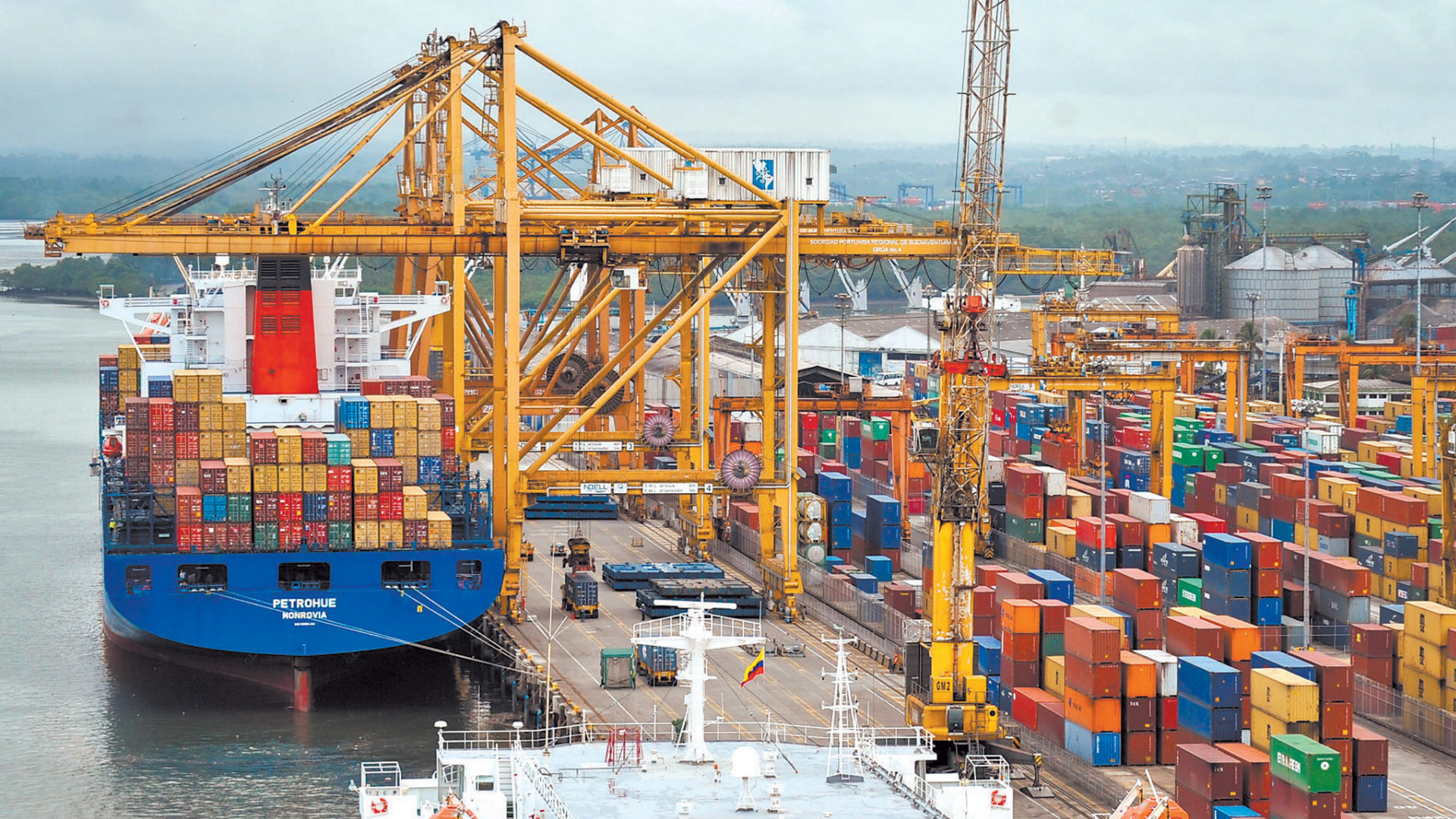
Ports are maritime commercial facilities usually located on a coast or shore that contains one or more harbours where ships can dock and transfer cargo as well as people. Ports constitute a major component of the global transportation sector and are linked to the expanding world economy. In other words, ports are a means of integration into the global economic system.

As the WTO-agreements since the 1980s lifted several pre-existing international trade barriers, manufacturers all over the world vertically disintegrated their production systems into geographically dispersed and flexibly organised supply chain systems . The international trade regime began allowing manufacturers to relocate their production and assembly plants to more cost-efficient locations in developing economies.

Ports have been at the hearts of commerce for centuries and they only kept gaining more significance . Before the invention of aeroplanes, sea had been the main mode of transport for settlers, travellers and migrants for centuries. They played important roles in the industrial revolutions and act as a catalyst to industrialisation. While early ports were mostly used as harbours, today they are more often referred to multi-modal distribution hubs having transport links using sea, river, canal, road, rail and air routes.
#canal#cargo#china#deep-sea-port#economy#global-economy#global-economy-2019#harbour#hinterland#kj#kj-videos#kjvids#oceans#port-of-ambarli#port-of-jebel-ali#port-of-los-angeles#port-of-rotterdam#port-of-shanghai#port-of-singpore#ports#rivers#seas#shipping#vassal

Related Intelligence

More articles
Transactional Neutrality: How Middle Powers Broke the Cold War Logic
Geopolitics

Transactional Neutrality: How Middle Powers Broke the Cold War Logic

The Global South has abandoned the pursuit of ideological blocks. By leveraging competition between Washington and Beijing for critical minerals and digital infrastructure, a new class of 'swing states' is securing unprecedented sovereign leverage.

1 Nov 2025

The Hollow Giants: Why Demographic Depth is the New Nuclear Deterrent
Geopolitics

The Hollow Giants: Why Demographic Depth is the New Nuclear Deterrent

Conventional power metrics like GDP and military hardware are lagging indicators. In the 21st century, the true arbiter of sovereignty is the replacement rate, shifting the global tilt towards a new tier of demographically resilient powers.

1 Jul 2025

The Calorie Hegemon: Why Agriculture is the Ultimate Power Multiplier
Geopolitics

The Calorie Hegemon: Why Agriculture is the Ultimate Power Multiplier

While markets obsess over semiconductors and AI, the true substrate of superpower survival remains the control of caloric surpluses and freshwater basins. In an era of fractured trade, the ability to export stability is the ultimate leverage.

1 Mar 2025

The Silo Fracture: Mapping the Great Bloc Realignment of 2030
Geopolitics

The Silo Fracture: Mapping the Great Bloc Realignment of 2030

The next decade will not be defined by a single flashpoint, but by the systemic decoupling of the global supply chain into two incompatible fortresses. Power is shifting from global markets to regional security architectures.

1 Nov 2024

The Orbital Chokepoint: Why Space is the New Geography of Sovereignity
Geopolitics

The Orbital Chokepoint: Why Space is the New Geography of Sovereignity

Forget the curiosity of exploration. Low Earth Orbit is becoming the decisive terrain for terrestrial survival. Space is no longer a vacuum of law, but a theatre where the next century of global dominance will be won or lost.

1 Jul 2024

The Silicon Bastion: Why AI is the Final Arbiter of Sovereignty
Geopolitics

The Silicon Bastion: Why AI is the Final Arbiter of Sovereignty

Artificial Intelligence is not an industry; it is the new operating system for hard power. As the era of the 'digital deterrent' begins, the gap between AI superpowers and vassal states is becoming permanent.

1 Mar 2024