The Paradox of the Forward Defence
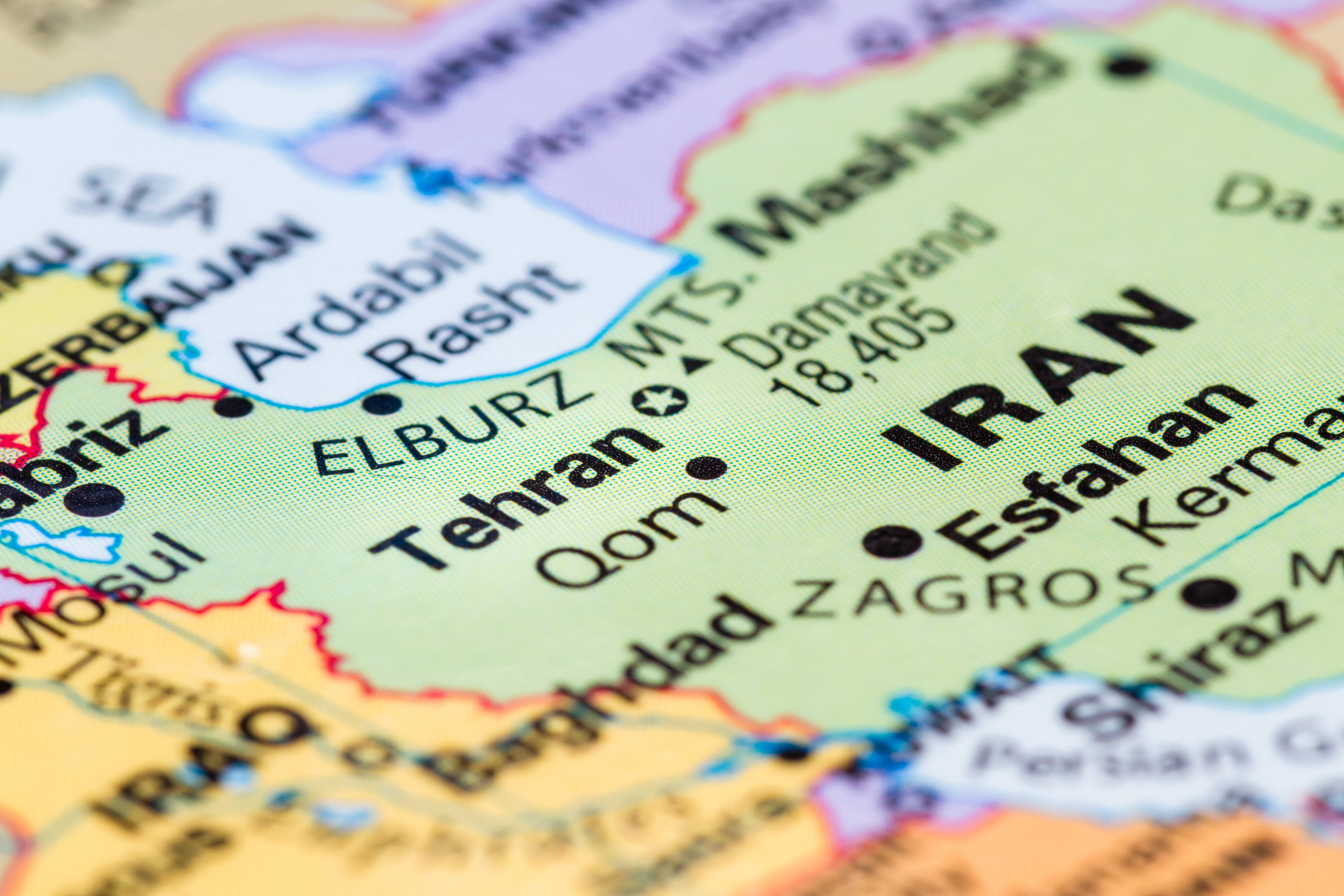
Tehran is currently trapped in a strategic paradox. On the map, the Islamic Republic has never looked more formidable. Its footprint extends from the Mediterranean to the Bab el-Mandeb, dictated by a network of non-state actors that allow it to project power without deploying a single regular army division. However, this external expansion masks a terminal internal attrition. The regime’s ‘Forward Defence’ strategy—designed to fight its enemies at their borders rather than its own—is being invalidated by a domestic reality: the Iranian state is losing its grip on its own social contract. When a state’s primary threat is its own population, regional assets cease to be tools of deterrence and instead become triggers for internal collapse.
The Logic of Proxy Overextension
To understand why Tehran acts as it does, one must look at the geography of the 1980s. The trauma of the Iran-Iraq War taught the clerical leadership that Iran’s conventional forces are insufficient to defend its borders against technologically superior adversaries. The solution was the asymmetric ‘Axis of Resistance’. By funding groups like Hezbollah, the Houthis, and various militias in Iraq, Tehran created a ‘layered deterrence’. The goal is simple: ensure that any strike on Iranian soil results in a multi-front regional conflagration. It is an insurance policy paid for in blood and influence.
But insurance requires the ability to pay the premium. For decades, the Iranian public accepted the cost of regional influence as a price for national security. That consensus has fractured. The incentive for the average Iranian has shifted from nationalistic pride to basic economic survival. Every billion dollars sent to Damascus or Sana’a is now viewed by the streets of Mashhad and Tehran not as a strategic investment, but as a theft from the national treasury. In this environment, the regime’s external strength is directly proportional to its internal fragility.
Structural Rot and the Demographic Divorce
The regime’s survival mechanism thrives on ideological rigidity, but the Iranian demographic has moved on. Over 60% of the population is under the age of 30. They have no memory of the 1979 Revolution and little interest in the ‘Export of the Revolution’. This creates a fundamental misalignment of incentives. The leadership prioritises regional ideological hegemony; the populace prioritises global economic integration and personal liberty.
The Sanctions-Corruption Feedback Loop
Sanctions have not just bled the economy; they have rewired it. The Islamic Revolutionary Guard Corps (IRGC) now controls significant portions of the black-market and official economies. This has created a ‘sanctions aristocracy’ that benefits from isolation. However, this creates a second-order effect: it eliminates the middle class—the very group required for long-term domestic stability. As the IRGC grows wealthier through smuggling and state contracts, the tax-paying public grows poorer. This creates a state that is militarily heavy but socially hollow. A hollow state cannot sustain a protracted regional war, no matter how many missiles it possesses.
A Historical Parallel: The Late Soviet Overstretch
The current state of the Islamic Republic mirrors the Soviet Union in the mid-1980s. Like the USSR, Tehran maintains a massive military-industrial complex and a sprawl of client states while its internal infrastructure crumbles. The Soviets could deploy tanks in Prague and advisors in Kabul, but they could not provide bread or dignity to their citizens in Moscow. The collapse did not come from an external invasion; it came from the exhaustion of the centre. When the cost of maintaining the empire exceeded the capacity of the home front to endure hardship, the system buckled. Tehran is now reaching its own ‘Gorbachev moment’, but unlike the USSR, it lacks a mechanism for systemic reform without total collapse.
What Most People Miss: Deterrence works both ways
Analysts often argue that Iran’s proxies deter Israel or the United States from attacking Iran. What is missed is that these proxies now also deter the Iranian leadership from taking decisive action. If Tehran activates its proxies for a full-scale war, the inevitable retaliatory strikes on Iranian infrastructure (power grids, refineries, ports) would likely be the final catalyst for a domestic uprising. The regime knows this. Therefore, the very weapons meant to protect the regime now act as a constraint on it. Tehran cannot afford a victory that costs it the capital. Its regional ‘strength’ has become a gilded cage.
Strategic Consequences
- The Erosion of Credibility: Adversaries are beginning to realise that Tehran’s threats are tempered by a fear of domestic unrest. This reduces the ‘fear factor’ that previously gave Iran’s diplomacy its edge.
- The Rise of Local Nationalism: In Iraq and Lebanon, the ‘Axis’ is facing a backlash not from the West, but from local populations tired of being used as Iranian pawns. This forces Tehran to spend more resources just to maintain the status quo.
- Succession Vulnerability: As the transition to a post-Khamenei era approaches, the internal friction will intensify. The IRGC will likely seek to tighten its grip, further alienating the public and increasing the risk of a systemic fracture.
What to Watch
- The ‘Bazaar’ Sentiment: Watch for strikes or protests in the traditional merchant districts. When the bazaar turns against the clergy, the end is usually near.
- Infrastructure Failures: Regular power blackouts or water shortages are trigger points for civil unrest that distract the security apparatus from regional manoeuvres.
- Security Force Defections: Any sign of hesitation from the Basij or regular police during urban protests indicates the ‘attrition of the will’ has reached the enforcers.
KJ Verdict
The Islamic Republic is attempting to project the power of a regional hegemon on the budget and social stability of a failing state. While the world focuses on the range of Iranian missiles and the movements of its proxies, the real threat to the regime’s survival remains within its own borders. History suggests that no amount of external influence can compensate for a domestic legitimacy deficit. Tehran’s ‘Forward Defence’ is a sophisticated façade; it is strong at the edges but brittle at the core. The next major shift in Middle Eastern power will not be decided in a proxy war in the Levant, but in the streets of the Iranian plateau. The regime is winning the map, but it is losing the country.