Since ancient times, the land known today as Myanmar has been famous for its wealth in natural resources of all kinds.
The Sanskrit name Suvarnabhumi, meaning “Golden Land,” has been associated with Myanmar for over two millennia.
Myanmar is geologically very rich, and mining is significant as a large-scale industry
Mineral occurrences cover all sectors, including base metals (gold, copper, silver, lead, zinc, tin, antimony, iron, etc.), industrial minerals, energy sources (mainly coal), gems (jade, rubies, sapphires, etc.), as well as “rare earth” minerals.
Myanmar is perhaps best known for gold, jade, rubies, and sapphires. It is estimated that in the past, 90 percent of the world’s rubies came from Myanmar.
Myanmar is also one of the world’s oldest oil producers, having first exported its first barrel in 1853 while under British colonial rule.
Myanmar’s energy ministry lists proven crude oil reserve estimates of $3.2 billion barrels and gas reserves of 11.8 trillion cubic feet (placing it about eight in the world)
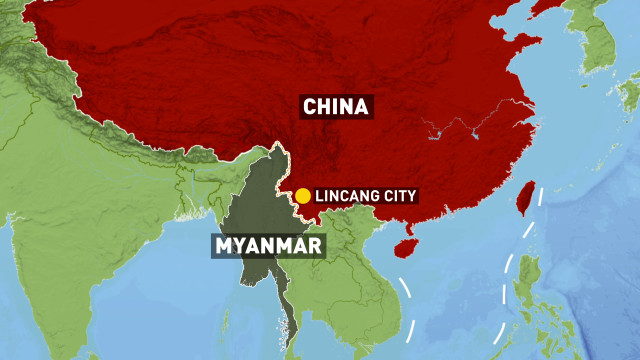
With its untapped natural resources, large potential of its nascent markets and strategic geographic location connecting South and Southeast Asia (and mainland China), Myanmar is a geopolitical asset.
Aside from its economic value, Myanmar’s strategic location serves as an important link for China’s market expansion in South and Southeast Asia.
A critical lifeline for China is access to maritime routes. The main and historic ports of China sit along the South and East China seas and are problematic due to their exposure to the Malacca Strait choke point.
China can overcome this constraint in multiple ways, including bypassing it altogether with direct land access to the Indian Ocean.
China’s approach to securing this overland access to the Indian Ocean is through Myanmar.
But to achieve this goal, China must have influence over, or be on good terms with, Myanmar’s government.
U.S.-Burmese ties had been on a downward trajectory since the military coup in 1988. The U.S. responded by imposing sanctions, banning imports
During this period of disengagement from the ruling junta, neighboring China was moving in and gaining influence.
China became a leading trade partner of Myanmar and developed extensive diplomatic, commercial, and military ties.
China gained access to Burmese ports in the Bay of Bengal, which provided it with the ability to project power and establish a military foothold in the region
It also assisted in the development of a port at Kyaukpyu. This is significant, as the Chinese are developing an oil and natural gas pipeline directly to China
This pipeline would enable China to import oil from the Middle East while bypassing the Straits of Malacca
The advancement of U.S.-Burmese relations will have profound strategic implications for China as it nervously watches the U.S. moves in the region.
The competition over Myanmar is also core reason why both America and China have ignored the ethnic cleansing of Rohingya Muslims in Burma.
As the geopolitical competition between America and China intensify, Myanmar, will increasingly make the news and the region is likely to have profound implications in the future.
The Chinese have feared that the U.S. would block Chinese oil imports in a crisis by closing the straits, and this pipeline would safeguard against this.
But the US recently began a process of normalizing ties with Myanmar following a long period of estrangement
In November 2012, Obama became the first American President to visit Myanmar. This was within a year after Hillary Clinton announced America’s “Pivot to Asia”
The Pivot to Asia features the U.S. focusing additional military and diplomatic resources on the region to counter a rising China
As the U.S. and Myanmar develop closer relations, these Chinese inroads into Myanmar are under threat, and the potential strategic losses for China are serious.
The advancement of U.S.-Burmese relations will have profound strategic implications for China as it nervously watches the U.S. moves in the region.
The competition over Myanmar is also core reason why both America and China have ignored the ethnic cleansing of Rohingya Muslims in Burma.
As the geopolitical competition between America and China intensify, Myanmar, will increasingly make the news and the region is likely to have profound implications in the future.