For decades, the standard playbook for American containment of China has relied on a single, structural vulnerability: the Malacca Dilemma. The logic was simple. If Beijing moved against the international order, Washington could throttle the narrow maritime arteries that supply 80 percent of China’s hydrocarbon imports. Deprived of fuel, the Chinese economy would grind to a halt within weeks, forcing a domestic political crisis or a military retreat.
That lever is now broken. Through a combination of aggressive domestic storage, diversified overland pipelines, and a sophisticated strategy of price-insensitive buying, Beijing has constructed a buffer that transforms energy from a strategic weakness into a tactical asset. China no longer reacts to oil prices; it dictates the terms of its own resilience.
The Architecture of Resilience
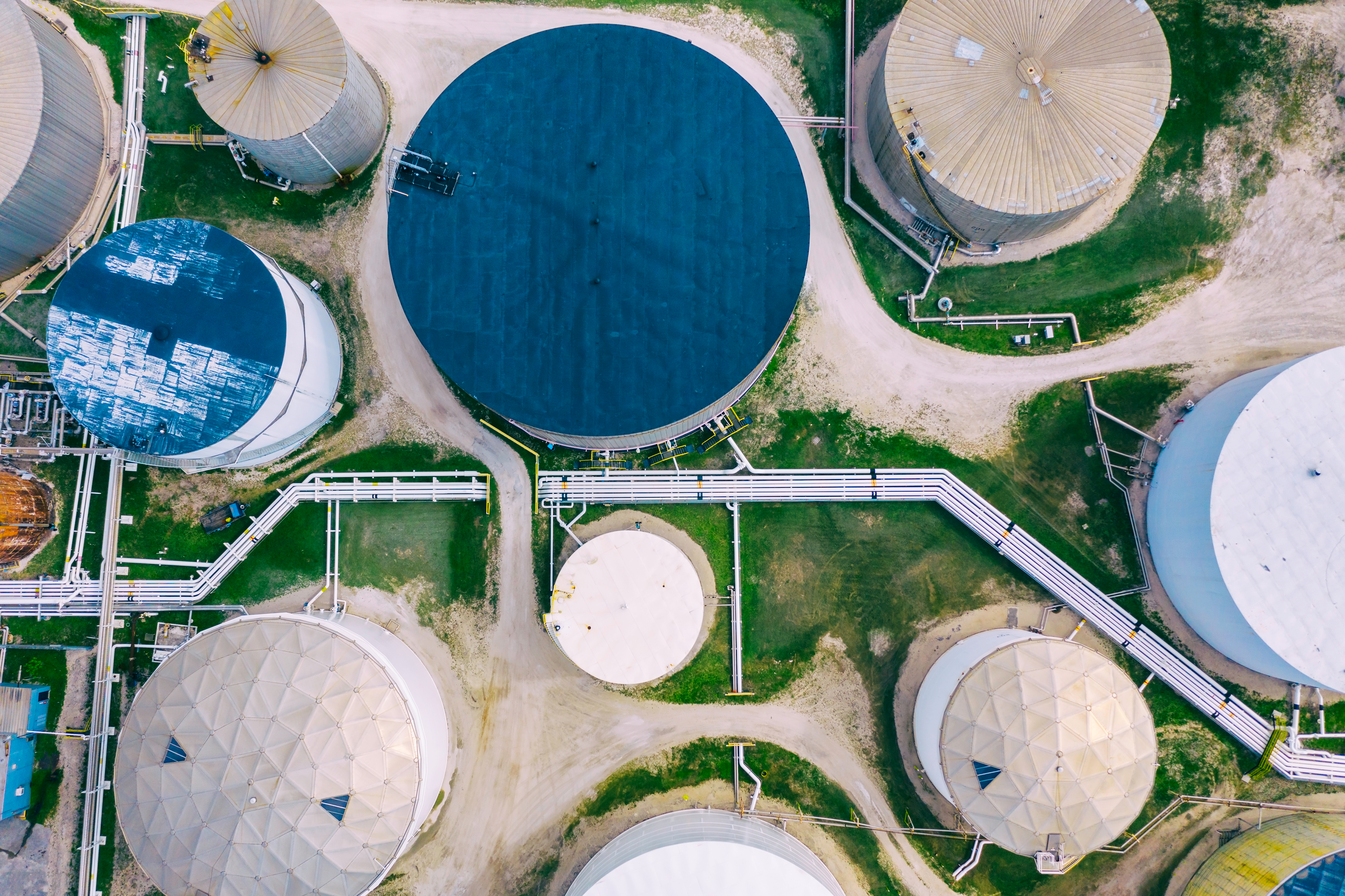
The scale of China’s Strategic Petroleum Reserve (SPR) is frequently underestimated because it is deliberately opaque. Unlike the American SPR, which is managed by the Department of Energy with public inventory data, the Chinese system is a hybrid of state-run bunkers, commercial storage mandates, and hidden military stockpiles. Current estimates suggest Beijing holds well over 1.2 billion barrels of crude—enough to cover its net imports for nearly 180 days without a single drop of new supply.
This is not merely about surviving a blockade. It is about market decoupling. By filling these reserves during periods of low global demand and drawing from them when prices spike, Beijing has effectively insulated its manufacturing sector from the inflationary shocks that typically follow geopolitical instability. When the US attempts to use energy sanctions to pressure adversaries, China’s buffer allows it to ignore the resulting price increases, providing a competitive advantage to its energy-intensive exports while Western rivals struggle with rising costs.
The Overland Diversification
Storage is only half of the equation. The second pillar of the Beijing Buffer is the systematic reduction of reliance on the South China Sea. The Power of Siberia pipelines from Russia and the expanded capacity of the Central Asia–China gas pipeline network have created a permanent, terrestrial energy bridge that the US Navy cannot reach. These pipelines do not just move molecules; they move geopolitical risk from the sea to the land, where China’s terrestrial military dominance is uncontested.
The Historical Parallel: The British Coal Gap
In the late 19th century, the British Empire maintained global dominance through its control of global coaling stations. Any navy that wished to challenge Britain had to rely on British-controlled ports for fuel. Germany, realising this vulnerability, invested heavily in synthetic fuels and domestic lignite production to bypass the British maritime monopoly. While the technology was different, the incentive was identical: to decouple national survival from a supply chain controlled by a rival hegemon.
Beijing has learned this lesson. They understand that a superpower is only as strong as its longest supply line. By shortening those lines through overland routes and thickening the "battery" of their domestic reserves, they are systematically removing the options on the American escalation ladder.
What Most People Miss: The Hidden Commercial Reserve
Analysis usually focuses on the state-owned SPR sites. What most observers miss is the role of China’s commercial refiners, the so-called "teapots." Beijing has implemented strict mandates requiring private entities to maintain minimum stock levels that far exceed commercial necessity. These are, in effect, a shadow SPR funded by private capital but controlled by the state in times of emergency.
Furthermore, China’s shift toward Electric Vehicles (EVs) is rarely framed as a security policy, yet it is the ultimate energy buffer. Every EV on the road in Shanghai or Shenzhen represents a permanent reduction in the daily petroleum requirement for civilian logistics. In a conflict scenario, the state can divert all remaining oil to the military and essential industry, while the civilian population continues to move on a domestic, coal-and-renewables-powered grid. The "energy lever" is being electrified out of existence.
Strategic Consequences
The neutralization of the energy lever has three primary second-order effects:
- Increased Risk Tolerance: With the threat of an energy-induced economic collapse removed, Beijing is likely to be more assertive in territorial disputes in the East and South China Seas.
- Sanction Immunity: Traditional Western sanctions targeting energy exports or prices (such as those seen against Russia) will have diminishing returns against a state that can survive for half a year on internal stocks.
- Shift in Naval Doctrine: As the Malacca Dilemma fades, the US Navy may be forced to pivot from a strategy of "distant blockade" to one of "close-in engagement," which is significantly more dangerous and costly.
"Power is not just the ability to act; it is the ability to withstand the actions of others. China’s oil buffer is a silent fortification, built not of concrete, but of time."
What to Watch
- Refinery Utilisation Rates: Watch for sudden drops in refinery output coinciding with high imports; this indicates a shift from processing to stockpiling.
- The Russia-China Pipeline Expansion: Any announcement regarding the 'Power of Siberia 2' will be a signal of Beijing’s confidence in its overland security.
- EV Penetration in Commercial Fleets: The transition of heavy trucking to electric or hydrogen in China is a direct indicator of military-grade energy decoupling.
The KJ Verdict
The American assumption that China is a fragile energy importer is an outdated relic of the 2010s. The Beijing Buffer has reached a critical mass where the threat of a maritime oil blockade is no longer a deterrent, but a manageable inconvenience. By the time a conflict starts, the energy war will have already been won or lost in the years spent building these underground vaults. Washington must now find a new lever of influence, as the old one no longer reaches its target.