This week’s inauguration of a new Red Sea Egyptian
military base was pregnant with the
symbolism of the rivalries shaping the future of the Middle East as well as
north and east Africa.
The inauguration took on added significance as rebel
Libyan Field Marshall Khalifa Haftar, backed by United Arab Emirates crown
prince Mohammed bin Zayed and Egyptian general-turned-president Abdul Fattah
al-Sisi, snubbed Russian president Vladimir Putin
by refusing to agree to a ceasefire in the
Libyan war.
Mr. Haftar’s refusal thwarted, at least temporarily,
an effort by Mr. Putin and Turkish president Recep Tayyip Erdogan to structure
the ceasefire so that it would align opposing Russian and Turkish interests,
allow the two parties to cooperate in the exploitation of Libya’s energy
resources, and protect a Turkish-Libyan maritime agreement
creating an Exclusive Economic Zone that
strengthens Russian-backed Turkish manoeuvres in the eastern Mediterranean.
The manoeuvres are designed to thwart a Greek-Cypriot-Israeli
agreement to build a pipeline that
would supply gas to Europe, reducing European dependence on Russian gas in the
process.
Critics charge that the maritime agreement that would
limit Greek-Cypriot Israeli access to hydrocarbons in the Eastern
Mediterranean, violates the Law of the Sea.
Warning that it would block European Union backing for any
Libyan peace deal as long as the
Turkish-Libyan maritime agreement was in place, Greece was one of the countries
Mr. Haftar visited in the days between his rejection of a ceasefire and a
conference on Libya hosted by Germany that is scheduled to be held in Berlin on
January 19.
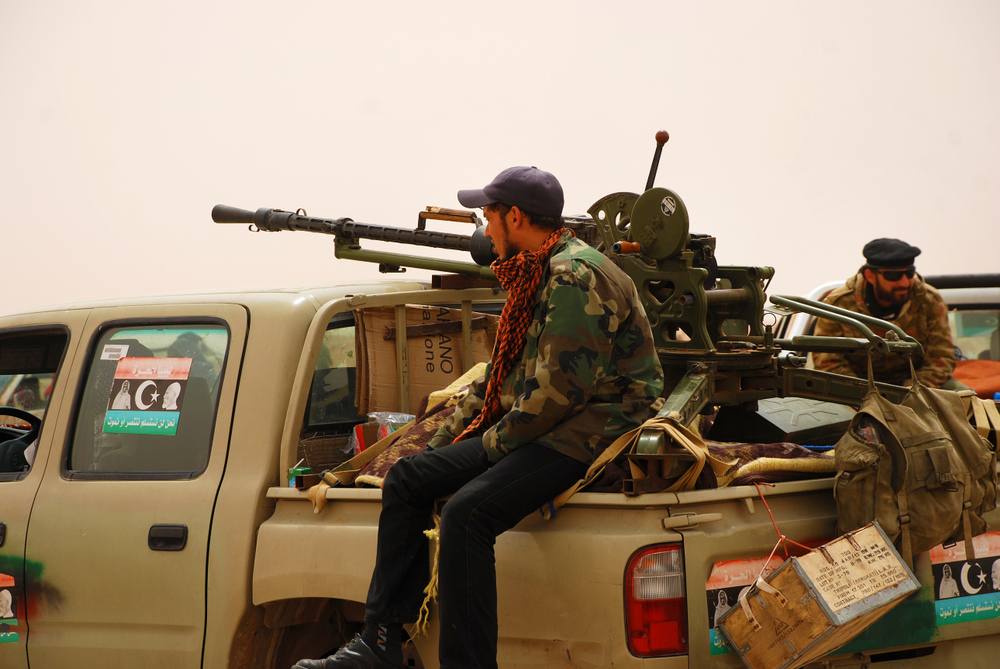
Mr. Haftar’s rejection came as Turkish troops arrived in Libya
to bolster forces of the internationally
recognized government of prime minister Fayez al-Sarraj defending the capital
Tripoli against an eight-month old assault by the field marshal’s rebel Libyan
National Army (LNA) that is backed by Russian mercenaries with close ties to
the Kremlin, the UAE, Saudi Arabia and Egypt.
Prince Mohammed’s presence at the inauguration of the
Egyptian naval base underlined the UAE’s influence in Egypt since it backed Mr. Al-Sisi’s 2013 military coup that
toppled the country’s first and only democratic elected president and the
Emirates’ determination to counter Islamist forces as well as Turkish influence in Libya and the Horn
of Africa.
UAE and Egyptian backing of Mr. Haftar is not just
about countering jihadist and non-jihadist Islamists as well as Turkey, but
also Qatar, Turkey’s ally, which also supports the Libyan rebels.
The UAE-Turkish-Qatari proxy war in Libya is
increasingly also coloured by Prince Mohammed and Mr. Al-Sisi’s opposition to
efforts to resolve divisions among the Gulf states that spilled into the open
with the declaration of a Saudi-UAE-led diplomatic and economic boycott of
Qatar in 2017.
Saudi Arabia has hinted in recent months that it may
be amenable to an easing of the boycott, a move that is believed to be opposed by the UAE as
long as Qatar does not make significant concessions on issues like freewheeling
broadcaster Al Jazeera and support for political Islam.
The new naval base’s location symbolizes Egypt’s
conundrum that also poses a problem for the UAE at a time that Egypt is at odds
with Ethiopia over the operation of a giant dam that Ethiopia is building on
the Blue Nile.
Stepping up involvement in Libya risks Egypt becoming
embroiled in two conflicts at the same time.
Egypt claims the dam puts a million Egyptian jobs, US$1.8
billion in economic output annually and electricity valued at US$300 million at
risk.
The base is aimed at “securing the country’s
southern coasts, protecting economic investments and
natural resources and facing security
threats in the Red Sea,” according to a spokesman for Mr. Al-Sisi.
The president has warned that Egypt would take all the necessary measures to
protect its rights to the Nile waters.
So far, Egypt is banking on mediation helping it avoiding
being trapped between a rock and a hard place by achieving a ceasefire in Libya
that would keep Egypt’s hands free to deal with Ethiopia were a conflict to
erupt.
The question is whether Mr. Haftar, who without
signing the ceasefire agreement reportedly told German officials that he
would adhere to its terms, and the UAE are willing to play ball.
The proof will be in the pudding. German Chancellor
Angela Merkel raised the stakes by insisting in advance of the Berlin talks
that they ensure “that the weapons embargo is adhered to again.”
The United Nations has accused the UAE together with several
other countries, including Turkey, of violating the UN embargo.
As a result, it may be the UAE rather than Mr. Haftar
who has a decisive voice in Berlin.
Said North Africa expert Ben Fishman: “Until Abu Dhabi
pulls back its drones, operators, and other crucial military support, the
prospects for Libya’s stability will remain dim. Besides the fact that they
provide the greatest advantage to Haftar’s forces, focusing on the Emiratis also makes
sense because the other foreign players currently have reasons to de-escalate
on their own.”