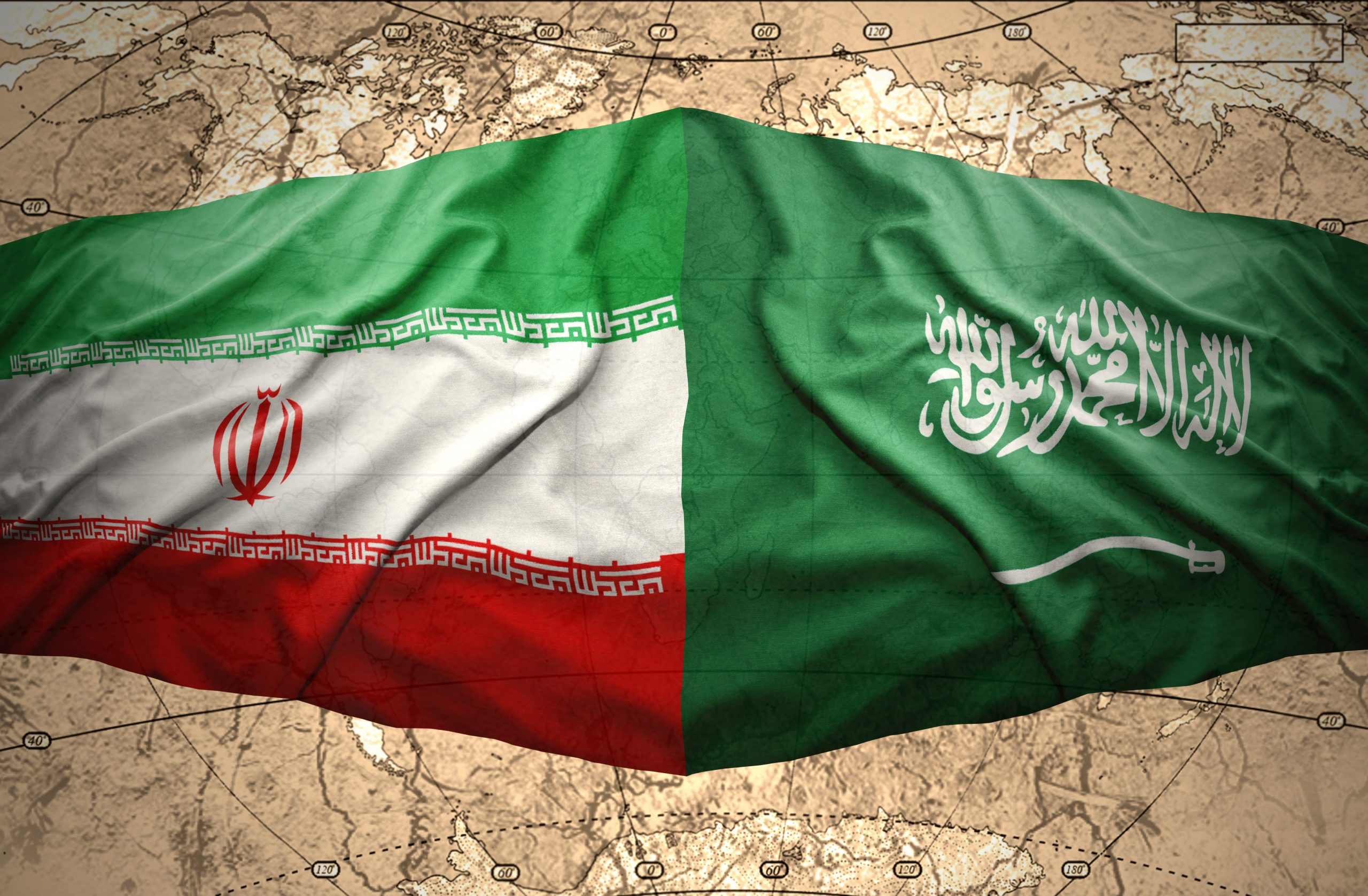
A series of recent measures in Saudi Arabia and Iran
that violate the rights, if not endanger religious and ethnic minorities call
into question their moral claims of adhering to core faith-based values of
mercy and compassion.
If anything, the two arch rivals compete in violating
the rights of minorities like Uighurs threatened with deportation to China
where they run the risk of being incarcerated in re-education camps in the
troubled, north-western province of Xinjiang; Rohingyas who have been the
victims of ethnic cleansing in Myanmar; and persecuted Bahais and other
religious minorities in Iran.
Saudi and Iranian policies seem more in line with
those of authoritarian and autocratic leaders who often seek their legitimacy
in civilisationalism that emphasizes the supremacy of a distinct
civilization at the expense of others rather than principles of
humanitarianism.
The plight of threatened Muslim majorities alongside
potential different Muslim responses to US President Donald J. Trump’s controversial Israeli-Palestinian
peace plan that favours Israel is
likely to sharpen a struggle for leadership of the Islamic world between a
Saudi-UAE-led alliance and countries like Turkey, Iran and Malaysia.
Backed by Turkey and Iran, Malaysia last month
organized an Islamic summit in Kuala Lumpur that failed to live up to its
billing of defending the rights of endangered Muslim minorities. Nonetheless,
the summit sparked ripples in various
Muslim nations in the Middle East as well as Asia.
Beyond Iran and Saudi Arabia’s overall abuse of
universal human rights, recent reports highlight their failure to ensure the
safety and rights of persecuted minorities – a principle that was left, right
and center in this week’s commemoration of the 75th anniversary of the
liberation of Auschwitz, the German
extermination camp in Poland.
“Auschwitz did not fall from the sky,” said
93-year-old historian and Auschwitz survivor Marian Turski.. He argued that
Auschwitz was the result of thousands of small steps that stripped minorities
of their dignity and humanity. “The 11th commandment is thou shalt
not be indifferent. Do not be indifferent when any minority
is discriminated against,” Mr. Turski
said.
The Saudi deportation of Uighurs who are caught in a no-man’s land given the blanket
refusal by Chinese diplomatic missions to extend their passports as part of its
brutal crackdown on Turkic Muslims in Xinjiang, casts a shadow over a visit this month to Auschwitz by
Mohammed Al-Issa, the first by a senior Saudi cleric.
Mr. Al-Issa’s visit was designed to project the
kingdom under Crown Prince Mohammed bin Salman, who has defended the crackdown, as a religiously tolerant country that has broken
with the intolerant aspects of ultra-conservative Islam, not only in its discrimination
against women but also in its attitudes towards other faiths and minority
groups.
Mr. Al-Issa heads the Muslim World League that for
decades was one of the prime Saudi vehicles for the global promotion and
funding of Sunni Muslim ultra-conservatism.
The world must ensure that “these kinds of horrible
crimes” will never “happen again,” Mr. Al-Issa said in Auschwitz, echoing
statements by multiple Auschwitz survivors who insisted that ‘never again’ was
a principle applicable to all persecuted minorities, not just Jews.
Mr. Al-Issa’s statement may well have been genuine. “His face reflected feelings of shock and
sadness as he looked at piles of used canisters of Zyklon-B, the gas used to suffocate victims, along with mounds
of eyeglasses, shoes, prayer shawls, and human hair that the Nazis collected
from incoming prisoners,” The Times of Israel reported.
“Unfortunately, humanity is still suffering from these
kinds of crimes on a large scale today, different human beings against each
other. I believe there is a huge responsibility on the international community
to do something to deal with these kinds of horrible crimes and to make sure
none of this will happen again. Our world will not be able to achieve peace
unless we have a strong will together to fight evil,” Mr. Al-Issa said in
Auschwitz.
Fighting evil would mean that arrangements are found
for Uighurs rendered without valid documents as a result of Chinese policy, if
not in the kingdom itself in cooperation with other countries rather than
exposing them to the risk of indefinite incarceration.
It would also mean adopting a compassionate attitude
towards the approximately 250,000 Rohingya who have
sought refuge in the kingdom from ethnic and religious persecution in Myanmar where they are denied basic rights.
The International Court of Justice (ICJ) last week
ordered Myanmar to adopt provisional
measures to prevent further attempts at genocide against the roughly 600,000 members of the Rohingya
Muslim minority remaining in Myanmar. Some 750,000 Rohingya have fled to
Bangladesh in recent years to escape what the United Nations called ethnic
cleansing.
Rohingya began migrating to Saudi Arabia in the 1950s
and were granted residency by King Feisal in 1973, allowing them to live, work
and travel within the kingdom and abroad.
Thousands of Rohingya have, however, been expelled in
recent years as illegal immigrants or because they entered the kingdom on false
documents, the only papers available to them, as part of Prince Mohammed’s
efforts to reduce dependence on foreign labour and increase employment
opportunities for Saudi nationals.
By the same token, Iran this week ruled that national identity cards would only
be issued to adherents of the three minority religions recognized by the
country’s constitution, Christianity,
Judaism and Zoroastrianism.
The ruling eliminated the category ‘other’ on the
application forms for the card that is needed to access government and banking
services as well as numerous other transactions.
The ruling targets Baha’is, members of a sect viewed
as heretic by mainstream Islam, and other sects, forcing them to lie to obtain
the identity card.
Baha’i leaders have been imprisoned and those who
openly follow the faith are routinely denied university education and
employment, while members of the community have seen their businesses shut down
and land confiscated by the state.
Iran’s National Organization For Civil Registration,
responding to a complaint about the omission of the ‘other’ option, advised the Baha’i complainant to in
effect disavow his faith and fill out the form with incorrect information.
“Dear citizen, we wish you health. The law neither
recognizes your religion nor offers a solution. You may submit your application
under existing options,” the authority said.