KJ ReportsKJ Reports

Pakistan Protests in Pictures

26 November 20171,034

Listen to this article

KJ narrates this report in his own voice
Pakistan Protests in Pictures
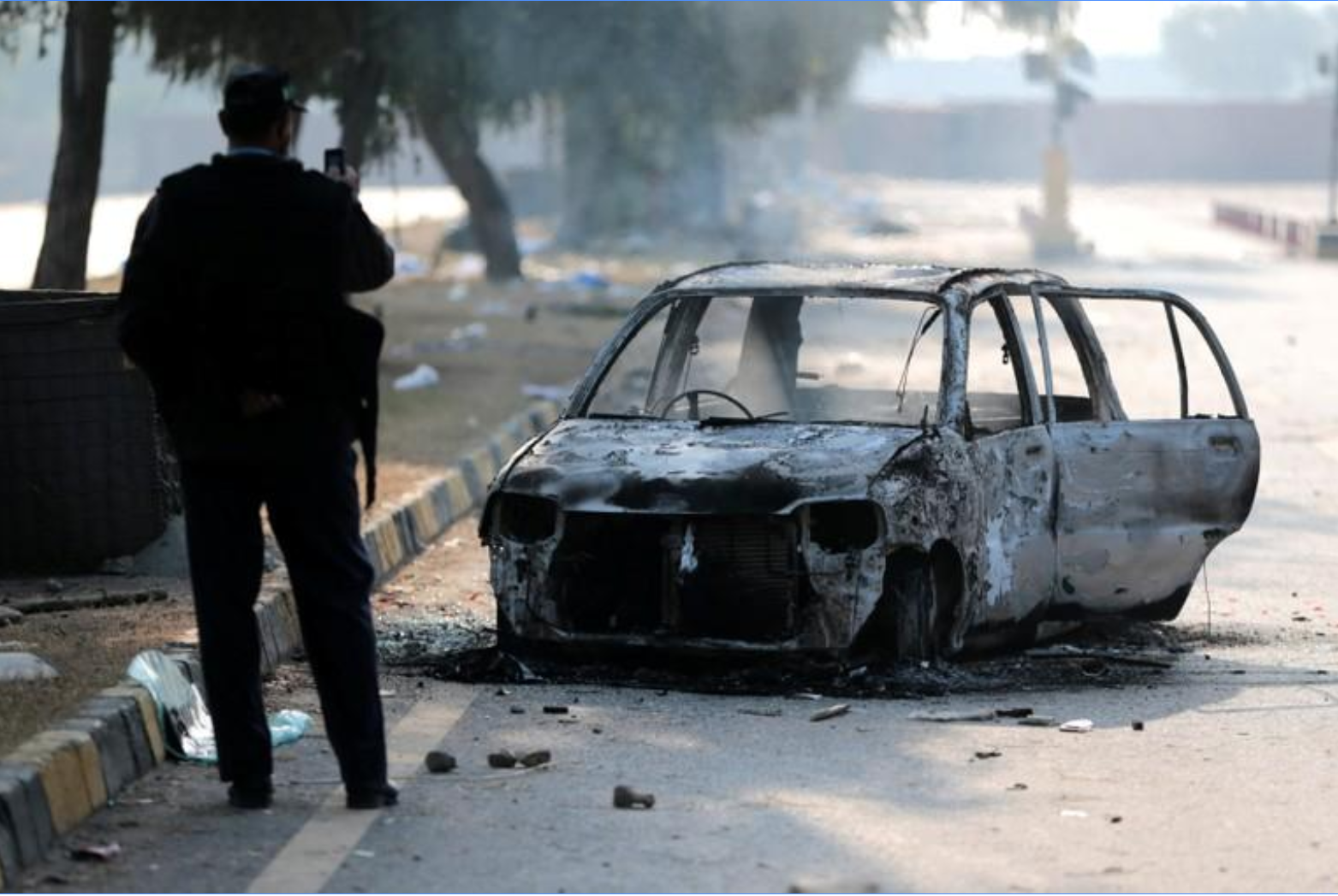
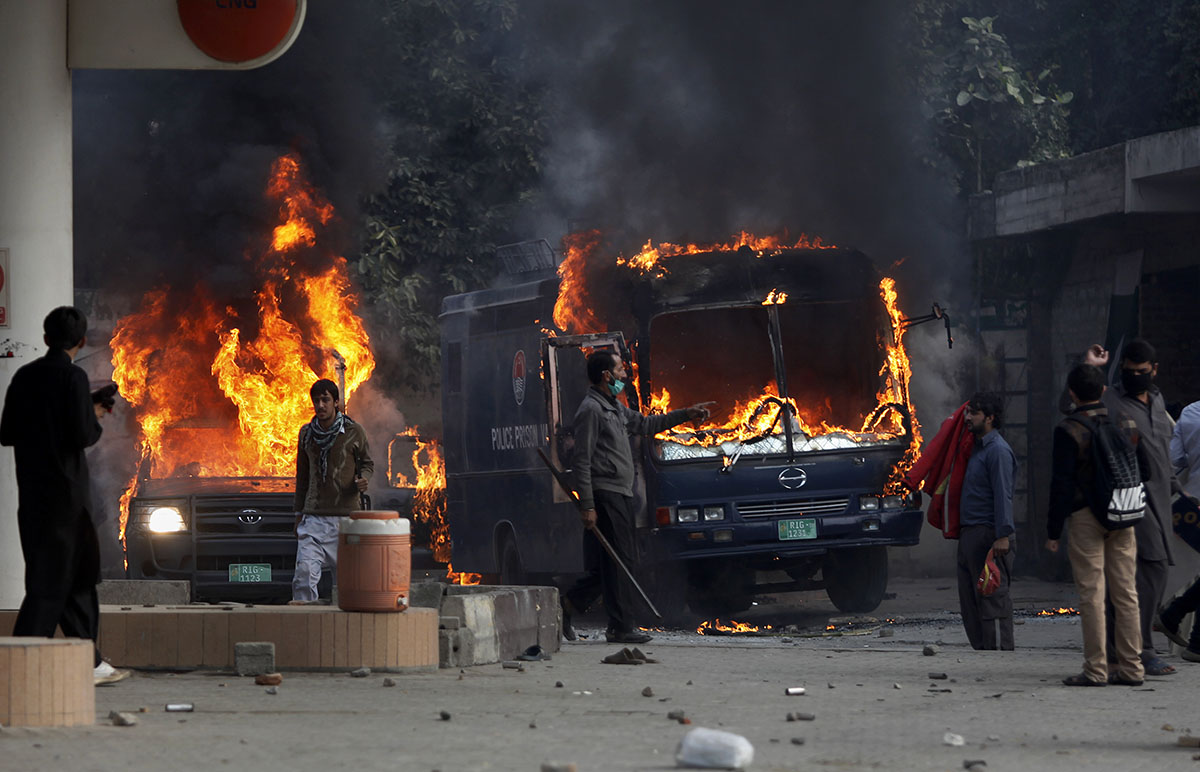
A policeman takes a picture of a car burned during clashes near the Faizabad junction in Islamabad, Pakistan November 26, 2017. REUTERS/Caren Firouz
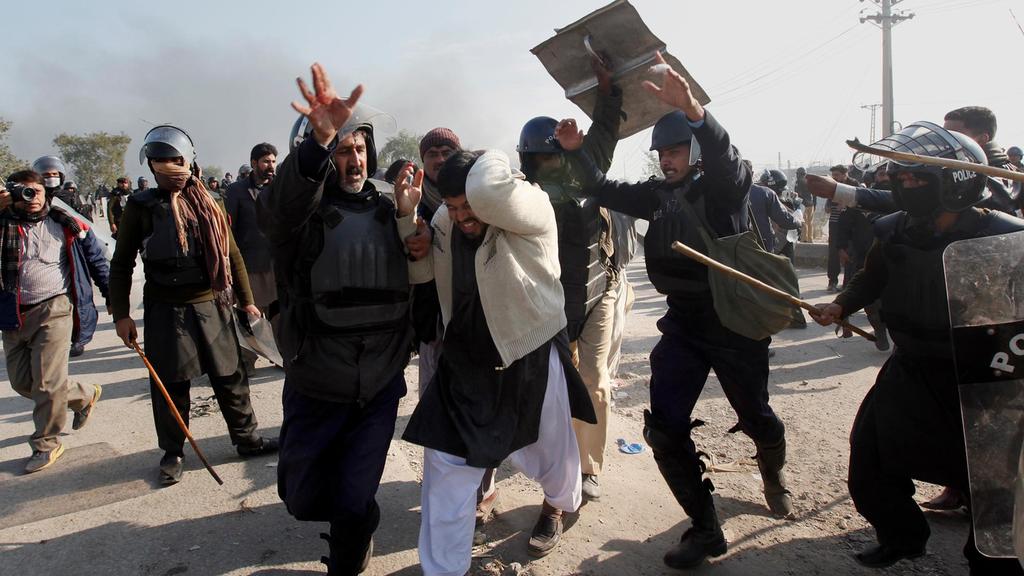
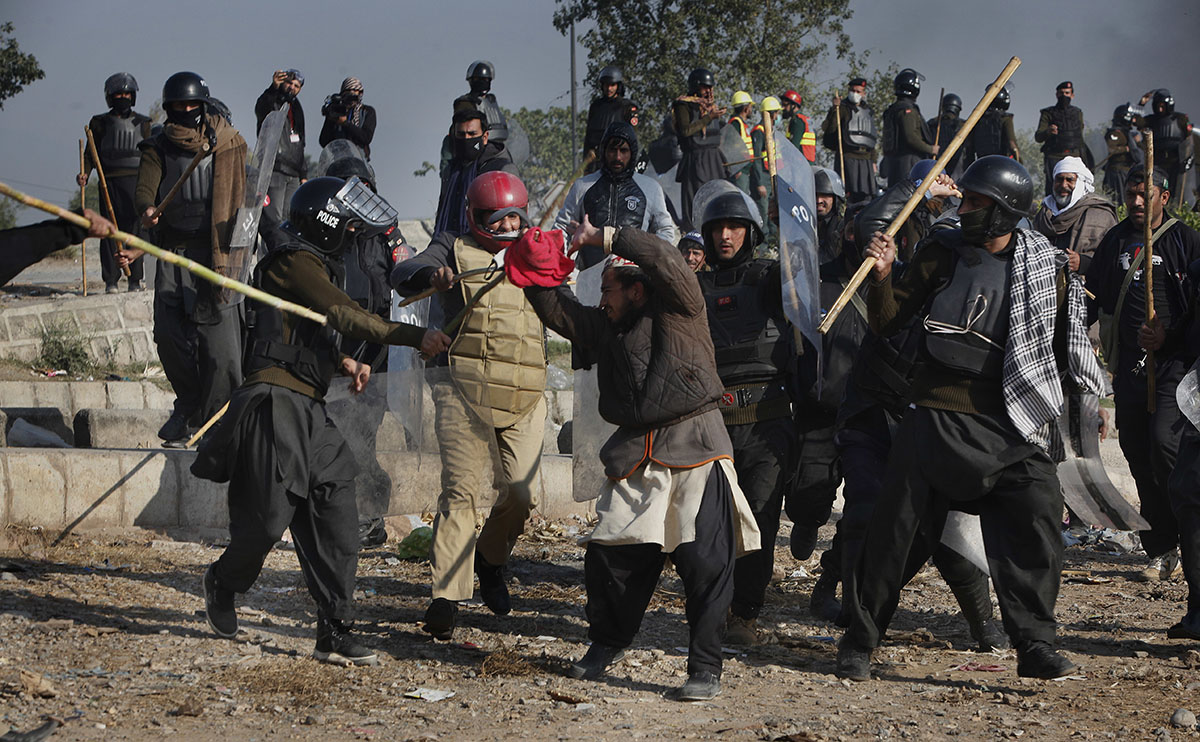
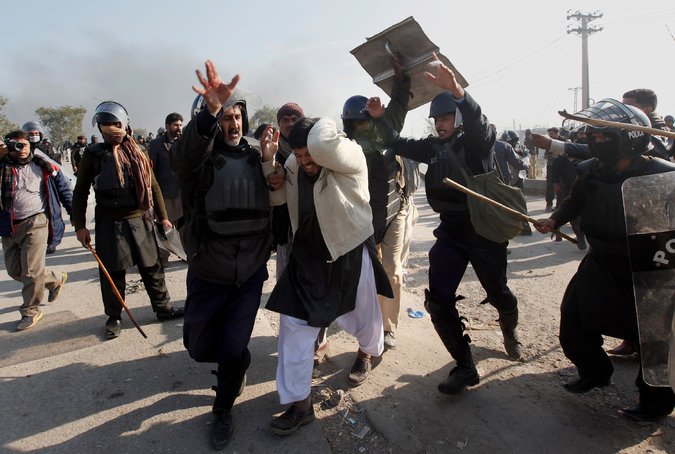
Pakistani police officers beat a protester during a clash in Islamabad, Pakistan. AP
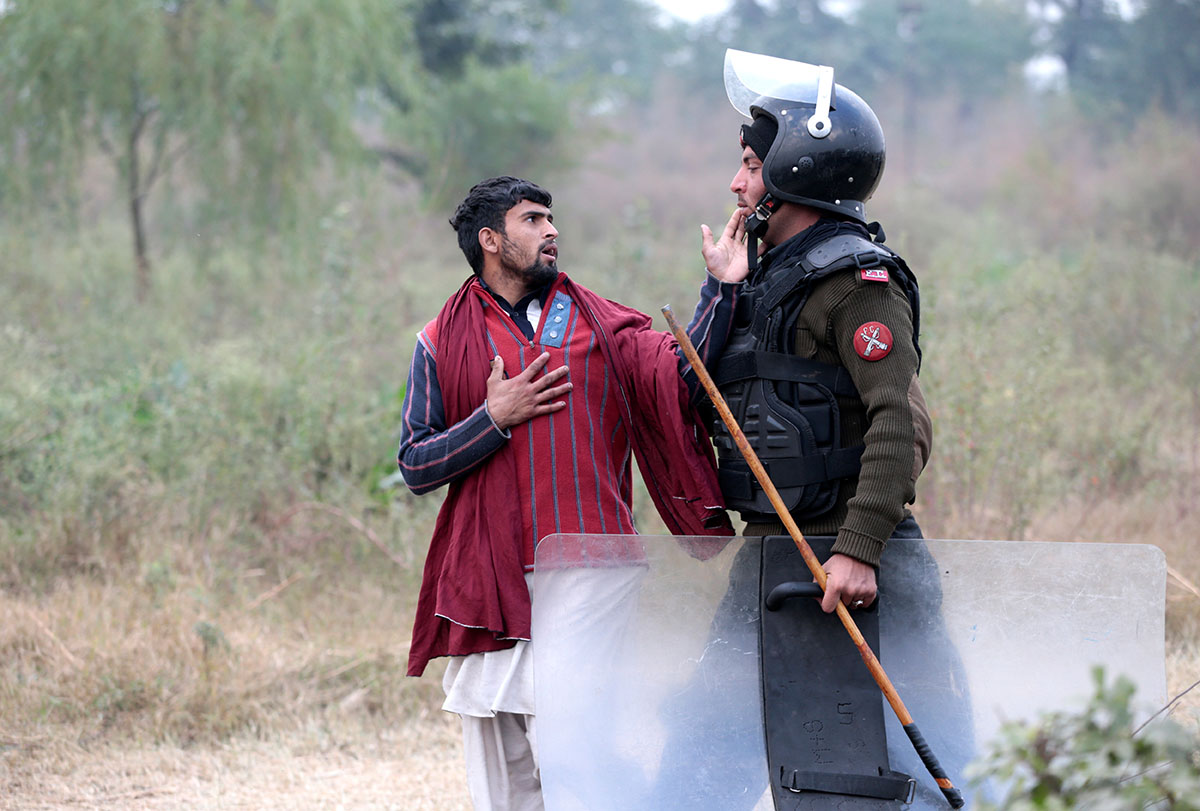
A demonstrator detained by a policeman gestures near the Faizabad junction in Islamabad, Pakistan. [Caren Firouz/Reuters]
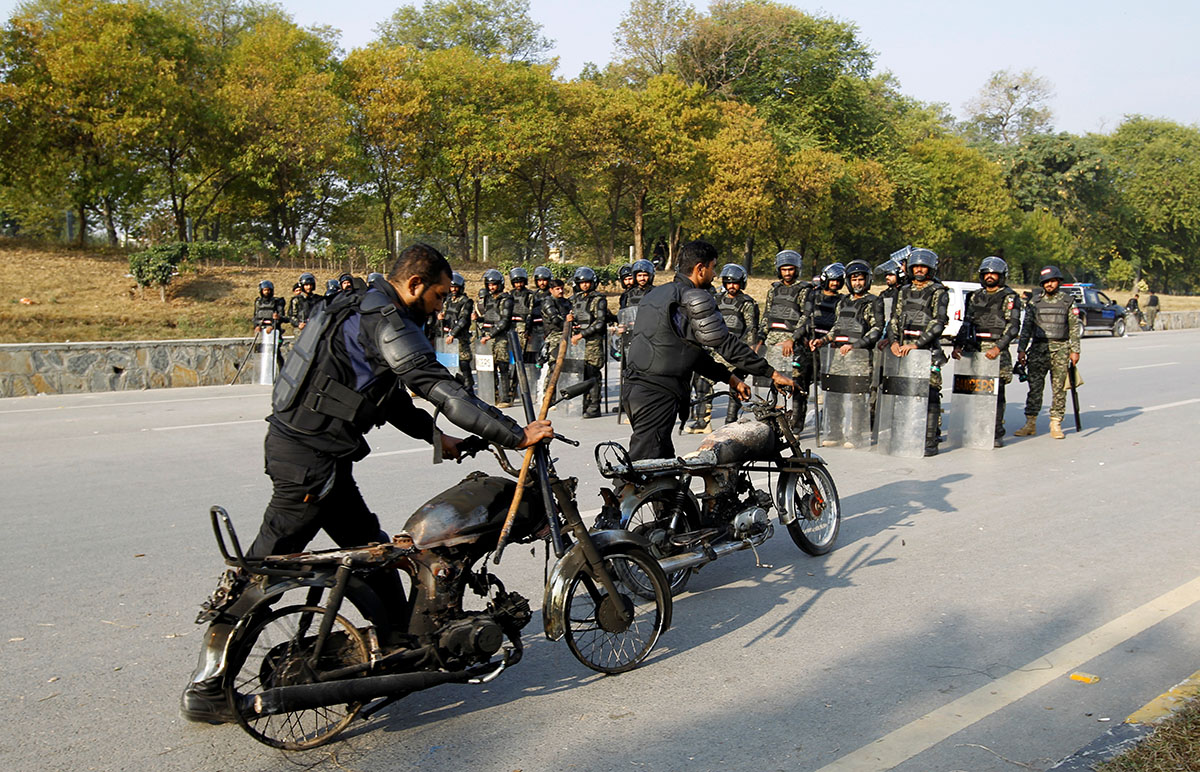
Police retrieve their motorcycles which were burned during clashes with protesters near the Faizabad junction in Islamabad, Pakistan November 26, 2017. REUTERS/Caren Firouz – RC11A631CD10
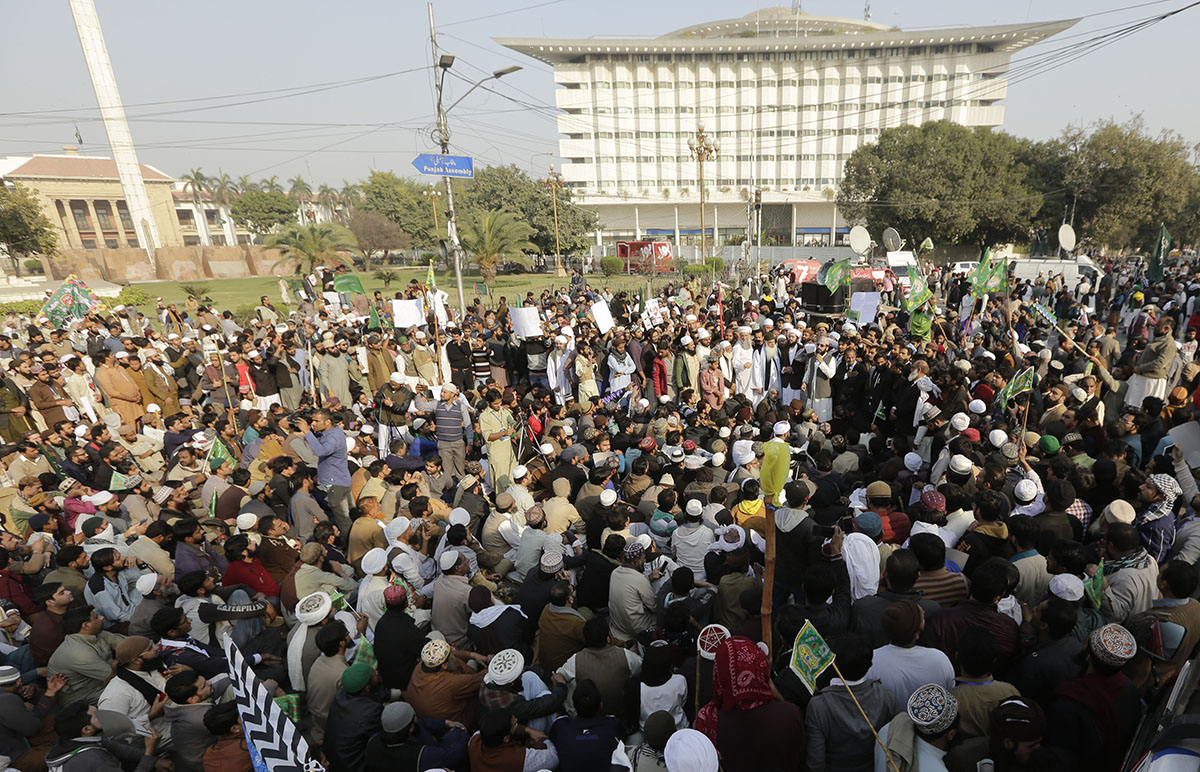
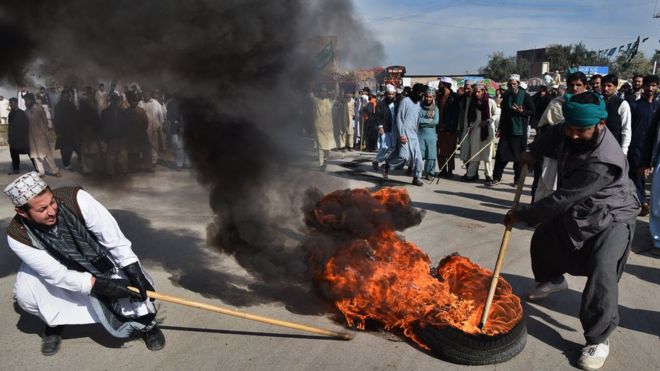
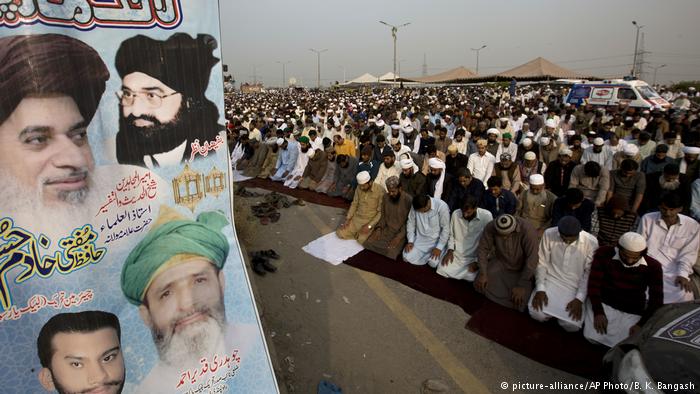
Supporters of religous group ”Tehrik Labayk Ya Rasool Allah” shout slogans to protest the crackdown by Police on their group’s supporters in Islamabad, in Lahore. [Rabat Dar/EPA-EFE]
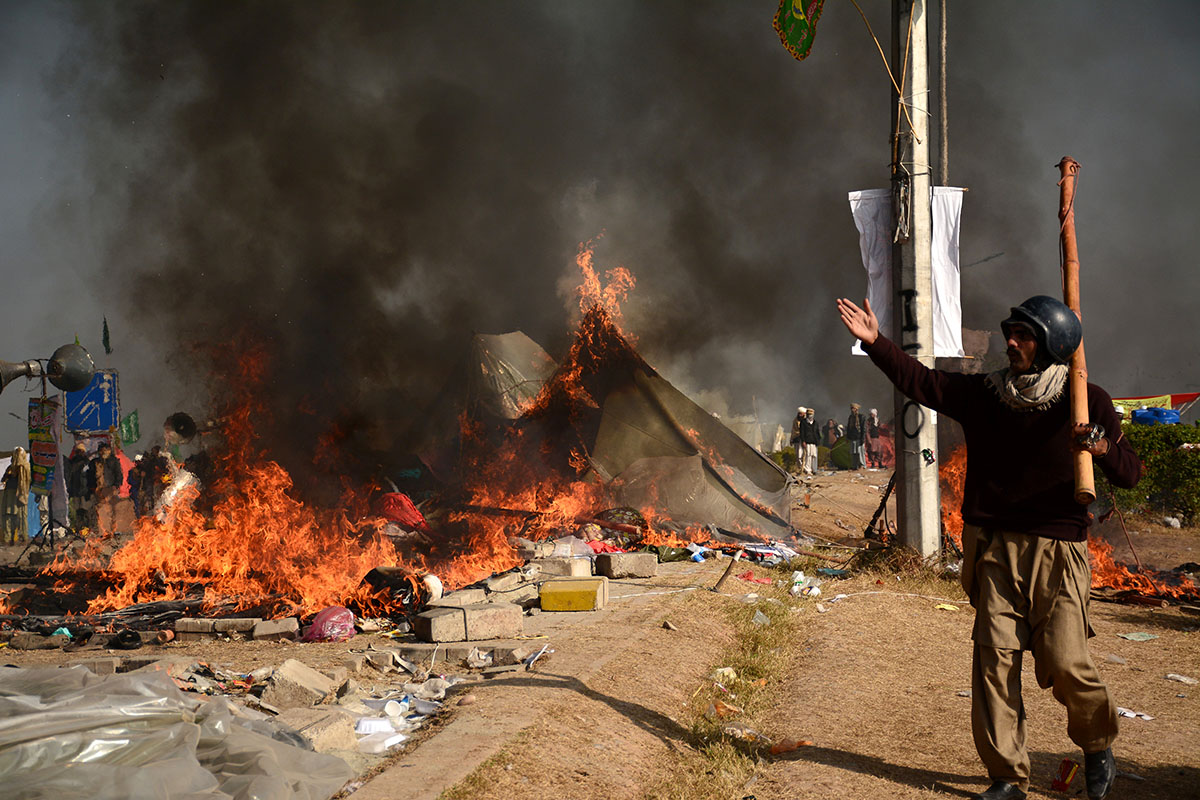
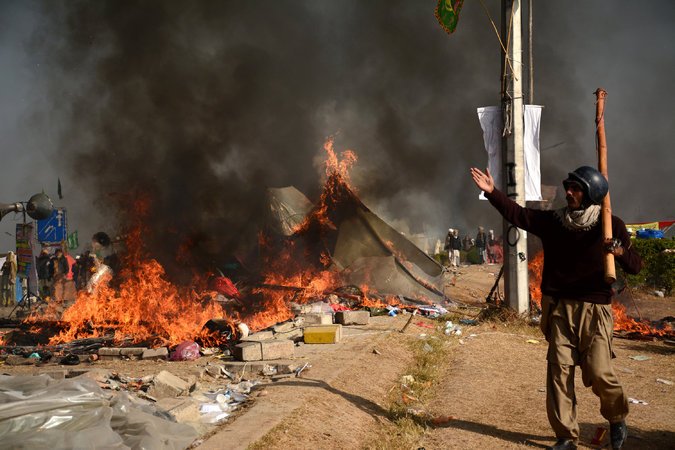
A protester walks near burning tents during clashes with police at Faizabad junction in Islamabad, Pakistan November 25, 2017. REUTERS/Stringer – RC1DC6445490
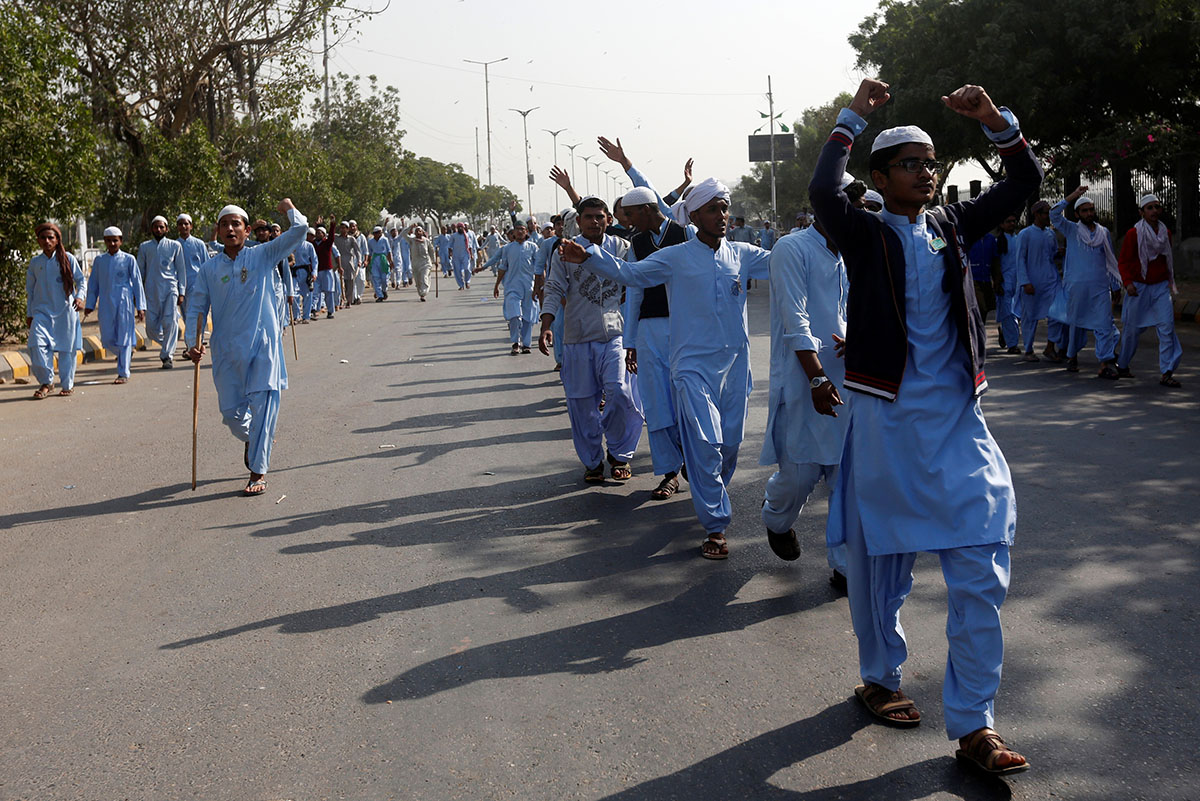
Supporters of the Tehreek-e-Labaik Pakistan, an Islamist political party, chant slogans as they walk to join the sit-in protest in Karachi, Pakistan November 25, 2017. REUTERS/Akhtar Soomro – RC12F79D3520
Pakistani police officers beat a protester during a clash in Islamabad, Pakistan, Saturday, Nov. 25, 2017. Pakistani police have launched an operation to clear an intersection linking capital Islamabad with the garrison city of Rawalpindi where an Islamist group’s supporters have camped out for the last 20 days. (AP Photo/Anjum Naveed)
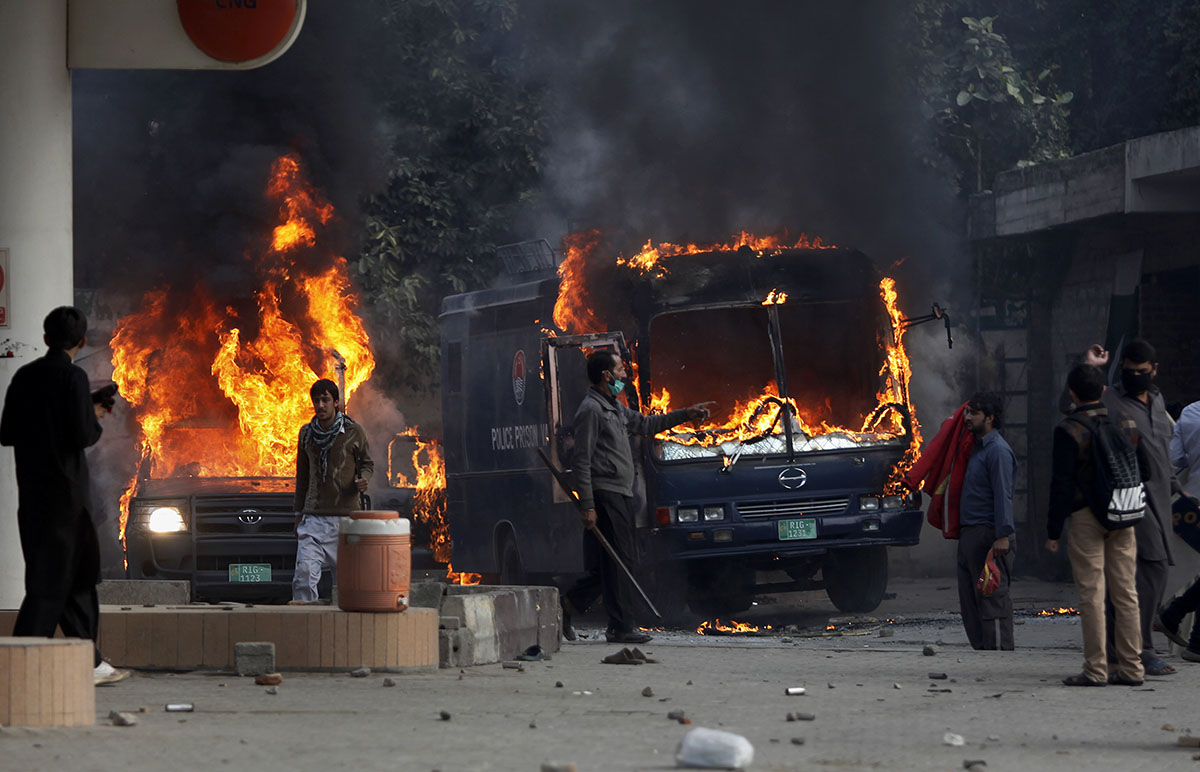
Pakistani protesters gather next to burning police vehicles after setting on fire them during a clash in Islamabad, Pakistan, Saturday, Nov. 25, 2017. Pakistani police have launched an operation to clear an intersection linking capital Islamabad with the garrison city of Rawalpindi where an Islamist group’s supporters have camped out for the last 20 days. (AP Photo/Anjum Naveed)
Protests began after a reference to the prophet Mohamed was omitted from a constitutional bill in parliament AFP/Getty Images
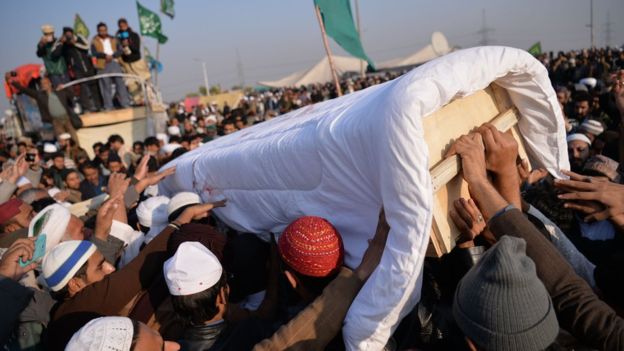
Six people are believed to have died in the protests and hundreds were injured, including police. AFP/Getty Images
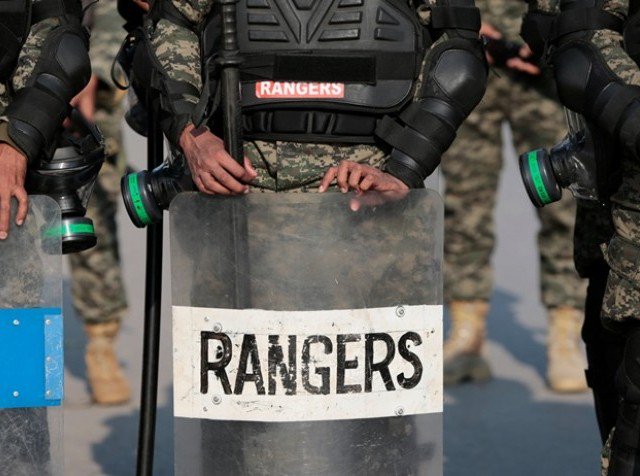
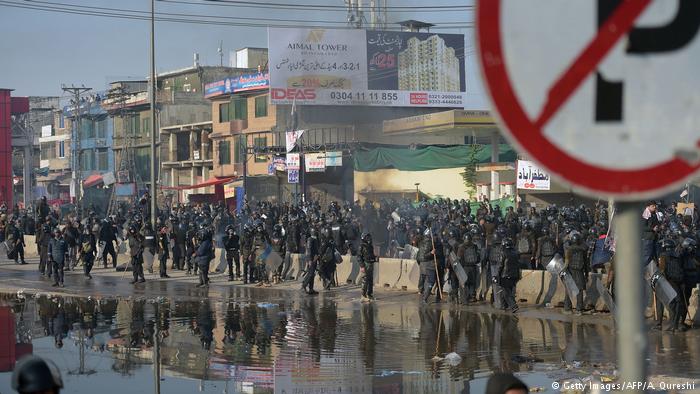
Rangers stand guard at a flashpoint with protesters near the Faizabad junction in Islamabad on November 26, 2017. PHOTO: REUTERS
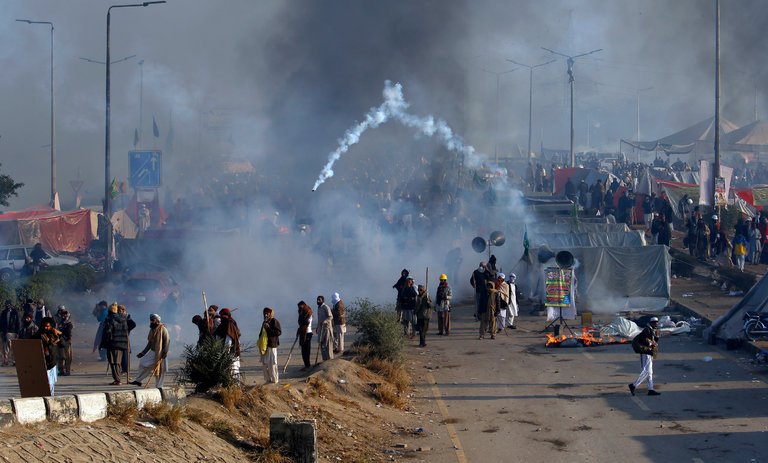
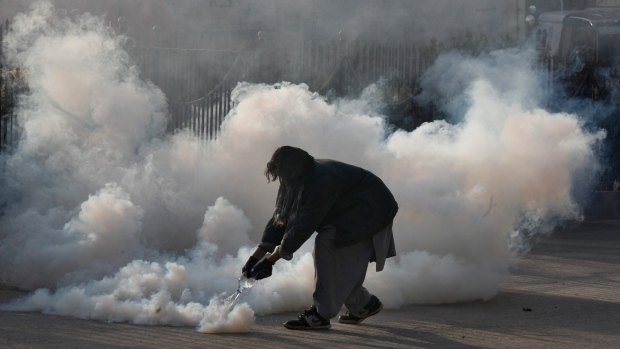
Protesters hurled back a tear-gas canister fired by the police during clashes near Islamabad, Pakistan, on Saturday. Anjum Naveed/Associated Press
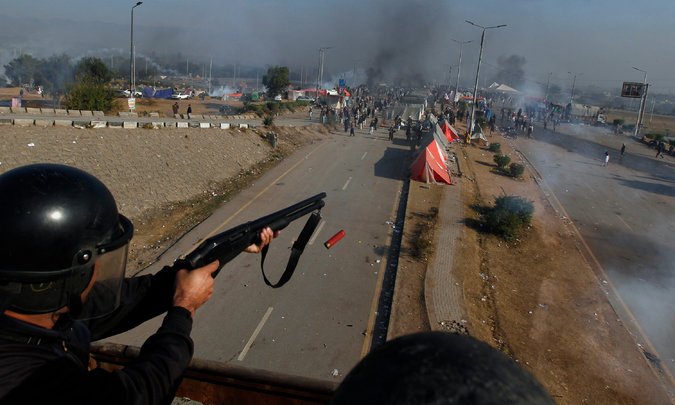
At least 8,000 police officers in riot gear and a paramilitary police force begun trying to clear out then protesters from the main interchange near Islamabad. Anjum Naveed/Associated Press
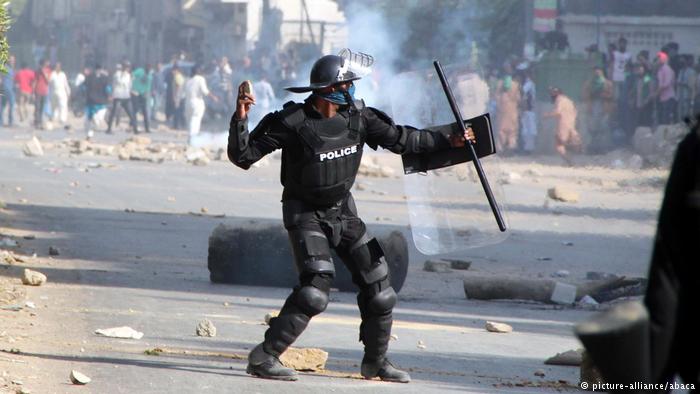
The police fired rubber bullets to disperse protesters. Officials took television news off the air to prevent live coverage from inflaming religious sentiments. Anjum Naveed/Associated Press
A protester near burning tents. The protests spread to other Pakistani cities in response to then confrontation in the capital. Reuters.
copyright picture-alliance/abaca from dw.com
A protester pours water on a tear gas shell fired by police during a clash in Islamabad, Pakistan, on Saturday. (Anjum Naveed/Associated Press)
#asia#asianews#bill#blasphemy#blasphemy-law#faizabad#government#international#islam#islamabad#karachi#khatme-nabuwat#kj-vids#kjvids#koran#lahore#loc#mereana-hond#muslims#news#pakistan#pakistan-anti-blasphemy-protests#pakistan-police#pakistan-protests#pakistani-army#prophet#punjab#quran#red-line#repeal#shahid-khaqan-abbasi#sharia

Related Intelligence

More articles
The Durand Fracture: Why Islamabad and Kabul Have Reached a Dead End
South Asia

The Durand Fracture: Why Islamabad and Kabul Have Reached a Dead End

Pakistan’s decades-long pursuit of ‘strategic depth’ in Afghanistan has collapsed into a structural rivalry. Internal economic decay and shifting militant loyalties are now forcing a permanent divorce between former patrons and their proxies.

29 Aug 2026

The Anatolia-Indus Axis: A New Security Core Outside the West
South Asia

The Anatolia-Indus Axis: A New Security Core Outside the West

The formalisation of the Riyadh-Ankara-Islamabad defence triangle marks the collapse of post-1945 security norms. It is a strategic pivot driven by sovereign survival, technological parity, and the death of Western reliability.

20 Aug 2026

The Dhaka Disconnect: New Delhi’s Neighbourhood Policy Collapse
South Asia

The Dhaka Disconnect: New Delhi’s Neighbourhood Policy Collapse

India’s strategic reliance on a single political dynasty in Bangladesh has backfired. As Dhaka pivots toward Beijing and Islamabad, New Delhi faces a structural security dilemma that threatens its entire eastern flank.

18 Aug 2026

The Tarapur Squeeze: India’s Strategic Pivot to American Atoms
South Asia

The Tarapur Squeeze: India’s Strategic Pivot to American Atoms

As Washington intensifies sanctions on Iranian hydrocarbons, New Delhi is trading its traditional stance of strategic autonomy for long-term energy immunity. This shift marks a fundamental realignment of Indian power around American nuclear technology and logistics.

14 Aug 2026

The India Exception: Why Washington Subsidises New Delhi’s Neutrality
South Asia

The India Exception: Why Washington Subsidises New Delhi’s Neutrality

Despite intensifying Western sanctions on global energy markets, Washington continues to grant New Delhi quiet exemptions. This calculated leniency reveals a structural necessity: the White House cannot counter Beijing without an Indian economy powered by Russian fuel.

14 Aug 2026

The Petrol Rouble: How India’s Refineries Became Russia’s Life Support
South Asia

The Petrol Rouble: How India’s Refineries Became Russia’s Life Support

India’s strategic refusal to join Western price caps has evolved from opportunistic trade into a structural necessity for the Kremlin. Without New Delhi’s refining capacity, the Russian state budget faces immediate fiscal collapse.

13 Aug 2026