China-Pakistan economic corridor will amplify Chinese influence on Pakistan
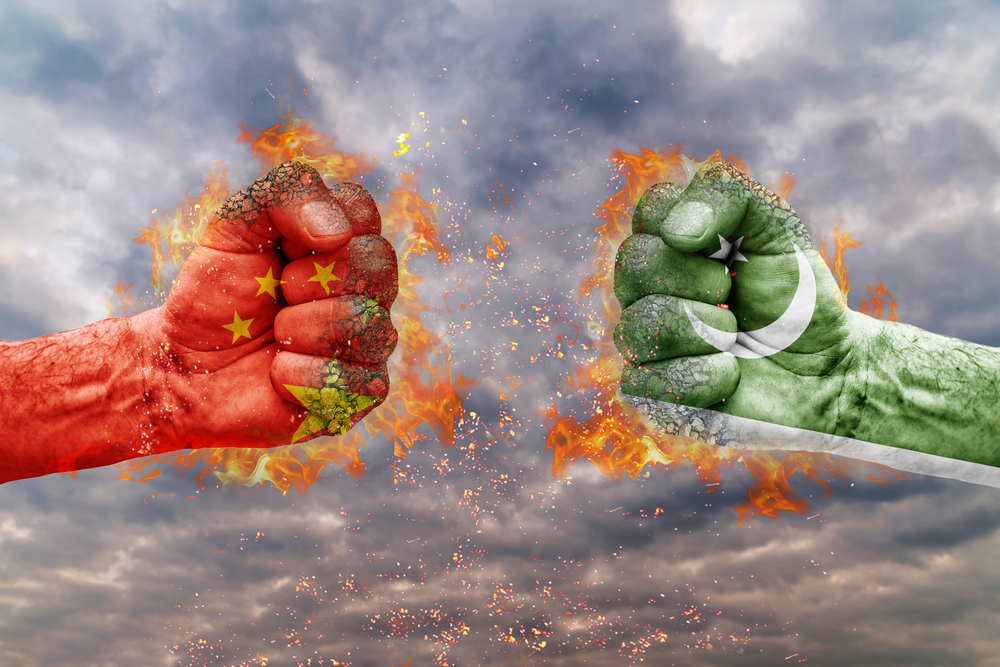
China’s belt road initiative has long been forecasted as a project that would give the superpower complete geopolitical and economic dominance in Asia, and its most significant aspect, the China-Pakistan economic corridor risks putting Pakistan in a deep economic reliance on China, and hence geopolitically paralyzed in opposing them.
Washington’s criticism of the project surrounds this problem. Alice Wells, the top United States diplomat for South Asia, reiterated the Trump leadership’s long-term position on the project last month: aid is an illusion, Pakistan is headed for a debt trap, and Beijing will consolidate all profits. Pakistan’s repayments to China are stretched over 20 years, a timeline aligned with the corridor’s prospective operations. According to official documents with the Ministry of Planning, total payments amount to US$39 billion where US$28 billion accounts for infrastructure and energy projects and US$11 billion accounts for dividends (a sum extracted out of profits). These specifics contest Well’s assertion that the “bulk of payments start to come due in the next four to six years”, and that “the corridor is going to take a growing toll on the Pakistan economy”.
China can also take the opportunity to establish military bases and proxies in Pakistan to form a strong counter-balance to India, which may align with Pakistan’s geopolitical rivalry with India, but will hurt its dignity as a regional power and the independence of its military.
Pakistan trying to forge stronger ties with Japan
In light of this incoming possibility of Pakistan’s economic reliance on China, they have looked to strengthen bilateral ties with Japan in order to have various economic and geopolitical options in maintaining their regional position. Most recently, Pakistan and Japan have reiterated their desire to enhance bilateral relations including efforts for peace and security in the region.
This resolve was expressed in a meeting between army chief General Qamar Javed Bajwa and Sonora Kentaro, Special Adviser for Foreign Affairs to Japan’s President Shinzo Abe. “During the meeting matters of mutual interest including overall regional security situation were discussed,” read a statement issued by the military’s media wing. “Visiting dignitary appreciated and acknowledged Pakistan’s positive role in the region. Both reiterated the desire to further enhance bilateral relations including efforts for peace and security in the region,” read the Inter-Services Public Relations (ISPR) statement. Furthermore, Pakistan and Japan on Monday signed a Memorandum of Cooperation that would allow skilled Pakistani workers to secure employment in the East Asian island nation.
Ministry of Overseas Pakistanis and Human Resource Development Secretary Aamir Hasan and Japanese Ambassador to Pakistan Kuninori Matsuda inked the agreement, which envisages opening up 14 Japanese sectors for Pakistan’s workers, including construction, information technology, nursing, manufacturing and engineering. “We need to sign this framework to hire Pakistani labour,” announced the Japanese ambassador at the signing, “as Japan is currently facing a serious shortage of workers due to an ageing society and shrinking population.” Pakistan’s increasing cooperation with Japan could be a signal that they do not intend to give in to Chinese economic pressure.
India got there first
While Pakistan and Japan have recently initiated strengthening of ties to overlook regional peace and counter Chinese influence, India has already been developing such a dialogue with Japan this year, and quite successfully. India turned to Japan to establish a force that can counter China’s geopolitical expansion. India and Japan held their inaugural defence and foreign ministerial dialogue on Nov. 30.
The new talks referred to as the “2+2,” a diplomatic term for bilateral meetings between defence and foreign ministers are expected to advance cooperation around a range of bilateral issues ahead of next month’s annual summit between Prime Ministers Shinzo Abe of Japan and Narendra Modi of India. Relations between India and Japan provide a stabilizing anchor for rules-based norms and values at a time when the United States is increasingly preoccupied with domestic concerns and Asia is wracked by the unsettling rise of China and the broadening spread of nationalism and authoritarianism.
Furthermore, and more worryingly for Pakistan, India and Japan have joined together to warn Pakistan in their role in regional security. In their inaugural foreign and defence ministerial dialogue, India and Japan on Saturday voiced serious concern over the threat posed to regional peace and security by terror networks operating from Pakistan and asked it to take “resolute and irreversible” action to contain terrorism. Pakistan on Monday categorically rejected a reference towards it in a Joint Statement issued by Japan and India in New Delhi last week, calling it “gratuitous and completely unwarranted”. This could be a sign that despite recent developing relations between Pakistan and Japan, Japan is already on a more established footing with India, which could be a major obstacle to developing Japan-Pakistan relations further.