KJ ReportsKJ Reports

Did Islam destroy the Mongols? – Rise of Muslims Episode 4

24 December 20182,737

Listen to this article

KJ narrates this report in his own voice

Did Islam destroy the Mongols? – Rise of Muslims Episode 4

Based entirely on the book by Ali Mahmood titled “Muslims” – Purchase using this link – https://www.kjreports.com/product/muslims/

In the fourth episode of this videos series on the book titled “Muslims” by Ali Mahmood, the author talks about the Mongol Empire, Timur and the The Delhi Sultanate

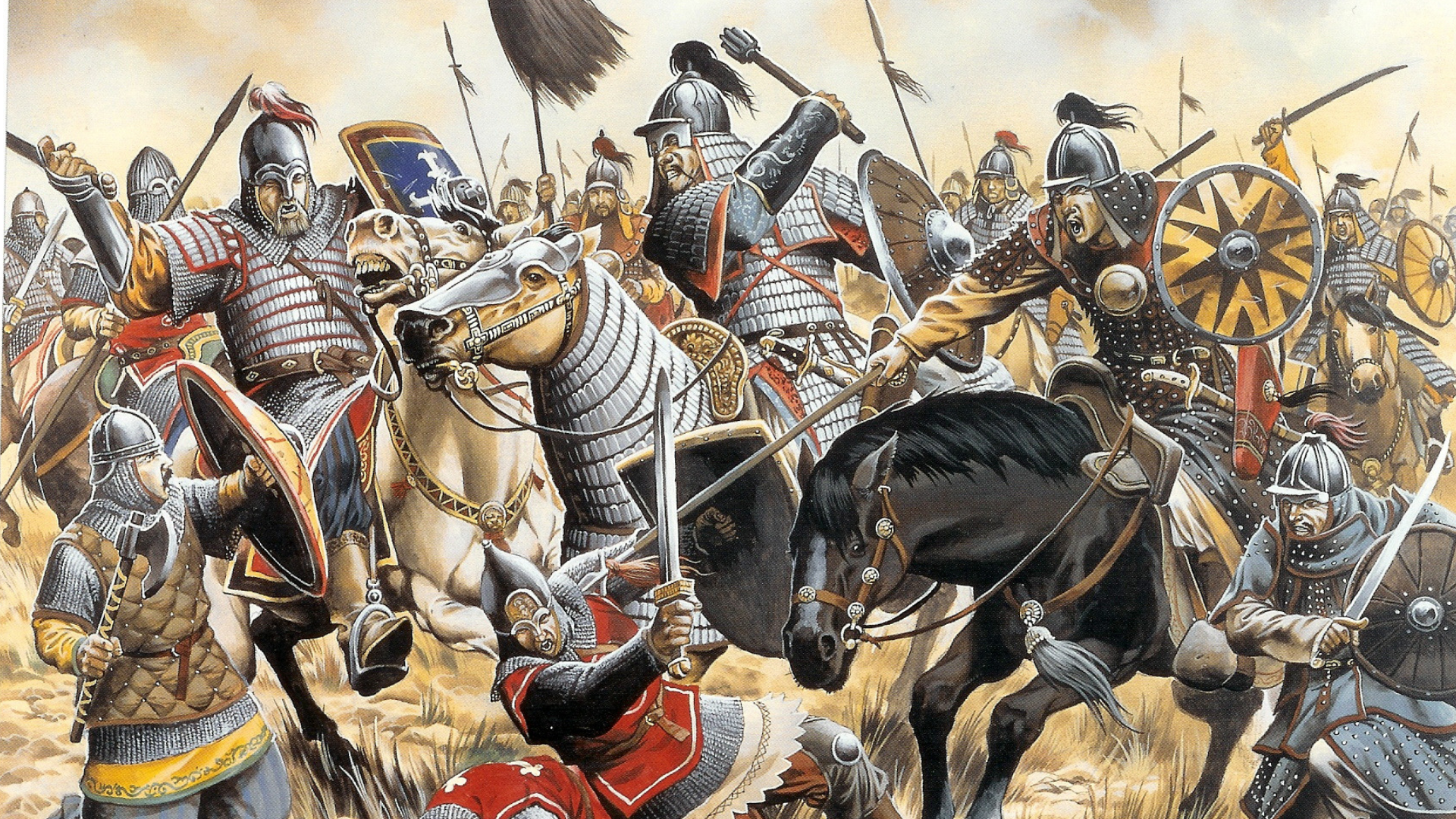
In the twelfth century the two great empires of the time were the Muslims in the Middle East and the Chinese in the Far East. Between these two great empires lay a vast land, by-passed by history, whose inhabitants were the nomad Mongols who lived as they had always lived on horseback, in tribes without cities, without houses, without books.

It was here that Temujin was born who would later be known as Genghis Khan, the World Conqueror. His father died and he was raised by his mother. Survival was not easy, and adversity turned the helpless and illiterate child into a warrior who created the greatest empire in history, a lawmaker whose Yasa gave his people a code that endured long after his death, and a leader whose wisdom and discipline inspired and transformed his followers. He imposed a system based on merit.

Young Temujin was captured and locked into a big wooden collar called a kang. He escaped but knowing it was futile to flee with no horse, no food and a kang around his neck, he appealed to the family that had been his recent jailor who hid him. Temujin had a magical ability to persuade and seduce. He was saved and many years later he rewarded his saviours with the privileges of not paying taxes and sharing the emperor’s cup. All those who helped Genghis were rewarded, all who resisted him were destroyed.

The most important of the early followers of Genghis were two brothers, Jelme who once saved his life by sucking out the poison from an arrow that wounded the neck of the Khan, and Subotai who went on to become the greatest general in history. Subotai conquered thirty-two nations and won sixty-five pitched battles.

His achievements surpassed Alexander as he conquered Korea, China, Persia, Hungary and Russia. Europe was only saved by the death of Genghis Khan which required all Mongols to return to Mongolia to elect his successor. Subotai was a master of deception and surprise and possessed the soul of a gambler, which Napoleon considered the most important trait of a great general.
Related Intelligence

More articles
The Ghost of Radcliffe: Why 1947 Still Governs 21st-Century Asia
History

The Ghost of Radcliffe: Why 1947 Still Governs 21st-Century Asia

Geographic partitions are not historical events; they are active geopolitical engines. In South Asia, a hasty retirement from Empire created a structural instability that ensures permanent mobilisation and restricts the rise of two nuclear powers.

15 Mar 2026

Pax Mongolica: The Hard-Power Blueprint for Global Integration
History

Pax Mongolica: The Hard-Power Blueprint for Global Integration

Modern globalisation is often framed as a Western invention. In reality, the 13th-century Mongol Empire established the first template for a borderless economy, proving that global trade requires a single, ruthless security guarantor to function.

15 Jan 2026

The Dollar Pact: Why Bretton Woods Never Actually Ended
History

The Dollar Pact: Why Bretton Woods Never Actually Ended

The 1944 Bretton Woods agreement is often treated as a historical relic. In reality, its core architecture remains the primary engine of American hegemony, weaponising global trade through a system of structural dependency that has no peer.

15 Oct 2025

The New Feudalism: Why the Westphalian Order is Withering
History

The New Feudalism: Why the Westphalian Order is Withering

The nation-state is not dying, but it is losing its monopoly on power. As digital territories and corporate spheres of influence supersede physical borders, we are witnessing the gradual return of pre-Westphalian overlapping jurisdictions.

15 Jun 2025

The Invisible Rot: Why Great Powers Implode From Within
History

The Invisible Rot: Why Great Powers Implode From Within

Conventional wisdom blames external rivals for the fall of empires. History suggests otherwise. True decline is a domestic process of institutional sclerosis, currency debasement, and the fatal decoupling of elites from national interests.

15 Feb 2025

The Suez Moment: When London Realised Might Was Not Money
History

The Suez Moment: When London Realised Might Was Not Money

In 1956, Britain’s imperial facade collapsed not through military defeat, but through a financial ambush. This structural analysis examines why the Suez Crisis remains the ultimate lesson in the fragility of debt-backed power.

15 Oct 2024