
The payoffs were reported last year to President Ford as an impropriety by the Intelligence Oversight Board, a three-member panel set up by Ford to curb CIA abuses.
President Ford took no steps to stop the covert payments. Last hear Hussein was paid approximately $750,000 by the CIA.
President Carter learned of the payoffs earlier this week after this newspaper began its investigation. He ordered that the payments be stopped.
The secret arrangement with Hussein had not been disclosed to Carter by the CIA or by any member of the previous administration, including President Ford, former Secretary of State Henry A. Kissinger, or former CIA Director George Bush.
Carter was “distressed” that he had not been told, according to well-placed sources, and sees the solution to CIA abuses as quick confirmation of his nominee as CIA director, Navy Adm. Stansfield Turner.
In addition, the Senate Intelligence Committee created last year to oversee the CIA apparently was not given the full story by the Ford administration of the secret payments to Hussein.
One of the most closely held and sensitive of all CIA covert activities, the payments to Hussein were made under the codeword project name of “No Beef.” They were usually delivered in cash to the king by the CIA station chief in Amman.
As justification for the direct cash payments to Hussein, the CIA claimed that Hussein was allowing U.S. intelligence agencies to operate freely in his strategically placed Middle Eastern country.
Hussein himself provided intelligence to the CIA and forwarded money from the payments to other government officials who provided intelligence or cooperated with the CIA.
Nonetheless, some CIA officials considered the payments nothing more than “bribes” and reported the matter to President Ford’s oversight panel.
Hussein, according to sources, considers the payments simply another form of U.S. assistance.
Within the CIA, the “No Beef” project has been considered one of its most successful operations, giving the United States great leverage and unusual access to the leader of a sovereign state.
The payments were first made to Hussein in 1957 during the Eisenhower administration. The initial payments apparently ran in the millions of dollars but they were sharply curtailed to the $750,000 level last year.
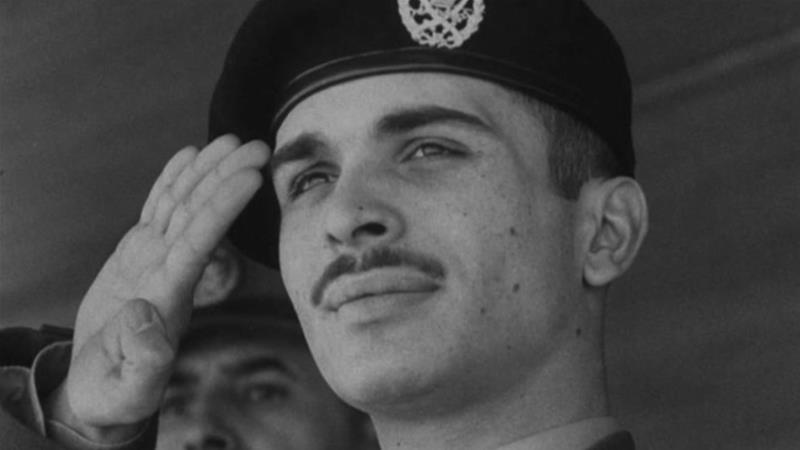
Hussein was only 21 when he first became a beneficiary of CIA funds. It was a time when Jordan was virtually a ward of the United States and Hussein had little money to support his lifestyle, which earned him the reputation as a “playboy prince.”
Hussein has a well-publicized taste for sports cars and airplanes. As once previously reported, the CIA has provided Hussein with female companions. The agency also provided bodyguards for Hussein’s children when they were abroad in school.
Some money from the most recent CIA payments to Hussein have been used to pay for bodyguards for his children.
Over the years, Hussein has maintained friendly relations with the United States and his country has been the recipient of substantial military and economic aid – about $200 million in loans and grants last year alone.
The “No Beef” payments to Hussein were made outside the conventional channel of military and economic assistance.
Well-placed sources said that nonetheless the United States has not been able to direct Hussein’s overall policy decisions. He has not been a “puppet,” the sources said, but he has rarely drifted outside the U.S. orbit.
In late 1974 the CIA became the focus of several government investigations into alleged abuses, and in February, 1976, President Ford directed a reorganization of the intelligence community.
Part of a Feb. 18, 1976, executive order set up the Intelligence Oversight Board which, among other things, was to “report in a timely manner to the President any activities that raise serious questions about propriety.”
The office of the general counsel in the CIA was assigned by the exectuve order to report any alleged abuses to the oversight panel.
The general counsel soon made such a report on the Hussein payments, and called them possibly improper.
The panel appointed by Ford included former Under Secretary of State Robert D. Murphy, former Secretary of the Army Stephen Ailes, and business book publisher Leo Cherne.
By last summer the oversight panel had made a formal report to President Ford on the payments, concluding that they were improper. Ford read the report but ordered no action taken.
Secretary of State Cyrus R. Vance is scheduled to meet with King Hussein today during Vance’s six-nation trip to the Middle East.
Jordan is widely considered a moderating influence on the Palestinians and a key to any lasting Middle East peace settlement.
The country is considered a vital part of any realistic option for getting the Palestinians represented at a future Geneva peace conference.
Geographically, Jordan is in a central position, sharing borders with Israel, Syria, Iraq, and Saudi Arabia. Israel’s entire eastern border touches Jordan.
Hussein’s decisions have often been highly compatible with U.S. and Israeli interests. For example, he expelled the Palestine Liberation Organization from Jordan in 1970, though this also helped Hussein’s own domestic situation.
In 1973, Hussein refused to join in the Arab war against Israel.
It is often considered a miracle that Hussein has held power for 24 years through the turbulence of the Middle East wars, frequent internal strife and at least a dozen assassination attempts.
Last week his wife, Queen Alia, 26, died in a helicopter crash while returning from a hospital mercy mission.