KJ ReportsKJ Reports

5 Weapons Used By The Ottomans

6 July 20172,452

Listen to this article

KJ narrates this report in his own voice

5 Weapons Used By The Ottomans

Yatagan

The yatagan or yataghan is a type of Ottoman knife used from the mid-16th to late 19th centuries

Yatagans consist of a single-edged slightly curved blade, 60-80CM Long with a bone or ivory hilt

In Ottoman period, yatagans were made in all the major cities of the Ottoman Empire, particularly Constantinople, Bursa and Filibe

One of the finest and earliest examples of the type was the weapon made for Suleiman the Magnificent, who ruled over the Ottoman Empire from 1520 to 1566.

Kilij

The Kilij, (from Turkish kılıç, literally “sword”)  as a specific type of sabre associated with the Ottoman Turks and the Mamluks of Egypt,

it was recognisable by the late 15th century. The oldest surviving examples sport a long blade curving slightly from the hilt and more strongly in the distal half.

The Central Asian Turks and their offshoots begun using curved cavalry swords beginning from the late Hsiung-Nu period.

The earliest examples of curved, single edged Turkish swords can be found associated with the late Hsiung-nu and Kok Turk empires.

Ottoman Mace

Maces are a type of weapon used by many in history, with each having their own designs, usually blunt or and relatively short

Maces where designed to be used with brute force to damage armoured opponents as bladed weapons struggled to penetrate foot soldiers armour

Ottomen maces where blunt with no/little sharp edges as they could get caught and stuck in their opponents plating.

Volley Gun

The Ottomen where one of the first people to use volley type guns

Crafted out of pure bronze, the ottoman used 9 barreled-Wheeled cannons able to thin out infantry groups

They fired stone pellets hundreds of feet towards there enemy at tremendous speeds.

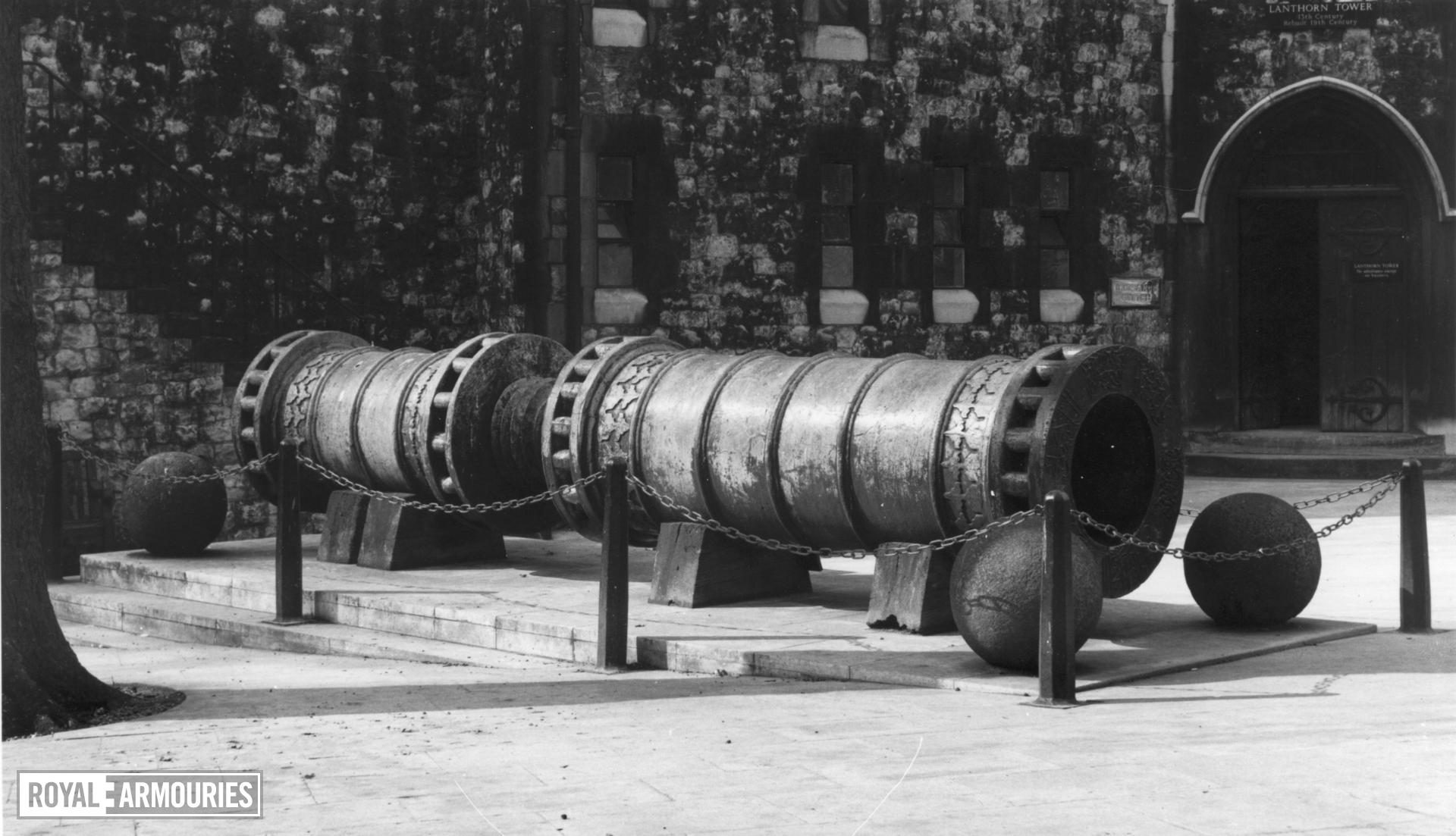
Dardanelles Gun

The Dardanelles Gun was cast in bronze in 1464 by Munir Ali

with a weight of 16.8 t and a length of 5.18 m it was able to fire 24.8 inch stone/Marble boulders weighing up to 1000 Pounds up to a mile

it was used in many Widley known battles such as the Dardanelles Operation, siege of Constantinople and many more

Along with other huge cannons, the Dardanelles Gun was still present for duty more than 340 years later in 1807 and was used to fight the British.

References

https://en.wikipedia.org/wiki/Dardanelles_Gun

http://www.allempires.com/article/index.php?q=The_Xiong_Nu_Empire

https://weaponsandwarfare.com/2015/11/07/1400-1590-ottoman-weapons-i/



#dardanelles-gun#kilij#ottoman-history#ottoman-mace#ottoman-weapons#volley-gun#yatagan

Related Intelligence

More articles
The Ghost of Radcliffe: Why 1947 Still Governs 21st-Century Asia
History

The Ghost of Radcliffe: Why 1947 Still Governs 21st-Century Asia

Geographic partitions are not historical events; they are active geopolitical engines. In South Asia, a hasty retirement from Empire created a structural instability that ensures permanent mobilisation and restricts the rise of two nuclear powers.

15 Mar 2026

Pax Mongolica: The Hard-Power Blueprint for Global Integration
History

Pax Mongolica: The Hard-Power Blueprint for Global Integration

Modern globalisation is often framed as a Western invention. In reality, the 13th-century Mongol Empire established the first template for a borderless economy, proving that global trade requires a single, ruthless security guarantor to function.

15 Jan 2026

The Dollar Pact: Why Bretton Woods Never Actually Ended
History

The Dollar Pact: Why Bretton Woods Never Actually Ended

The 1944 Bretton Woods agreement is often treated as a historical relic. In reality, its core architecture remains the primary engine of American hegemony, weaponising global trade through a system of structural dependency that has no peer.

15 Oct 2025

The New Feudalism: Why the Westphalian Order is Withering
History

The New Feudalism: Why the Westphalian Order is Withering

The nation-state is not dying, but it is losing its monopoly on power. As digital territories and corporate spheres of influence supersede physical borders, we are witnessing the gradual return of pre-Westphalian overlapping jurisdictions.

15 Jun 2025

The Invisible Rot: Why Great Powers Implode From Within
History

The Invisible Rot: Why Great Powers Implode From Within

Conventional wisdom blames external rivals for the fall of empires. History suggests otherwise. True decline is a domestic process of institutional sclerosis, currency debasement, and the fatal decoupling of elites from national interests.

15 Feb 2025

The Suez Moment: When London Realised Might Was Not Money
History

The Suez Moment: When London Realised Might Was Not Money

In 1956, Britain’s imperial facade collapsed not through military defeat, but through a financial ambush. This structural analysis examines why the Suez Crisis remains the ultimate lesson in the fragility of debt-backed power.

15 Oct 2024