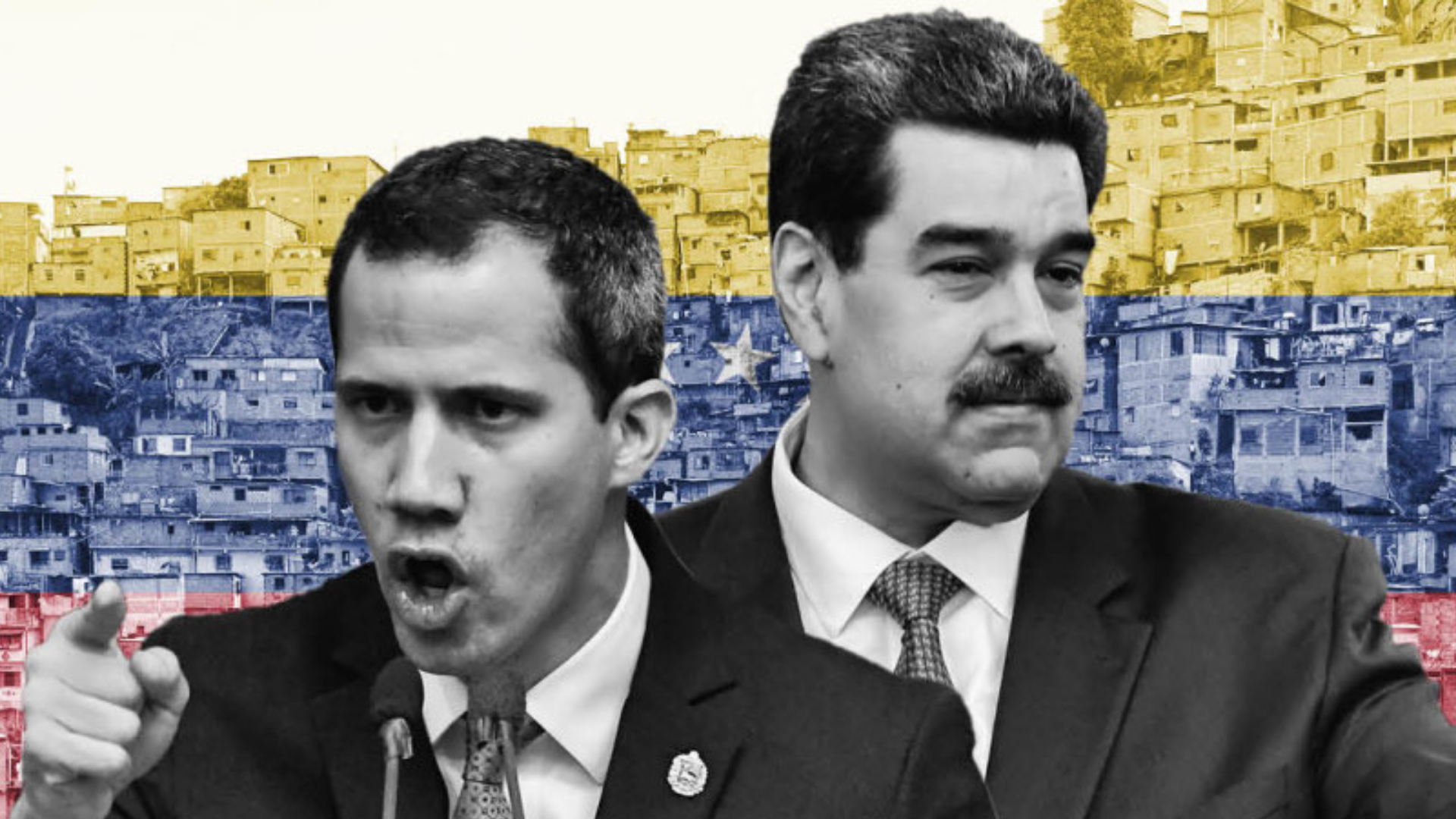
Venezuela Stalemate: 5 Geopolitical Effects You Need to Know

Hazem Zahab6 August 2019880

Listen to this article

KJ narrates this report in his own voice

Venezuela Stalemate: 5 Geopolitical Effects You Need to Know

1. The political standoff in Venezuela could cause economic disaster

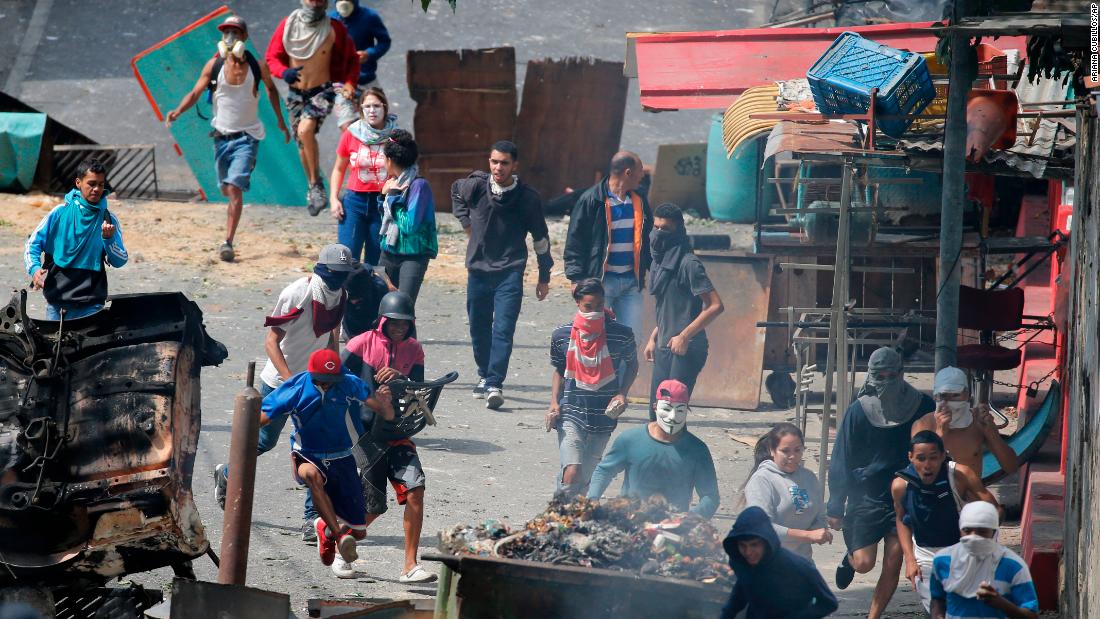
The stand-off between Venezuelan authoritarian leader Nicolas Maduro, and the man backed by the West and many in Venezuela Juan Guaido has been going on for several months, and it appears time is running up for the latter. Guaido is continuing to rally support from rural areas, and has announced his will to remove Maduro’s rule, by all means, stating in one of his rallies, “If I have to descend to hell to finish off this dictatorship, I will do it with the blessing of you all.” It is clear from these comments that Guaido will not back down. It is unclear, however, how long Mr Guaidó can keep his fractious opposition coalition together and his supporters enthused, and if the political stalemate continues for longer it could lead to an economic disaster. “Venezuela is in a state of perverse equilibrium,” said Luis Vicente León, director of Datanálisis, a polling and market research firm in Caracas, adding: “We are in a catastrophic deadlock where neither side can defeat the other but their conflict can destroy the country.”

2. Venezuela hit by US sanctions

In the latest move by the US to try to force Maduro to step down, the US has added new sanctions to the already imposed ones, which includes the authorisation of penalties against “foreign persons” who provide support for his government, as well as freezing the assets of President Maduro. The Venezuelan government has clearly been affected by this decision, as Venezuelan vice president called the actions, a “global threat” and an attack on private property, adding that “the US has to understand once and for all that they aren’t the owners of the world.” Although the move by the US could make Maduro reconsider his position, it will dangerously affect the economy and the Venezuelan people.

3. Russia’s opposition to the US

Russia’s support of Maduro in opposition to the US has continued, as Russian foreign ministry called new American sanctions against Venezuela “economic terror” in a statement Tuesday. “Such steps have no legal basis either in terms of international or domestic Venezuelan law,” said ministry spokeswoman Maria Zakharova. “Obviously, the White House is driven by the ideology of intolerance and dictatorship, which are put above the interests of Venezuelans.” Russia has clearly made its insistence in supporting the Maduro administration, along with China and Iran, and has used it as a tool to limit the US’s influence in South America.

4. Venezuelan Church takes a side

The church of Venezuela, who have a large influence on the nation and the Venezuelan public, have made their stance clear, as they have demanded Maduro to step down and to hold free elections. Although this is not picking a side, or siding with Guaido, they have clearly opposed Maduro. Maduro “must retire” from the presidency “to allow for truly free elections,” added Archbishop Jesús González in a press conference. This could be crucial to mount pressure on the Venezuelan leader, as he finds himself surrounded by the opposition in his nation.

5. Is Guaido losing steam?

While Maduro is struggling to maintain a positive public opinion in Venezuela, the man set to challenge and replace him, is not doing as well as earlier. More than six months after proclaiming himself acting president, and earning the recognition of more than 50 countries, Guaido has not succeeded in ousting Maduro and can no longer attract the massive crowds of supporters that he once mobilized. Guaido has tried to keep hope alive, encouraging Venezuelans weary after years of crisis not to give up. But on July 23, six months after he launched his bold challenge to unseat Maduro, less than 1,000 people turned up to a special event in downtown Caracas. Many believe his movement has “gone cold”, as perceived by political scientist Luis Salamanca told AFP. This only makes the political situation worse, as there is no leader that can attract the masses, and save the country from the incoming economic disaster.
#south-america#venezuala

Related Intelligence

More articles
Is Chile Becoming over-reliant on China: 5 Geopolitical Effects You Need to Know
Chile

Is Chile Becoming over-reliant on China: 5 Geopolitical Effects You Need to Know

1. Chinese digital influence in Chile China has had a growing digital role in Chile and has used it as a tool to expand its digital reach. Technological advances have brought the two countries closer together. China’s ride-hailing company DiDi Chuxing, which launched its operation in Chile in June, have had a big impact in Chile, while Chinese made electric buses have dominated the public transport sphere. Online commerce website Ali express has become popular in Chile, while the increased popularity of products and services of Chinese origin reflect China’s growing presence in the South American country, and its “natural and quotidian” nature. 2. Chile’s copper exports to China Chile is the world’s largest producer of copper, and a big proportion of its exports go to China. However, in its second quarterly report the Chilean Copper Commission (COCHILCO) reduced its 2020 projection from US$3.08 to US$2.90 a pound, it said in a statement. The drop is because China “is experiencing a cycle of economic slowdown that has undermined expectations for short-term demand,” said the statement. That was exacerbated by “macroeconomic and global geopolitical tensions that have reduced the projections of worldwide growth,” largely due to a trade war between China and the United States, COCHILCO said. This has had a big impact on Chile’s economy and shows that its over-reliance of exports to China could hurt them. Subscribe to unlock the other 3 Points We wish we didn't have to do this, but only paid subscribers can read the full article, Unlike other publishers, we are not the beneficiaries of State funds and are entirely dependent on our supporters to keep KJ Vids functioning. Please subscribe to read the rest of the article. The First 1,000 subscribers will receive a 50% lifetime discount to our content. - Access over 500 videos explaining global politics - Full access to all articles - Vote on future video topics - Secure Questions for Video Q&As Sign Up - https://www.kjreports.com/product/lifetimediscount/

19 Aug 2019

Argentina’s Return to Populism: 5 Geopolitical Effects You Need to Know
Argentina

Argentina’s Return to Populism: 5 Geopolitical Effects You Need to Know

1. Argentina’s incoming elections Argentina’s election season is coming up, and the country’s future is up in the air, as there is no clear favourite at first glance. In October, the victor will need to obtain 45 per cent of the vote, or win 40 to 44 per cent of the vote and remain 10 per cent ahead of the runner-up. Failing that, voters will go back to the polls for a runoff in November. Argentines will also be voting to fill half the seats in the lower house of Congress, known as the Chamber of Deputies, and one-third of the Senate seats. Meanwhile, the powerful province of Buenos Aires, which accounts for about 40 per cent of registered voters, will also elect provincial and municipal legislators. In a system that requires a clear majority to win, with no clear favourite, it is not a surprise that many people are taking interest in Argentina’s upcoming elections. 2. Is populism returning in Argentina? President Mauricio Macri, who won the Argentinian elections 4 years ago, surprising many, was seen as a sign of the defeat of populism and economic freedom and reform. Now, however, after an economic decline and crisis, his approval ratings have slipped, and there is a fear of the return of populism in Argentina. The Macri campaign’s struggles should come as no surprise. Though he remains beloved by Western governments and investors, his pro-market policies are broadly considered a failure at home. Furthermore, what is surprising, is the strength of his populist opponents, despite memories of Fernández de Kirchner’s turbulent administration. It appears Alberto Fernández and Fernández de Kirchner offer Argentines a seemingly irresistible promise: a return to generous public spending on infrastructure, government jobs, social programs and higher wages that appeals to a population accustomed to public largess. Their return to power will be welcomed by the Argentinian public. Subscribe to unlock the other 3 Points We wish we didn't have to do this, but only paid subscribers can read the full article, Unlike other publishers, we are not the beneficiaries of State funds and are entirely dependent on our supporters to keep KJ Vids functioning. Please subscribe to read the rest of the article. 3. Result of elections will have a big impact on markets 4. Argentina’s politics still dominated by Peron 5. Opposition gains big win By investing in KJ Vids, you are investing in yourself Our content succinctly contextualises the key geopolitical trends you need to know in order to make sense of world events. We can assure you that a regular dose of our content will be as healthy as fruit and vegetables for your mind. Subscribe for only £10 a month.

12 Aug 2019

Understanding Venezuela’s Foreign Policy
Video Reports

Understanding Venezuela’s Foreign Policy

Whilst enormous academic and media attention has focussed on how “Bolivarianism” has shaped Venezuela’s economic policy since 1998 (the year Hugo Chavez first came to power), comparatively small effort has been expended on understanding how the Bolivarian revolution has influenced Venezuelan foreign policy in the past two decades.

15 Mar 2019

Geopolitics of Brazil
Geopolitics

Geopolitics of Brazil

23 Jan 2019

Where is Venezuela Heading?
Video Reports

Where is Venezuela Heading?

23 Jan 2019

The Truth Behind the 1989 U.S. Invasion of Panama
America

The Truth Behind the 1989 U.S. Invasion of Panama

17 Feb 2018