The intensifying conflict between Iran and Israel is frequently framed as a countdown to an inevitable regional conflagration. This view is narrow. It confuses tactics with strategy. In reality, the 'shadow war'—characterised by maritime sabotage, cyber attacks, and targeted assassinations—is not a failed attempt at peace, but a highly calibrated form of communication. Both Tehran and Jerusalem are currently using controlled violence to reinforce a status quo that neither side can afford to break.
The Logic of Deniable Friction
Statecraft is often about the management of risks rather than their elimination. For Israel, the primary objective is the 'Campaign Between Wars' (MABAM). The goal is to degrade Iranian capabilities in Syria and Lebanon without triggering a full-scale missile exchange that would devastate the Israeli interior. For Iran, the strategy is 'Forward Defence'. By maintaining proxies on Israel's borders, Tehran ensures that any direct strike on its nuclear infrastructure would carry an unacceptable cost. Both sides have reached a point of 'saturated deterrence'.
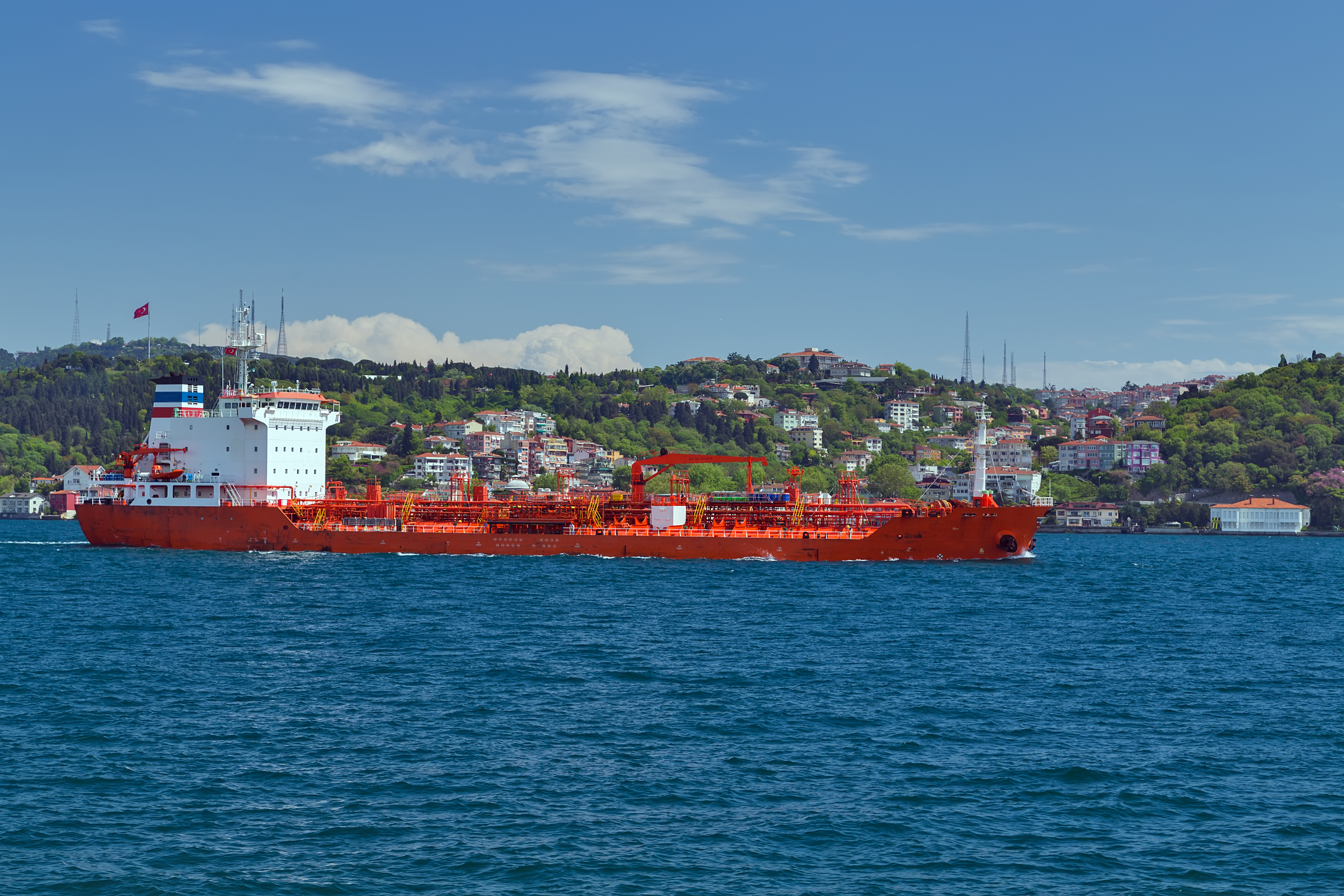
The shift to the shadows—attacking oil tankers in the Gulf of Oman or hacking civilian infrastructure—serves a specific purpose. It provides a pressure valve. These actions allow both regimes to satisfy the demands of their hardline domestic factions and signal resolve to their adversaries without crossing the 'red lines' that mandate a conventional declaration of war. The ambiguity of these attacks provides 'diplomatic off-ramps'; if an attack is not officially claimed, the victim is not structurally forced to escalate to total war to save face.
The Geography of Constraint
Geography dictates the limits of this rivalry. Iran and Israel do not share a border. A conventional ground war is logistically impossible. Any direct escalation would necessarily be an air and missile campaign. Israel possesses superior technology and air defence (the Arrow and David’s Sling systems), but Iran possesses depth and a vast arsenal of low-cost loitering munitions and ballistic missiles. An open exchange would be a 'lose-lose' scenario. Israel’s economy, highly dependent on its tech sector and foreign investment, cannot tolerate the prolonged instability of a hot war. Iran’s regime, already facing economic fragility and domestic unrest, cannot risk a conflict that might lead to its collapse.
Money as a Weapon
Financial incentives play a hidden role in the timing of these shadow strikes. Iran uses its regional influence to bypass sanctions, moving oil through networks that Israel periodically disrupts. Conversely, Israel uses its intelligence prowess to target the financial conduits of the Islamic Revolutionary Guard Corps (IRGC). This is a war of attrition played on a balance sheet. By making Iran's regional projects more expensive, Israel hopes to force a strategic retreat without firing a shot in Iranian territory.
A Historical Parallel: The Cold War ‘Active Measures’
The current Iran-Israel dynamic finds its closest parallel in the 1960s rivalry between the United States and the Soviet Union in the Third World. During the Cold War, both superpowers avoided direct confrontation because of the nuclear 'Sword of Damocles'. Instead, they fought through intelligence agencies, assassinations, and regional proxies in Africa, Asia, and Latin America. Just as the CIA and KGB operated in the 'grey zone' to shift the balance of power without triggering World War III, the Mossad and the IRGC’s Quds Force are engaged in a contemporary version of 'Active Measures'. The goal is not to conquer the enemy, but to make the enemy’s chosen path too expensive to continue.
What Most People Miss: The Internal Stabiliser
Most analysts focus on how external strikes weaken a regime. They miss how external threats provide internal stability. For the Iranian leadership, the 'Zionist threat' is the primary unifying narrative that justifies its security expenditure and cracks down on internal dissent. For Israeli politicians, the Iranian nuclear threat is a potent tool for building parliamentary coalitions and securing unwavering US military aid. Paradoxically, the high-tension environment benefits the survival of the political elites in both capitals. Neither side actually wants the 'problem' of the other to be solved, because the problem itself is a source of domestic political capital.
Strategic Consequences
The second-order effects of this shadow war are reshaping the Middle East. First, it has accelerated the 'Abraham Accords' logic. Arab Gulf states, sensing that the US is pivoting towards East Asia, are looking to Israel as a security guarantor against Iran. This has created a new 'Realpolitik' axis that ignores the Palestinian issue in favour of integrated air defences. Second, it has pushed Iran deeper into the arms of Moscow and Beijing. We are seeing a shift from a regional rivalry to a theatre of a new global bipolarity, where Iranian drones are traded for Russian fighter jets.
What to Watch
- Maritime Escalation: Watch for attacks on undersea fibre-optic cables in the Red Sea. This would signal a shift from harassing trade to targeting the digital backbone of the global economy.
- The ‘Third Way’ in Lebanon: Watch for whether Hezbollah is forced to intervene in domestic Israeli unrest. A miscalculation here is the most likely trigger for an accidental hot war.
- Cyber-Physical Attacks: The transition from stealing data to disrupting physical systems (water pumps, power grids) within the Iranian or Israeli interior.
- Succession Politics in Tehran: Any shift in the health of the Supreme Leader will likely lead to an uptick in IRGC aggression as factions compete to prove their revolutionary credentials.
The KJ Verdict
The Iran-Israel shadow war is an enduring features of the 21st-century landscape, not a fleeting crisis. It is a stable system of instability. While the rhetoric from both sides remains maximalist, their actions are deeply conservative. Both powers are terrified of a total war they cannot win and cannot afford. As long as the strikes remain deniable and the casualties remain manageable, the shadow war will continue to serve as the primary mechanism for maintaining the regional balance of power. The danger is not intent, but accident—a single strike that kills too many people or hits the wrong target, forcing a leader’s hand in a way that logic cannot prevent.