
KJ ReportsKJ Reports

Putin calls U.S. election-meddling charge a ‘load of nonsense’ in Megyn Kelly interview

5 June 2017960

Listen to this article

KJ narrates this report in his own voice

Putin calls U.S. election-meddling charge a ‘load of nonsense’ in Megyn Kelly interview

Read original article on The Washington Post or read some of the key points below;

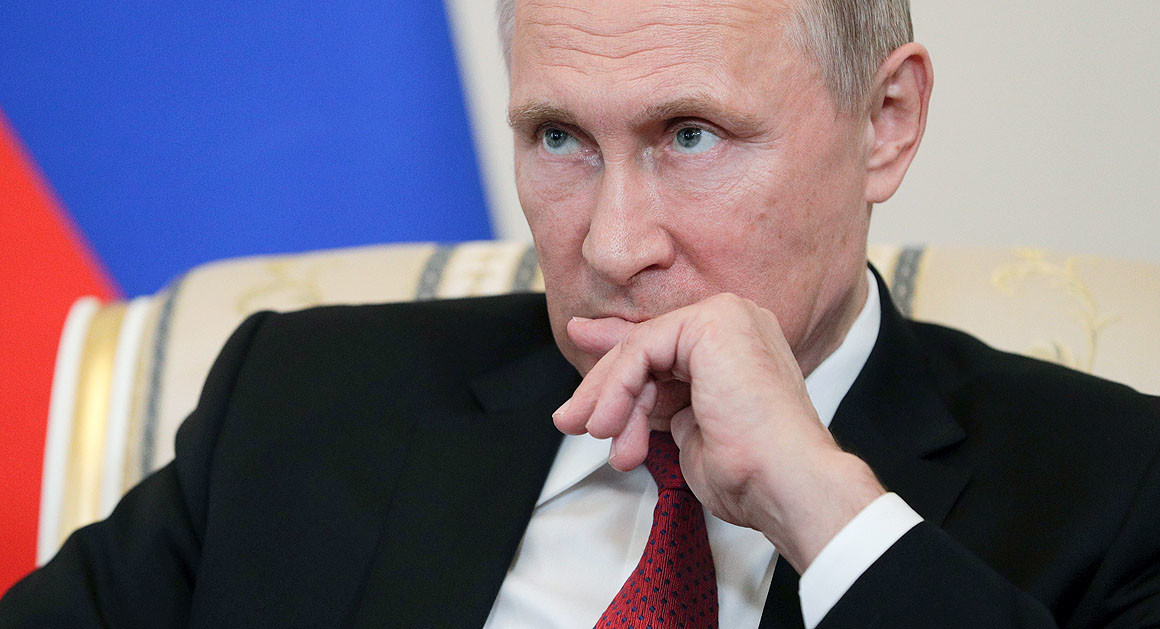
  1. Russian President Vladi­mir Putin testily rejected the idea that his government had interfered in the 2016 U.S. election — or that he is holding compromising evidence against President Trump — in an interview broadcast Sunday night with NBC’s Megyn Kelly.
  2. The interview with Putin — conducted last week during an economic forum in St. Petersburg — was the opening segment in the debut episode of “Sunday Night With Megyn Kelly.”
  3. The interview was tense at times, with Putin calling Kelly’s questions a “load of nonsense.” “Your lives must be so boring, if Americans are reduced to making up stories about Russia.” he said.
  4. When Kelly asked him about allegations of Russian involvement in the campaign, he replied with a conspiracy theory about the death of President John F. Kennedy in 1963. “There’s a theory that Kennedy’s assassination was arranged by the United States intelligence services. So, if this theory is correct — and that can’t be ruled out — ” then the same agencies could fabricate evidence of Russian hacking, Putin said.
  5. Kelly asked Putin if he was holding any kind of damaging information about Trump, either involving Trump’s finances or a visit Trump made to Russia as a businessman. Putin, slouched over in his seat, scffed at the idea. “We have a lot of Americans who visit us,” Putin said. “Do you think we’re gathering compromising information on all of them right now or something? Are you all — have you all lost your senses over there?”
#conspiracy#putin#russia#russian-hacking#us-russia

Related Intelligence

More articles
The APRA Mandate: Australia’s Financial Hedging for a Post-US Order
United States

The APRA Mandate: Australia’s Financial Hedging for a Post-US Order

As Canberra adjusts its regulatory framework to account for intensifying geopolitical shocks, a deeper shift is occurring: Australia is decoupling its financial stability from the total reliance on the American security umbrella.

19 Jun 2026

The Security Deficit: Why Washington is Resigning as Global Underwriter
United States

The Security Deficit: Why Washington is Resigning as Global Underwriter

As domestic debt surges and populist sentiment hardens, the United States is quietly retracting its global security umbrella. This strategic withdrawal is forcing allies toward a messy, fragmented era of self-reliance.

16 Jun 2026

The Sovereign Sanctuary: America’s Retreat to Fortress North America
United States

The Sovereign Sanctuary: America’s Retreat to Fortress North America

As the 2026 World Cup begins, the United States is quietly pivoting from global ideologue to insular hegemon. By prioritising domestic stability over democratic export, Washington is redrawing the map of American power.

15 Jun 2026

The Leviathan's Edge: Why America Still Monopolises the Future
United States

The Leviathan's Edge: Why America Still Monopolises the Future

While critics forecast a hollowed-out empire, the United States has widened its lead in the global technology race. The reason is not policy, but a unique synthesis of capital risk, institutional elasticity, and geographic isolation.

1 Mar 2026

Debt, Dominance, and the Weaponisation of the Dollar
United States

Debt, Dominance, and the Weaponisation of the Dollar

The United States faces a mounting fiscal crisis, but the real threat to the dollar's hegemony is not solvency—it is the erosion of the trust required to underpin the world's primary neutral settlement tool.

1 Jan 2026

The Fractional Guard: Why the Petrodollar Survives by Shrinking
United States

The Fractional Guard: Why the Petrodollar Survives by Shrinking

While headlines predict the dollar’s total demise, the true shift is far more subtle. We are entering a period of strategic fragmentation where the US dollar trades its monopoly for a more durable, albeit smaller, sphere of influence.

1 Sept 2025