KJ ReportsKJ Reports

North Korea fires suspected cruise missiles close to US aircraft carriers

8 June 2017778

Listen to this article

KJ narrates this report in his own voice

North Korea fires suspected cruise missiles close to US aircraft carriers

Read original article on The Independent or read some of the key points below;

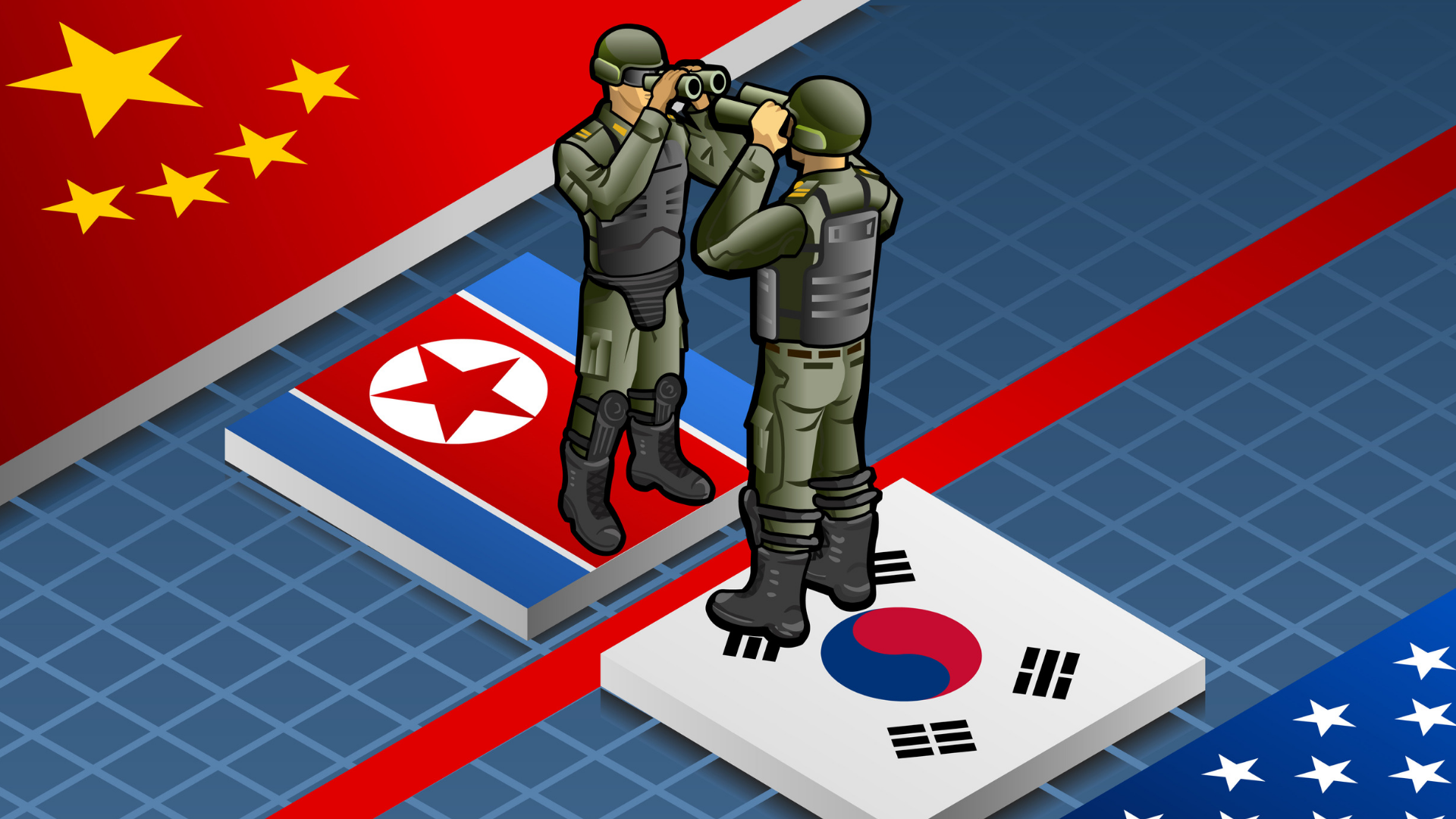
  1. North Korea fired several suspected short-range anti-ship missiles in a continuation of defiant launches as it seeks to build a nuclear missile capable of reaching the continental United States.
  2. The projectiles were fired from the North Korean eastern coastal town of Wonsan and likely flew about 200 kilometres (about 125 miles) while reaching a maximum altitude of about 2 kilometres (1.2 miles), South Korea’s Joint Chiefs of Staff said.
  3. North Korea’s weapons tests are meant to build a nuclear and missile programme that can stand up to what it sees as US and South Korean hostility, but they are also considered by outside analysts as ways to make its political demands clear to leaders in Washington and Seoul.
  4. The launches were North Korea’s fourth missile test in as many weeks as the country continues to speed up its development of nuclear weapons and missiles.
  5. In following weeks launched a solid-fuel midrange missile that can be fired on shorter notice than liquid fuel missiles, and also what it descried a new “precision-guided” missile, which experts say is designed with a maneuverable terminal stage meant to frustrate missile defense systems like the US Terminal High Altitude Area Defense that is being deployed in South Korea.
#communist#korea#missile-test#north-korea#north-korea-missile#south-korea#us-north-korea

Related Intelligence

More articles
North and South Korea Fury: 5 Geopolitical Effects You Need to Know
North Korea

North and South Korea Fury: 5 Geopolitical Effects You Need to Know

1. North Korea ‘warns’ South Korea with missile test North Korea has fired short-range missiles in the Sea of Japan, from Wonsan on North Korea’s east coast, and called the test of two new missiles on Thursday a “solemn warning” against what it described as “South Korean warmongers”. North Korean supreme leader Kim Jong-Un said he was forced to develop new missiles to “eliminate potential and direct threats”. The North Korean leader continued to say that South Korea should “not make a mistake of ignoring the warning”. It appears the tests are a response to the upcoming US-South Korean joint military drills, which NK have long been opposed to, based on fears of a possible invasion. It is important to note the joint drills are an annual event. 2. First hostile act since Trump-Kim meeting The missile tests are the first military tests since Kim and Trump met in the demilitarised zone between North and South Korea, signalling that after a period of positive relations and optimism, tensions may now increase, even more so, should the US and South Korea go ahead with their plans of large-scale military drills. Pyongyang also continues to demonstrate its abilities to develop new weapons despite strict economic sanctions. Earlier this week Mr Kim inspected a new type of submarine, state media reported, which could be developed to carry ballistic missiles, according to some analysts. 3. The US and South Korea do not see tests as a threat Despite this, South Korean-U.S. military command said on Friday a North Korean missile launch the previous day was not a threat directed at South Korea or the United States and had “no impact on our defence posture”. Both nations simply see it as a test of a new type of missile for the military of North Korea. This reaction is not the usual as the US usually responds negatively to North Korean development of new weapons, but is clearly a reaction to earlier talks between Trump and Kim, where it was agreed that NK would reduce their nuclear arsenal, but maintain the improvement of normal military equipment.

26 Jul 2019

Origins of the Korean conflict
North Korea

Origins of the Korean conflict

22 Jun 2018

The Amman Alignment: Jordan’s Break from the Pan-Arabist Fiction
Middle East

The Amman Alignment: Jordan’s Break from the Pan-Arabist Fiction

Jordan’s recent kinetic intervention against Iranian ordnance signals a fundamental shift in Levantine architecture. Amman has traded the ghost of pan-Arab solidarity for a hard-nosed survivalist pact with Western and Israeli security frameworks.

29 Jul 2026

The Iraqi Re-Alignment: Sovereignty vs Security in a Bipolar Baghdad
Middle East

The Iraqi Re-Alignment: Sovereignty vs Security in a Bipolar Baghdad

Baghdad faces a terminal dilemma as the dual-track presence of Iranian influence and American financial-military support becomes unsustainable. The era of playing both sides has reached its structural limit.

29 Jul 2026

The Hegemon’s Fatigue: The End of US Forward Presence
United States

The Hegemon’s Fatigue: The End of US Forward Presence

Internal legislative paralysis and the erosion of executive war powers signal a structural shift in American grand strategy. Washington is no longer withdrawing by choice, but by domestic necessity, ending the era of global forward presence.

28 Jul 2026

The Hormuz Leverage: Why Tehran Engineered an Oil Crisis
Middle East

The Hormuz Leverage: Why Tehran Engineered an Oil Crisis

Conventional analysis views Iran’s maritime aggression as a tactical reaction to sanctions. In reality, Tehran is pursuing a deliberate strategy to force global oil prices into a permanent risk premium to fund its internal survival.

26 Jul 2026