US attempts to normalize ties between Israel and Saudi Arabia
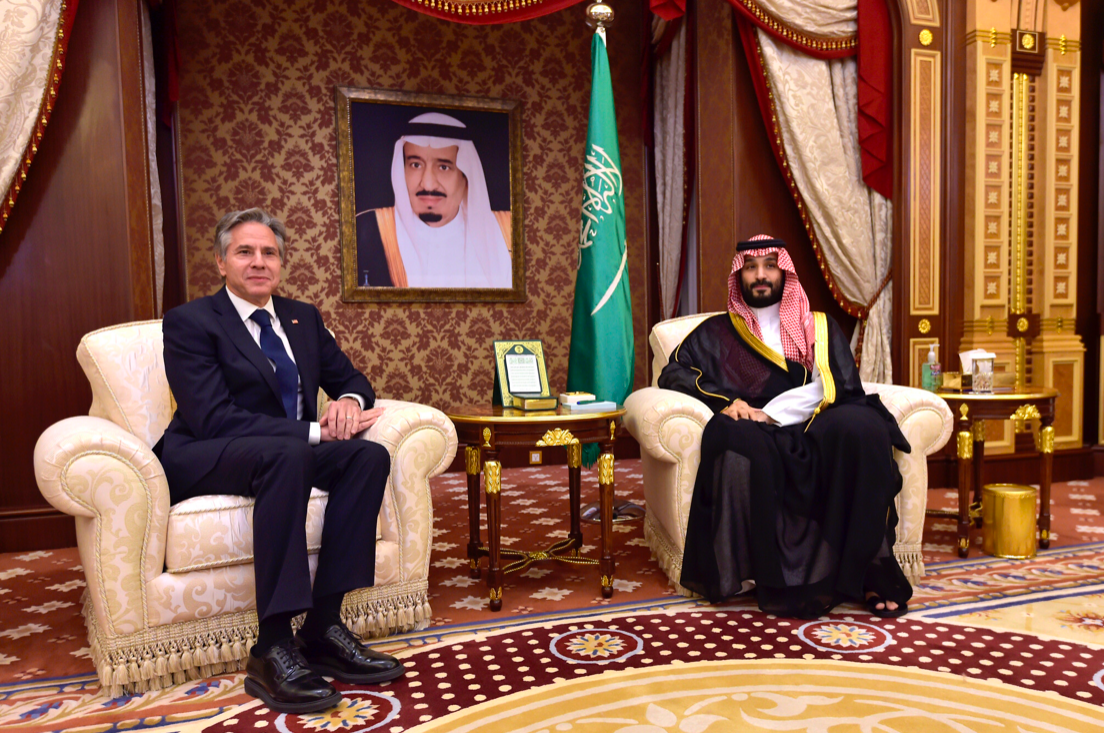
In recent weeks, the Biden administration has increased the frequency of high-level officials’ visits to Riyadh and Tel Aviv to meet with Prince Mohammed and Mr. Netanyahu. After Secretary of State Blinken’s visit, Brett McGurk, the top White House official handling Middle East policy, led a delegation on a discreet trip to continue negotiations. National Security Adviser Jake Sullivan also traveled to Saudi Arabia in May.
According to former U.S. ambassador Martin Indyk, President Biden’s commitment to the cause has energized the administration, as his involvement is crucial for diplomatic breakthroughs between Israel and Arab nations. However, any defense pact or nuclear deal with Saudi Arabia would require approval from a divided Congress, where some prominent members of Biden’s own party might oppose it. Surprisingly, there have been unusual political alliances forming, with Republican Senator Lindsey Graham quietly assisting the White House’s negotiations.
The Saudi embassy in Washington did not respond to a comment request, while a representative from the National Security Council stated that the Biden administration’s Middle East policy includes efforts to expand and strengthen the Abraham Accords and normalize relations between Israel and Saudi Arabia. Mr. Netanyahu has openly expressed his desire to reach a deal with the Saudis.
The idea of a formal reconciliation between Israel and Saudi Arabia has been discussed for years, but numerous obstacles have prevented its realization. The Saudis declined to join the Abraham Accords when they were signed in September 2020 under President Trump. Although President Biden had a strained relationship with Prince Mohammed due to the killing of journalist Jamal Khashoggi, he reluctantly visited the kingdom last July. Relations worsened in October when the Saudis surprised American officials by cutting oil production.
However, both governments quietly attempted to mend relations during the winter. In May, during Sullivan’s visit, Prince Mohammed signaled a greater willingness to normalize relations with Israel, suggesting that this year might be the opportune time, albeit at the right price. This message, conveyed to President Biden by Sullivan, seemed to convince the president to push for a deal.
For Saudi Arabia, normalizing relations with Israel is less about Israel itself and more about what it can gain from the United States, its long-standing security guarantor. Saudi officials assert that normalizing relations with Israel would cost Prince Mohammed political capital with his own citizens, who still hold negative views of Israel. To justify such a move, significant concessions from the United States, aimed at deterring Iran, would be necessary.
Progress so far
Talks between the Saudis and Israel have not progressed much since the commencement of US efforts to strike a deal, as the incentives on both sides remain weak at this moment, as Saudi foreign policy objectives have shifted to a less US-oriented outlook, while Israel is more willing to establish a deal but growing increasingly frustrated.
In what appears to be one of several signs that negotiations are not in a desirable position, Chairman of the National Security Council, Tzachi Hanegbi, confirmed on Monday that direct flights between Israel and Saudi Arabia for Muslim pilgrims will not be available in time for this year’s Hajj. Despite months of intensive efforts by Israeli, Saudi, and American negotiators, the goal of launching the direct flights as a step toward normalization between the two countries has not been achieved.
The idea of establishing the direct flight route was initially proposed during US President Joe Biden’s visit to the region in July last year. It was included in a package of measures that the United States had managed to secure, which also included an agreement by Riyadh to allow Israeli overflights.
In a statement, the White House expressed its approval of the ongoing discussions to include direct flights from Israel to Jeddah for the next year’s Hajj on approved carriers. Since then, the parties have been engaged in talks to operationalize the flights in time for this year’s pilgrimage, scheduled from June 25 to July 2.
However, according to Hanegbi in an interview with the Kan public broadcaster, they will not succeed in achieving the goal within the given timeframe. He expressed hope that for the next Hajj, they may be in a position to assist in the matter and have direct flights departing from Israel, but it is still too early to make any definitive statements.
In addition to this, Israeli diplomats were not permitted to enter an event hosted by Crown Prince Mohammed bin Salman in Paris this week despite having been invited, it was reported Friday.
According to the Walla news site, the two Israeli officials had been invited to the reception held by Riyadh in the French capital as part of its major push to host the 2030 World Fair’s Expo.
The report suggested that the rescinding of the invitation could be a response by Riyadh to the hardline Israeli government’s policy in the West Bank and the recent escalation in violence.
Israeli attacks on Palestinians bring further complications
Even the US has acknowledged and warned that Israel’s recent attacks on Palestinian settlements in the West Bank could seriously jeopardize an chance of normalization with Saudi Arabia.
US Secretary of State Antony Blinken emphasized that the United States has conveyed to Israel that the escalating tensions with the Palestinians would severely hinder the expansion of normalization agreements with Arab nations. Blinken mentioned that the Israeli government has taken certain escalatory actions, particularly regarding settlements.
Speaking at an event at the Council on Foreign Relations, Blinken stated that they had informed their friends and allies in Israel that if there is a fire burning in their backyard, it would be significantly challenging, if not impossible, to deepen existing agreements and explore potential expansions, including with Saudi Arabia.
Blinken revealed that he had discussed this matter with Foreign Minister Eli Cohen and Prime Minister Benjamin Netanyahu during their conversations. He also highlighted the practical implications of Israel assuming responsibility for the West Bank, which includes three million Palestinians and over five hundred thousand settlers. Such a scenario would impact the allocation of resources, including security concerns regarding Gaza, Lebanon, and Iran. Blinken stated that recent steps, particularly on settlements, have been moving in the opposite direction.
During the same event, Saudi Foreign Minister Faisal bin Farhan expressed the belief that normalization is beneficial for the region and would bring significant advantages. However, he emphasized that without finding a pathway to peace for the Palestinian people and addressing that challenge, any normalization would have limited benefits.
In light of Israel’s current aggressive policies towards Palestinians in the West Bank and Jerusalem, it is likely that Saudi Arabia will withhold normalization unless the United States presents a lucrative offer.