
Intelligence
Indonesia
5 reports in this category.
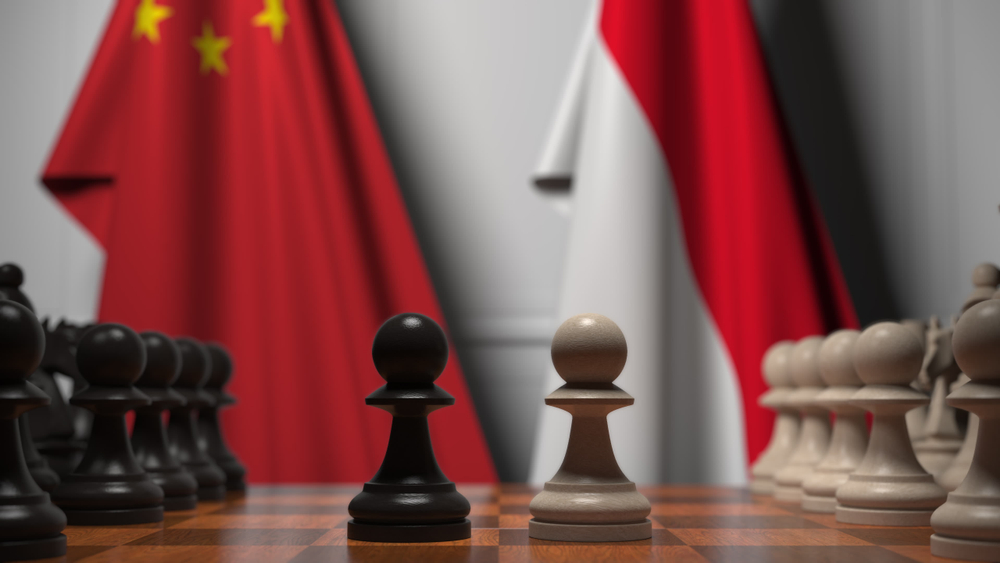
Is it too late for Indonesia to stand up to China?
Indonesia challenges China in the South China sea Indonesia has recently surprised China with its strong and aggressive approach in the South China Sea, defending their territorial integrity adamantly and not backing down to Chinese pressure. Indonesian President Joko Widodo flew to the Natuna Islands on Wednesday to underline how seriously his administration takes China’s recent provocations in the southern reaches of the South China Sea. While some of Widodo’s senior ministers initially sought to play down the tensions, his government has pressed ahead in dispatching warships and jet fighters to the energy and fishery-rich region, which Indonesia has unilaterally renamed the North Natuna Sea. Highlighting Indonesia’s strong approach, dozens of Chinese vessels that were fishing in Indonesia’s Exclusive Economic Zone (EEZ) in Natuna are now leaving the area, the Indonesian military said today, after days of stand-off. The Chinese vessels entered the Natuna waters, near the disputed South China Sea last month, prompting Indonesia to summon the Chinese ambassador in Jakarta and deploying eight warships as well as four fighter jets to the area. Before today’s tour of the main Natuna Besar island, Widodo had declared the issue “non-negotiable.” “There is no such thing as bargaining about our sovereignty, about our country’s territories,” he said, echoing a previous statement from political coordinating minister Mohamad Mahfud. It is clear that Indonesia is standing up to China to defend its territorial integrity, a move which can be used to highlights that despite Chinese economic influence in Indonesia which will be expanded on in the next point, Indonesia is not a Chinese puppet, and is standing up to the superpower, even if it means risking the Chinese investment in the country. Subscribe to read the full article We wish we didn't have to do this, but only paid subscribers can read the full article, Unlike other publishers, we are not the beneficiaries of State funds and are entirely dependent on our supporters to keep KJ Vids functioning. Please subscribe to read the rest of the article. The First 1,000 subscribers will receive a 50% lifetime discount to our content. - Access over 500 videos explaining global politics - Full access to all articles - Vote on future video topics - Secure Questions for Video Q&As Sign Up - https://www.kjreports.com/product/lifetimediscount/
9 Jan 2020
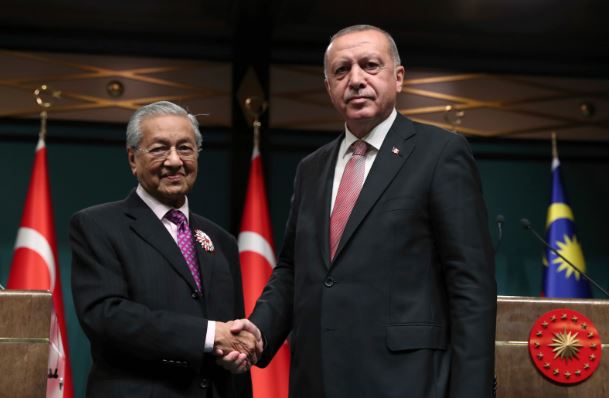
Are Malaysia and Turkey on a challenging quest to unite the Muslim world?
Malaysia leading efforts to unite the Muslim world In recent years, Malaysia has been trying to increase its engagement and cooperation with the Muslim world. We saw many signals of this in 2019, as the nation significantly strengthened relations with Pakistan, as well as Iran and several other Muslim nations in Asia. Furthermore, Malaysia has been vocal on the oppression of Muslim minorities, namely, the Uighurs in China and the Rohingya in Myanmar. After a call for a Muslim summit currently taking place in Malaysia, coming after many calls by Malaysian PM Mahathir Mohammad for the Muslim world to come together, many believe that Malaysia is trying to unite the Muslim world, and consequently increase their say in world politics. Can Malaysian Prime Minister Mahathir Mohamad bring together a divided Muslim world riven by conflict, oppression and under-development? That’s the question observers will ask as Islamic world leaders and representatives convene in Kuala Lumpur for a four-day summit chaired by the outspoken 94-year-old Malaysian leader. “Islam, the Muslims and their countries are in a state of crisis, helpless and unworthy of this great religion which is meant to be good for mankind,” said Mahathir in his opening address to the summit, at which he said Muslim nations had “lost the respect of the world” due to rampant terrorism and disrespect for human rights. In addition to this, Economic Affairs Minister Datuk Seri Azmin Ali said foreign direct investment (FDI) within Muslim economies would stimulate wealth creation of Muslim economies. He said this could be done even as these states continued their current efforts to promote FDIs and trade with other members of the international community. “There is a lot we can benefit from if we increase trade among Muslim countries. This allows us to correct the imbalances in supply and demand among Muslim countries. The demand may be high but we lack the ability to produce the products. We have a huge human capital who are talented and are skilled workers which can be leveraged on.” Malaysia appears to be trying to unite the Muslim world for some sort of economic revival, but as point 3 will illustrate, this will not be easy. Subscribe to read the full article We wish we didn't have to do this, but only paid subscribers can read the full article, Unlike other publishers, we are not the beneficiaries of State funds and are entirely dependent on our supporters to keep KJ Vids functioning. Please subscribe to read the rest of the article. The First 1,000 subscribers will receive a 50% lifetime discount to our content. - Access over 500 videos explaining global politics - Full access to all articles - Vote on future video topics - Secure Questions for Video Q&As Sign Up - https://www.kjreports.com/product/lifetimediscount/
20 Dec 2019
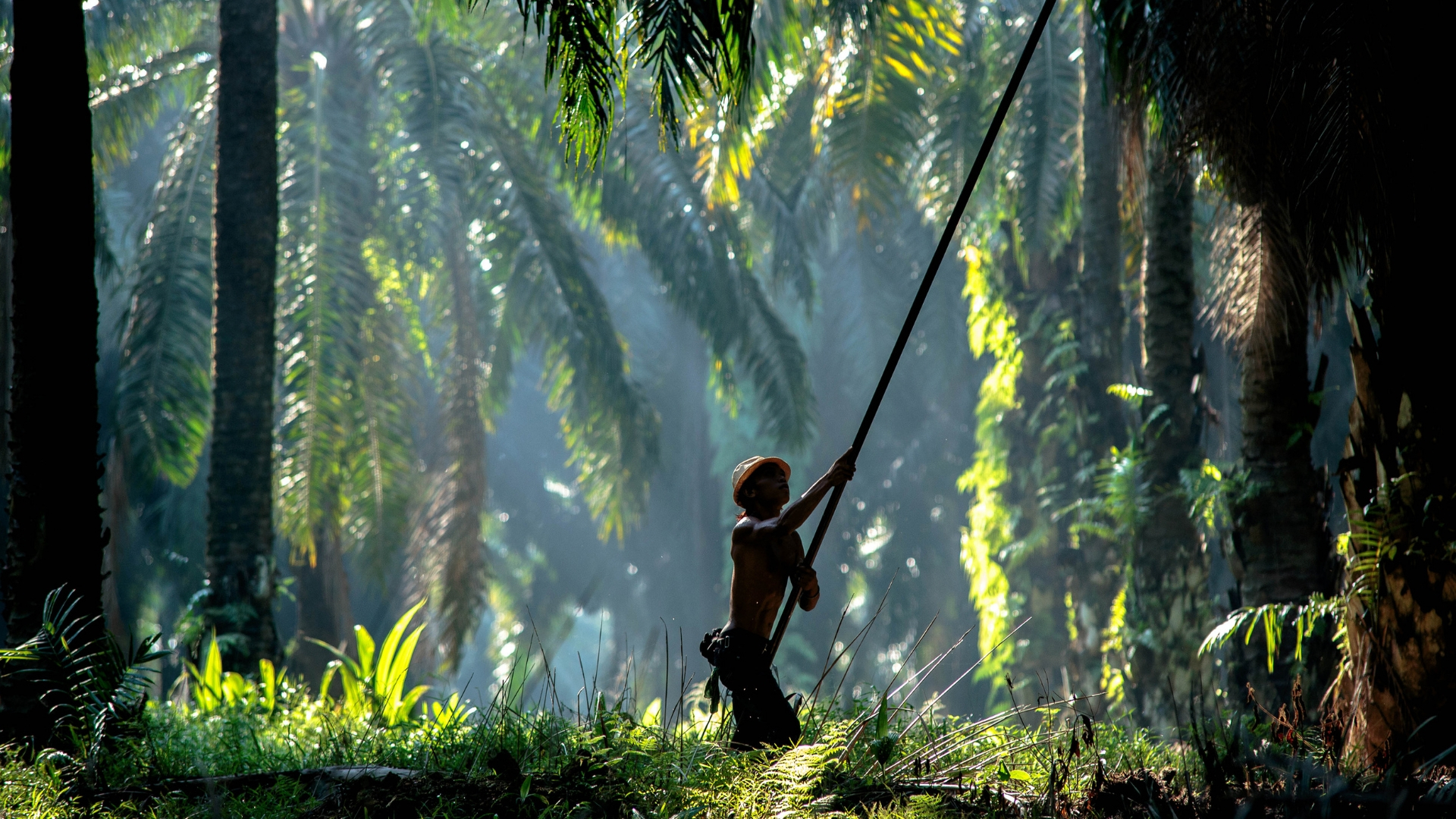
Indonesia’s Incoming Trade War: 5 Geopolitical Effects You Need to Know
1. Indonesia’s fight with the EU could create trade war Indonesia announced today that it will immediately recommend to an inter-ministerial team a 20%-25% tariff on EU dairy products as the appropriate response to the EU’s plan to impose anti-subsidy duties of 8%-18% on palm biodiesel from Indonesia. This seems the spark to a trade war between Indonesia and the EU, but there are feelings that Indonesia’s industry would get hurt the most, as the EU duties would be another blow to Indonesian biodiesel producers after the 28-nation block said in March that palm oil should be phased out of renewable transportation fuels due to palm plantations’ contribution to deforestation. “If the parameters are not fair, it’s a step toward protectionism and a trade war, and we will not stay silent for the unfair treatment,” Enggartiasto Lukita told an economic forum in Jakarta. It remains to be seen whether Jakarta will back down or not. 2. Effects of EU sanctions already visible The effects of the Eu’s tariffs on Indonesia can already be seen, as the EU ban on palm oil could keep Norwegian telecommunication giant Telenor Group out of Indonesia. The EU parliament passed on 10 June 2019 a law that will restrict and ban palm oil usage in biofuel by 2030. Since Telenor originates from the EU, the merger should be scrutinised, according to Indonesia’s Minister of Communication and Information Technology, Rudiantara. Nevertheless, the exclusion of an important company from Indonesian operation signifies that Indonesia will suffer economically from the incoming trade war. Subscribe to unlock the other 3 Points We wish we didn't have to do this, but only paid subscribers can read the full article, Unlike other publishers, we are not the beneficiaries of State funds and are entirely dependent on our supporters to keep KJ Vids functioning. Please subscribe to read the rest of the article. 3. Trade co-operation with Malaysia booming 4. Vietnam crucial partner 5. Indonesia facing tax from China as well By investing in KJ Vids, you are investing in yourself Our content succinctly contextualises the key geopolitical trends you need to know in order to make sense of world events. We can assure you that a regular dose of our content will be as healthy as fruit and vegetables for your mind. Subscribe for only £10 a month.
9 Aug 2019
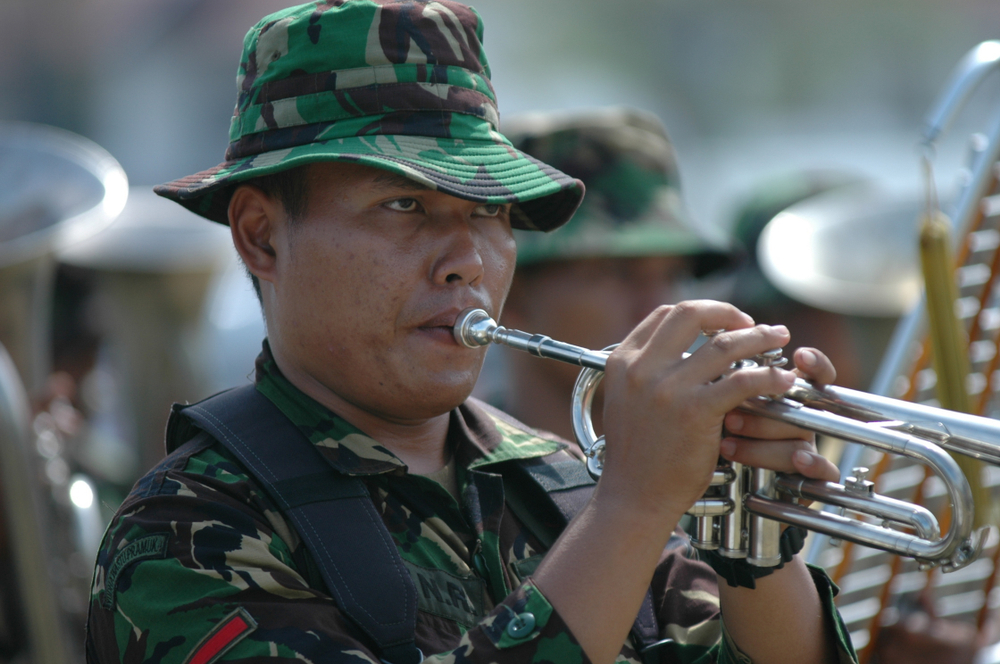
The rise of Indonesia
Indonesia is the world’s largest Muslim country by population and is one of South-East Asia’s most dynamic economies. Located at the juncture between the Pacific and Indian Oceans, it has the potential to become a leading regional power. However, its location is also a source of considerable challenges that Indonesia will have to manage attentively in the coming years. Indonesia is the world’s largest Muslim country by population and is one of South-East Asia’s most dynamic economies. Located at the juncture between the Pacific and Indian Oceans, it has the potential to become a leading regional power. However, its location is also a source of considerable challenges that Indonesia will have to manage attentively in the coming years. Indonesia's Geography The very name Indonesia is revealing: it comes from Greek and means “Indian Islands”. As a matter of fact, Indonesia is an archipelago located at the eastern edge of the Indian Ocean, and this is a key factor that has shaped its geopolitical thinking. In terms of dimension and configuration, Indonesia is a vast but fragmented state. It counts over 18,000 islands; the most important of which are Sumatra, Java, the southern section of Borneo, Sulawesi and the western part of New Guinea. These islands, covered by a thick rainforest rich in wildlife, have a volcanic origin. This means that Indonesia is vulnerable to seismic events and tsunamis; something that has a negative impact on its human security environment. The country extends over almost 8 million square kilometres if we take into account its maritime space including the Exclusive Economic Zone, or EEZ. Combined with its archipelagic nature, this makes it difficult for the central state to exert its power over all the territory; also because fragmentation is reflected in demographic terms: the population exceeds 260 million citizens divided in more than 300 ethnic groups; and this has important implications on the country’s geopolitics.
10 Apr 2019

Indonesia Government Bans Hizb ut-Tahrir
21 Jul 2017