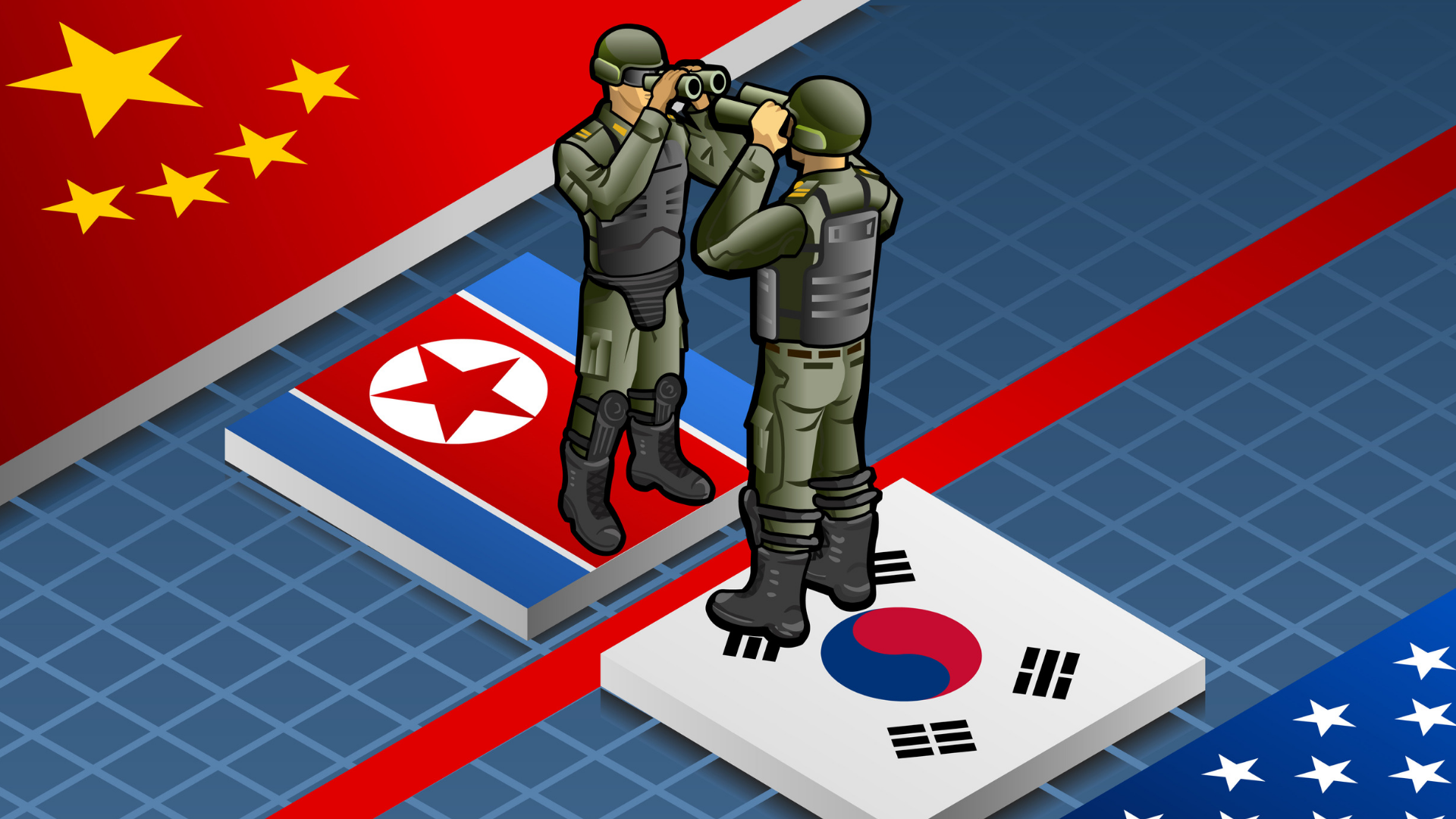
The Japan-South Korea trade war: 5 geopolitical points you need to know

Hazem Zahab14 August 2019772

Listen to this article

KJ narrates this report in his own voice

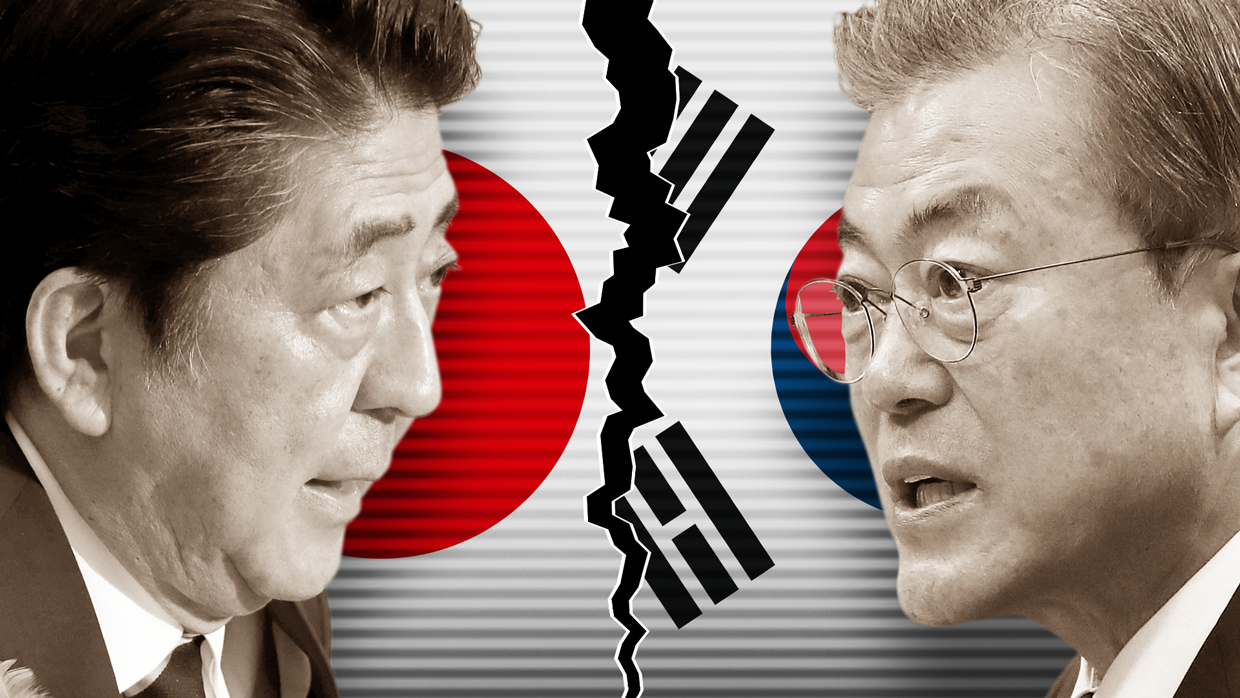
  1. Japan and Korea’s deep history of conflict: Japan and South Korea’s conflict has deep roots and has existed for a long time. Japan colonized Korea in 1910 and ruled it, sometimes with great brutality, until it was defeated in World War II in 1945. But Tokyo doesn’t like to be reminded of all that and claims that it discharged whatever moral debt it owed when it paid $500 million to Seoul in 1965. last October, when South Korea’s Supreme Court ruled that the lump-sum, government-to-government deal of 1965 did not cover damages for the mental anguish of individual wartime labourers. Subsequent rulings have authorized South Korean individuals to claim compensation from the Japanese industries that used their labour by forced legal sales of those companies’ assets in South Korea, which Japan strongly opposed. However, the two countries have almost always managed to keep important issues like trade and national security separate from the emotional flare-ups that make the relationship so fraught. This changed last month. 
  2. The escalating trade war: South Korea and Japan are embroiled in a bitter trade war that could have consequences for a global economy that is already suffering from another trade war between the US and China. Last month, Japan announced it would tighten control over three chemicals fluorinated polyamides, photoresists, and hydrogen fluoride that are crucial to producing semiconductors in Korea. Under new regulations, Japanese companies would need a license for each chemical to import them to South Korea. Japan claimed it was setting such restrictions because it believed South Korea was leaking sensitive information to North Korea, although they did not provide proof for these claims. After South Korea denied the claims, Japan went on to remove South Korea from its “white list,” an index of trusted trade partners. South Koreans are furious at Japan. And they’re displaying their anger by boycotting Japanese beer and clothing brands, as well as travel to the country.
  3. South Koreans united in fighting Japan:South Korea has responded furiously to Japan’s move and the whole nation is contributing, as thousands of South Koreans have started boycotting Japanese brands since early July, while some South Koreans have received backlash for taking their frustrations out on Japanese tourists and immigrants one restaurant in Busan, for example, reportedly put up a sign that reads, “No Japanese people allowed inside.” Meanwhile, South Korea is floating the idea of removing itself from the General Security of Military Operations Agreement or GSOMIA, an intelligence-sharing agreement also involving Japan and the United States. Overall, the response has been strong, meaning both sides have plunged into a trade war. 
  4. What can Japan do to mend ties? Japan’s trade war with South Korea will hurt the Japanese economy, and there is hope that a solution is in sight. Leveraging off Washington’s clout, Japan should also seek more trilateral talks with the U.S. and South Korea to prevent Seoul from pursuing further misguided policies with regard to China and North Korea. From a long-term perspective, it is also important for Japan to make efforts to reduce South Korea’s heavy dependence on trade with China and help boost the country’s economic importance. This will not be easy, however, and will require a willingness from SK as well. 
  5. Trade war puts the US in a bad position: The US has found itself in a strange and difficult position, as Japan and South Korea are both its close allies in the region. U.S. President Donald Trump said Friday that South Korea and Japan need to resolve outstanding issues between them, as friction between the two threatens to damage trilateral cooperation in dealing with North Korea’s nuclear threats. He said the disputes over trade and shared history has put the U.S. in a “very difficult position. They have to get along with each other. If they don’t get along, what are we doing?” Trump said. “It’s very important. South Korea and Japan have to sit down and get along with each other.” Although these comments do not aid the situation in any way, they are true, as friction between Japan and SK will only serve as an advantage to North Korea for their geopolitical plans in the region.

Related Intelligence

More articles
Will Iran’s latest actions damage ties with South Korea?
Iran

Will Iran’s latest actions damage ties with South Korea?

7 Jan 2021

Is Iran pulling Japan away from the US?
Iran

Is Iran pulling Japan away from the US?

The recent revival of Iran-Japan relations not a surprise Japan and Iran’s recent boost and revival in ties is not without basis and did not come as a shock, as the 2 nations have maintained positive relations since 1979 and have worked to strengthen relations frequently. Despite this, Japan’s close relation and military reliance on the US has kept ties with Iran limited. Hence, a recent increase in relations with Iran has shown that Iran may finally be pulling Japan away from full reliance on the US as in June Abe became the first sitting Japanese prime minister to visit Iran in 40 years. As far as possible, Abe would like to avoid participating in a coalition that could negatively affect Japan’s relations with Iran. Indeed, Iranian President Hassan Rouhani announced a visit to Japan, which will coincide with the latter’s decision on whether to deploy SDF vessels to the Middle East. Iranian President Hassan Rouhani will visit Japan on Dec. 20-21 and will meet with Prime Minister Shinzo Abe, as Japan looks to help ease tensions in the Middle East, the Japanese government’s chief spokesman said on Tuesday. “Our country will persistently continue to support diplomatic efforts in cooperation with the United States, Iran and various other related countries aimed at easing tensions in the Middle East,” Chief Cabinet Secretary Yoshihide Suga told a news conference. Mentioning Iran alongside the US in diplomatic terms shows a shift towards Iran from Japan’s side, as in the last decades Japan’s alliance with the US has been stronger than any other. Subscribe to read the full article We wish we didn't have to do this, but only paid subscribers can read the full article, Unlike other publishers, we are not the beneficiaries of State funds and are entirely dependent on our supporters to keep KJ Vids functioning. Please subscribe to read the rest of the article. The First 1,000 subscribers will receive a 50% lifetime discount to our content. - Access over 500 videos explaining global politics - Full access to all articles - Vote on future video topics - Secure Questions for Video Q&As Sign Up - https://www.kjreports.com/product/lifetimediscount/

17 Dec 2019

China sees weakened US ties with Japan and South Korea as a perfect opportunity:
China

China sees weakened US ties with Japan and South Korea as a perfect opportunity:

The US needs a united South Korea and Japan For a long time, the US has enacted strong relations with South Korea and Japan, cooperating economically and militarily, in order to act as a counter-force to China in the region. The US realises that China’s geopolitical and economic strength in the region is currently rapidly increasing, and therefore the trade conflict between Japan and South Korea has come at the worst possible time in their view. In September, South Korea lodged a formal complaint to the WTO over Japan’s trade restrictions but announced they will halt dispute consultations as long as bilateral talks continue, and rocky diplomatic exchanges persisted last month as South Korea’s chief negotiator Chung Hae-Kwan spoke to reporters about ending talks altogether, saying, “We will not have talks for the sake of talks.” This trade dispute, which has been going on for several months, has worried the US, as for them, a disunited Japan and South Korea gives a clear advantage to China’s regional influence. The US has hence put huge pressure on both parties to resolve the conflict, and it appears to have worked in some cases. Under intense pressure from the United States, South Korea reversed itself at the last minute Friday and extended an intelligence-sharing pact with Japan, a sign that the Seoul government wanted to halt fraying relations with the two countries. Taken together, both developments suggested that President Moon Jae-in of South Korea was looking for ways to de-escalate underlying historical tensions, which have caused one of the most serious rifts between the two countries since they normalized relations 54 years ago. The moves came on the eve of a Group of 20 meetings of foreign ministers in Nagoya, Japan, appearing to set the tone for improvement in relations with the United States and Japan that have been increasingly strained. There appear to be signs of easing tensions, but the US will hope to close this dispute fast if it wants to reassert itself and limit China’s rise. China intends to take advantage of weakened US influence As highlighted in point one, over the past months, relations between both South Korea and Japan, and the US have been strained, not solely because of the trade dispute between the 2 Asian nations, but also as a result of the pressure, the US has been putting on them to maintain its influence. For instance when the US were angered over an impasse with South Korea in a separate dispute over the costs of maintaining American troops in the country as a deterrent to North Korea. This weakened relation is seen as an opportunity to China, who appear to intend to strengthen relations with both South Korea and Japan, and hence enact an influence of their own. “The world is now full of various uncertainties and unilateralism, as well as bullying and power politics that have been harming global peace and stability and threatening the right to develop our own countries,” Wang told a meeting of business leaders and former officials on Thursday. It was Wang’s first visit to South Korea in four years and comes as Beijing looks to boost ties with its neighbours. Japanese Prime Minister Shinzo Abe is set to visit China later this month, and the Kyodo news agency reported that he was expected to meet Xi and take part in a three-way summit with South Korean President Moon Jae-in in Sichuan province. It would be the fourth meeting between Xi and Abe since the latter’s visit to Beijing last October. “China has been intensifying a ‘new type of neighbourhood diplomacy’ as a way to offset the American influence in the region, amid their deepening power rivalry,” said Lee Seong-Hyon from the Sejong Institute in Seoul, also adding that China is clearly doing this for its own interests and “not for the sake of the neighbours.” Subscribe to read the full article We wish we didn't have to do this, but only paid subscribers can read the full article, Unlike other publishers, we are not the beneficiaries of State funds and are entirely dependent on our supporters to keep KJ Vids functioning. Please subscribe to read the rest of the article. The First 1,000 subscribers will receive a 50% lifetime discount to our content. - Access over 500 videos explaining global politics - Full access to all articles - Vote on future video topics - Secure Questions for Video Q&As Sign Up - https://www.kjreports.com/product/lifetimediscount/

8 Dec 2019

Eurasia’s Great Game: India, Japan and Europe play to Putin’s needs
Europe

Eurasia’s Great Game: India, Japan and Europe play to Putin’s needs

18 Oct 2019

Japan is standing up to China: 5 Geopolitical Effects You Need to Know
China

Japan is standing up to China: 5 Geopolitical Effects You Need to Know

1. Japan taking on China in Africa Japan has appeared to see the opportunity in investing in Africa and has followed China’s example, possibly challenging them. The extent of this will officially be seen at the end of August when Japan will host the Seventh Tokyo International Conference on African Development (TICAD) in Yokohama. The conference is the catalyst for Japan’s development efforts on the continent and is co-organised with a number of international partners, including the United Nations, the United Nations Development Programme, the World Bank, and the African Union Commission. It remains to be seen how China will respond, but their interests in Africa could feel to be threatened. 2. Will Japan help the US in closing its missile gap with China? Japan could also help the US in its military challenge to China, as the US has said it would turn to Japan for support. “Instead of a Eurocentric perspective on INF that seeks to prioritise Europe’s strategic stability, we need to view this in a way that also acknowledges the shifting conventional military balance in Asia,” said Eric Sayers, a former special assistant to then-Adm. Harry Harris, former chief of the U.S. Pacific Command. Should Japan abide, it would be a clear sign of standing up to China and would increase tensions in the region. Subscribe to unlock the other 3 Points We wish we didn't have to do this, but only paid subscribers can read the full article, Unlike other publishers, we are not the beneficiaries of State funds and are entirely dependent on our supporters to keep KJ Vids functioning. Please subscribe to read the rest of the article. The First 1,000 subscribers will receive a 50% lifetime discount to our content. - Access over 500 videos explaining global politics - Full access to all articles - Vote on future video topics - Secure Questions for Video Q&As Sign Up - https://www.kjreports.com/product/lifetimediscount/

25 Aug 2019

North and South Korea Fury: 5 Geopolitical Effects You Need to Know
North Korea

North and South Korea Fury: 5 Geopolitical Effects You Need to Know

1. North Korea ‘warns’ South Korea with missile test North Korea has fired short-range missiles in the Sea of Japan, from Wonsan on North Korea’s east coast, and called the test of two new missiles on Thursday a “solemn warning” against what it described as “South Korean warmongers”. North Korean supreme leader Kim Jong-Un said he was forced to develop new missiles to “eliminate potential and direct threats”. The North Korean leader continued to say that South Korea should “not make a mistake of ignoring the warning”. It appears the tests are a response to the upcoming US-South Korean joint military drills, which NK have long been opposed to, based on fears of a possible invasion. It is important to note the joint drills are an annual event. 2. First hostile act since Trump-Kim meeting The missile tests are the first military tests since Kim and Trump met in the demilitarised zone between North and South Korea, signalling that after a period of positive relations and optimism, tensions may now increase, even more so, should the US and South Korea go ahead with their plans of large-scale military drills. Pyongyang also continues to demonstrate its abilities to develop new weapons despite strict economic sanctions. Earlier this week Mr Kim inspected a new type of submarine, state media reported, which could be developed to carry ballistic missiles, according to some analysts. 3. The US and South Korea do not see tests as a threat Despite this, South Korean-U.S. military command said on Friday a North Korean missile launch the previous day was not a threat directed at South Korea or the United States and had “no impact on our defence posture”. Both nations simply see it as a test of a new type of missile for the military of North Korea. This reaction is not the usual as the US usually responds negatively to North Korean development of new weapons, but is clearly a reaction to earlier talks between Trump and Kim, where it was agreed that NK would reduce their nuclear arsenal, but maintain the improvement of normal military equipment.

26 Jul 2019